


A James Island client called me in the spring with a backyard she had inherited from a previous owner — buckled chain-link fencing, a patchy crabgrass lawn that gave up by August, a cracked concrete pad meant to be a patio in 1994 and never finished, and a pair of drainage swales that flooded after every Charleston thunderstorm. She did not know what she wanted. She knew what she did not want. This gallery is the twelve concrete design directions I drew up from that same starting yard — contemporary, cottage, formal parterre, tropical, zen, Mediterranean, industrial, Scandi, jungle, sustainable, and the full outdoor entertainer. Each direction is paired with the palette I would actually specify for Lowcountry humidity and salt exposure, the styling notes I gave the client, and the regional context that determines whether the look reads as resolved or as a costume.
Table of Contents
- Contemporary Cool: Sleek Lines and Integrated Lighting
- The Romantic Cottage Retreat
- Geometric Grandeur: A Modern Formal Garden
- English Country Charm: A Floral Layered Border
- Tropical Luxe: Resort-Style Outdoor Lounge
- Zen Minimalism: A Japanese-Inspired Sanctuary
- Mediterranean Warmth: Terracotta and Texture
- Industrial Edge: Concrete, Corten, and Festoon Lighting
- Scandi Bright: A Light-Filled Minimalist Escape
- The Jungle Lagoon: Immersive and Lush
- The Sustainable Sanctuary: Wildflower Meadow and Raised Beds
- The Outdoor Entertainer: Built-In Kitchen and Lounge
- Pro Tips From My Project Files
- Regional Fit Across the Southeast
- What Each Direction Actually Costs
- Frequently Asked Questions
- Sources and References
- Final Thoughts
Contemporary Cool: Sleek Lines and Integrated Lighting
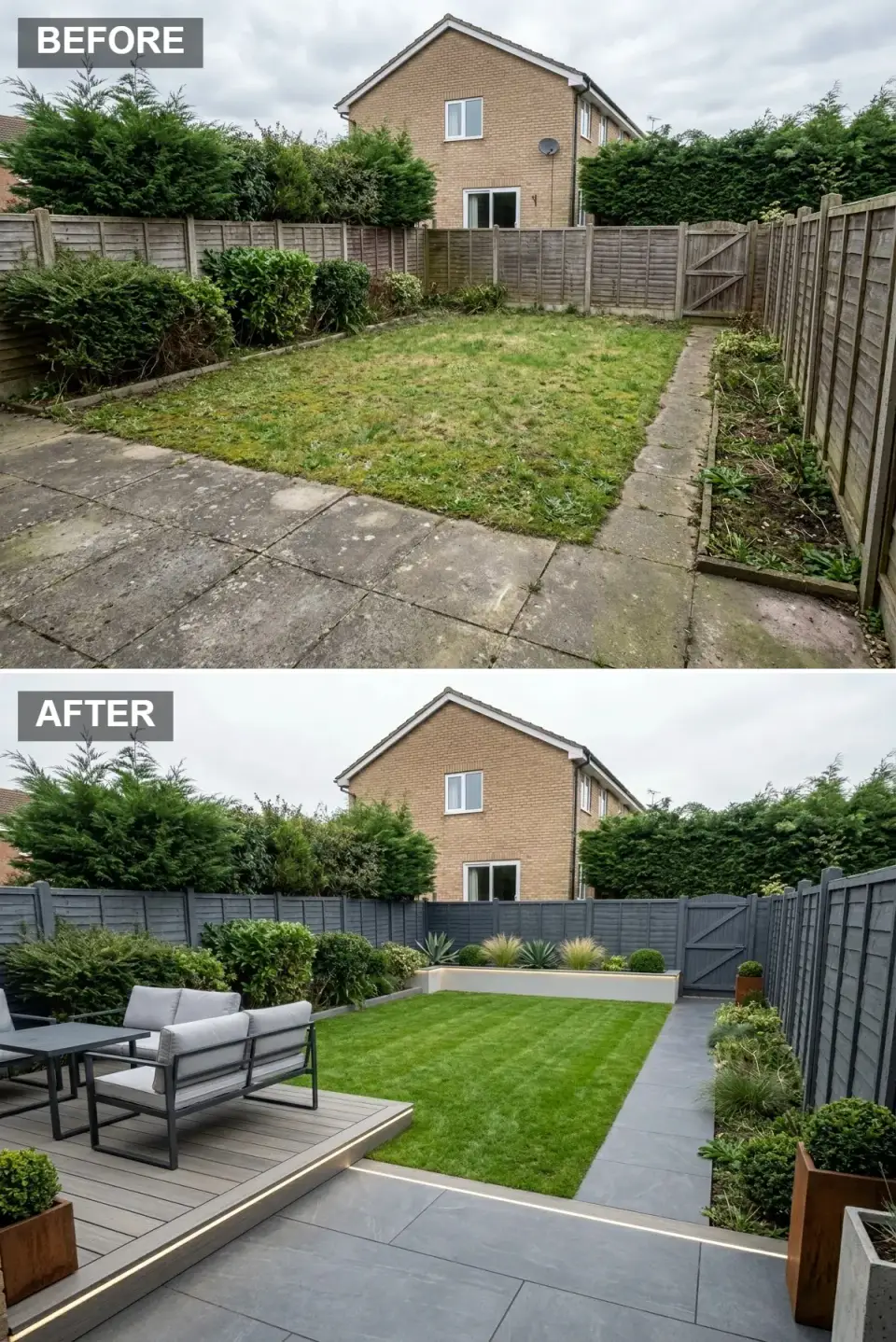
This is the direction I draw for clients who want their backyard to read as a continuous extension of a contemporary house — the architectural language carries through the door rather than stopping at it. The buckled chain-link comes out and is replaced with horizontal cedar fence panels stained Benjamin Moore Soot 2129-20, a true charcoal that recedes against green planting and makes every architectural plant look more sculptural. Pavers are 24x48 inch large-format porcelain (Florim StonePeak or Marazzi Mystone, both rated for exterior pedestal-set installation) on a compacted base, and the lounge zone shifts to a Trex Transcend composite deck in Spiced Rum to give the feet a warmer surface than the porcelain. The hero is a pair of rendered raised planters in Sherwin-Williams Pure White SW 7005 — Lime White finish on a CMU block core — with continuous warm-white 2700K LED strip lighting tucked under the coping for an architectural glow that pulls eye and ankle at dusk. Furniture is a Outer Teak modular sectional or RH Biscayne, both built for Charleston salt exposure without the silver-dollar mildew you get on cheaper teak.
Color Palette
#363636
Recedes the boundary and makes architectural plants pop
#F0F0F0
Crisp architectural lines that brighten the lounge zone
#A9A9A9
A neutral mid-tone that bridges the dark fence and white planters
#FFF4E0
Highlights structural features without the cold cast of 4000K
Styling Notes for This Look
- Continuous LED strip under planter coping reads as architecture, not landscape lighting. Specify warm-white 2700K — the 4000K version makes the rendered white look hospital-clinical at night.
- Painting or staining the fence dark before any planting goes in is the single highest-impact, lowest-cost move in a contemporary garden. Charcoal absorbs and recedes, beige reflects and competes.
- Define zones with material change, not paint. Composite deck for lounging, porcelain for circulation, pea gravel or DG for transition — the foot reads the change before the eye does.
- Outdoor porcelain pavers must be 20mm thickness minimum for pedestal or sand-set installation. The 10mm interior porcelain cracks within two seasons in a Charleston freeze-thaw cycle.
The Romantic Cottage Retreat
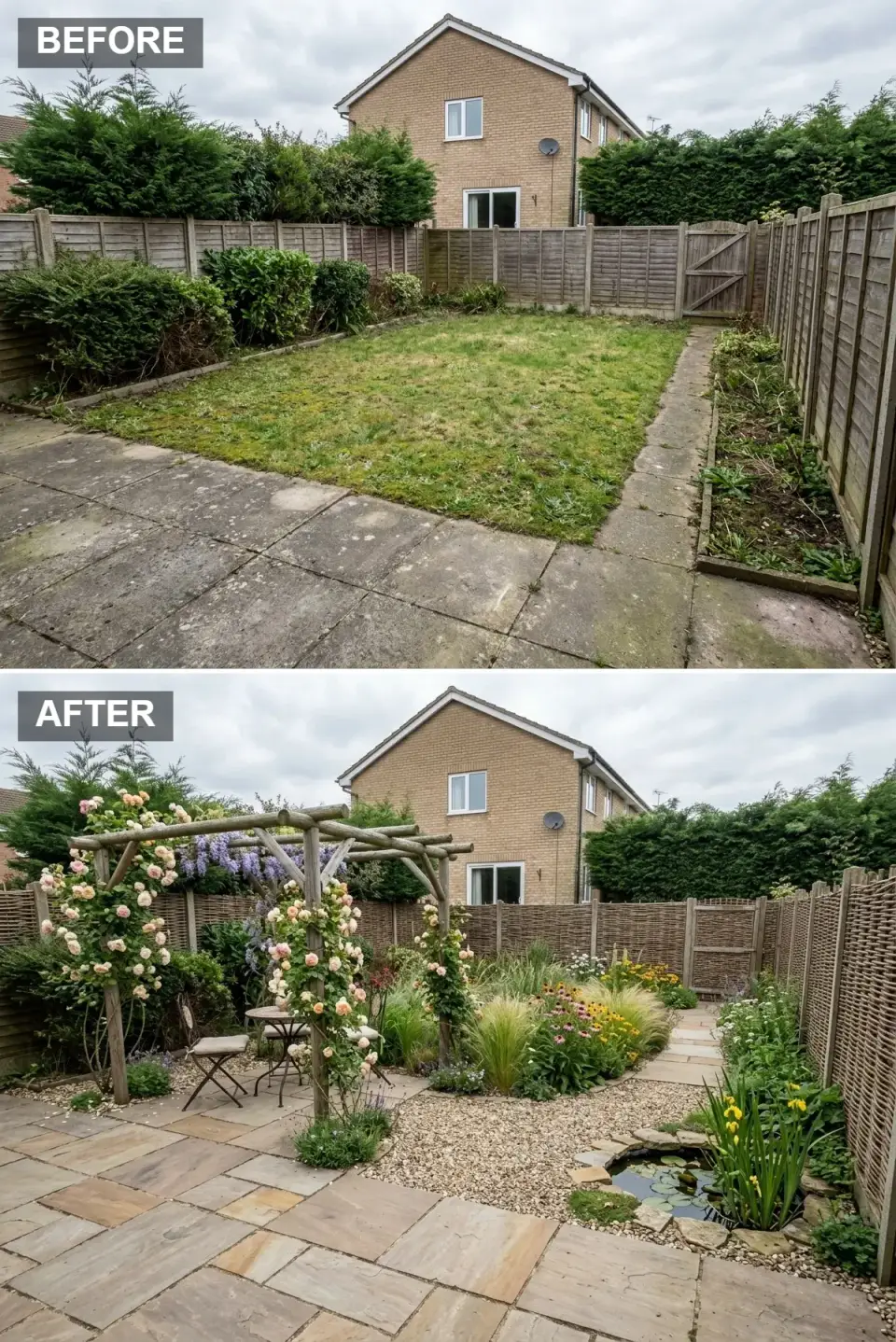
This is the direction I drew for a Sullivan's Island client whose cottage was built in 1928 and deserved a backyard with the same vintage. Standard fence panels come out and are replaced with woven willow hurdles from Master Garden Products or English Hurdle imports — they need replacing every 7-10 years in Charleston salt exposure, and that is part of the rhythm rather than a defect. The cracked concrete pad is broken up and replaced with rustic Pennsylvania flagstone in irregular sizes, set with 3-4 inch gaps planted with creeping thyme and Corsican mint. Pea gravel paths in a warm beige (Charleston Builders Supply tan pea gravel, 3/8 inch) curve to a 10x10 timber pergola from Outdoor Living Today, draped in a Confederate jasmine and a New Dawn climbing rose for the season-long bloom. A small preformed pond with a hidden pump replaces the swale problem at the back corner. Planting is the layered cottage formula — Limelight and Annabelle hydrangeas, Lady Banks rose, foxgloves and salvias for vertical interest, lavender and Russian sage for the dry-tolerant border. A reproduction wrought-iron bistro set anchors the conversation zone.
Color Palette
#8B5A2B
Natural aged wood tones — willow ages silver in coastal sun
Pennsylvania Flagstone
#C2B280
Earthy variegated tones, set with planted gaps for softness
Tan Pea Gravel
#D2B48C
Walkable, drains well, satisfying underfoot
Aged Wrought Iron
#554F47
A classic vintage material that earns its rust honestly
Styling Notes for This Look
- Willow hurdles are a 7-10 year material in Charleston coastal exposure — budget the replacement into the original cost, do not treat the rot as failure.
- A Confederate jasmine on a cottage pergola will cover the structure in two growing seasons in Zone 8b. New Dawn rose is the slower-growing companion that adds three months of bloom.
- Cottage gardens read most authentically with three textures of vertical: a vine on the pergola, a tall perennial like foxglove or hollyhock, and a mid-height shrub like a hydrangea. Skip any one and the layered look flattens.
- Curved gravel paths drain better than straight in our Charleston rainfall pattern; specify a 4-inch compacted base of #57 stone before the pea gravel surface or it will migrate within a year.
Geometric Grandeur: A Modern Formal Garden
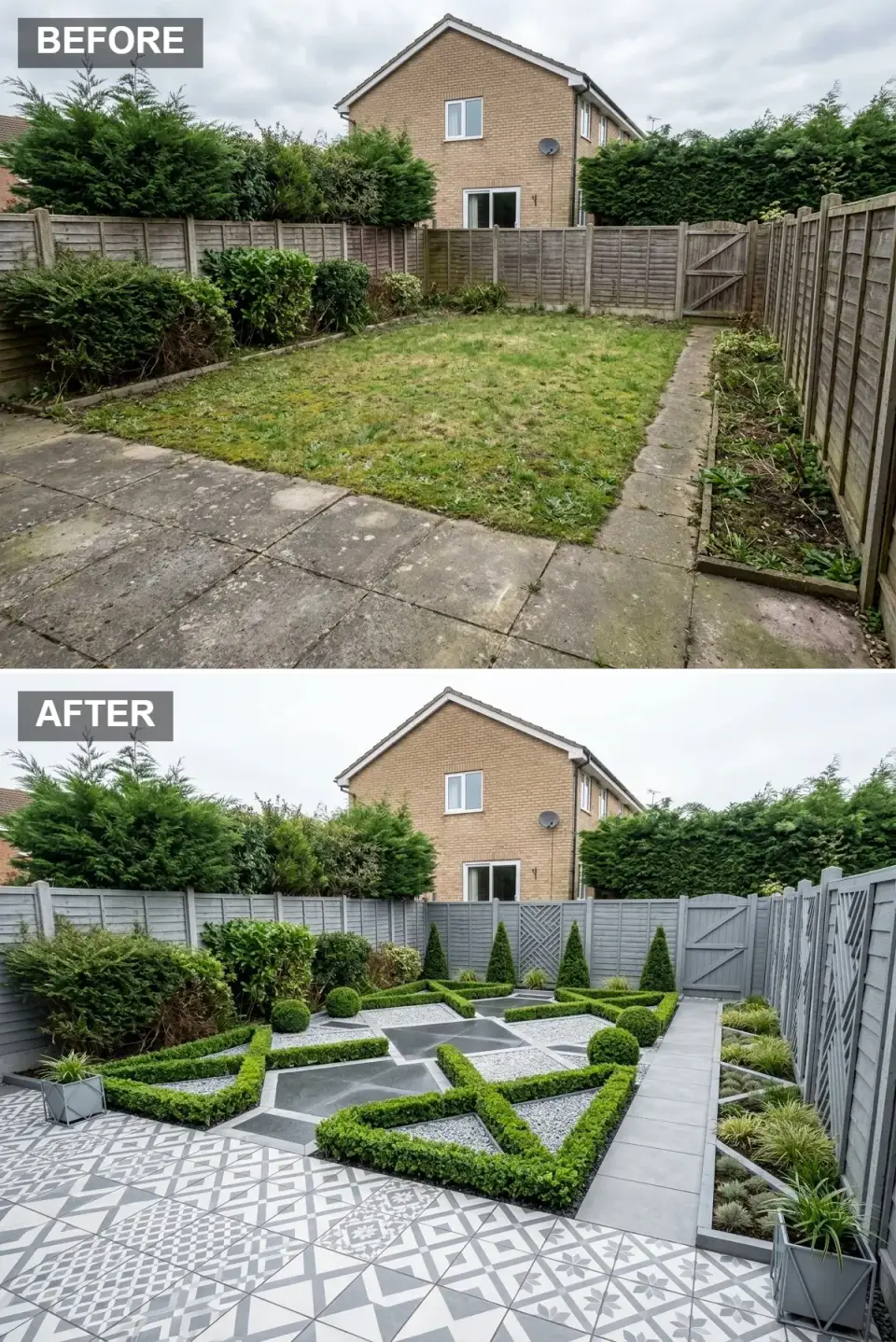
A Mount Pleasant downtown client wanted a backyard that read formal without slipping into the McMansion-stately version of formality. The patio comes in as a patterned outdoor porcelain — Living Tile's Marrakesh series or Bert and May's outdoor-rated geometric prints — installed as an outdoor rug at roughly 12x14 feet. The lawn is sacrificed entirely (no grass to mow in a Charleston summer is a feature, not a loss) and replaced with a parterre garden of dwarf English boxwood (Buxus sempervirens Suffruticosa) in tight geometric beds, infilled with light granite gravel that catches the sky and brightens the entire scheme. Pathways are smooth 24x24 grey concrete pavers from Belgard's Lafitt collection. The fence is upgraded to a 6-foot solid panel in a smart medium grey — Sherwin-Williams Iron Ore SW 7069 — topped with a 12-inch lattice section that breaks the wall without inviting wind. Conical topiary in cast-stone planters anchors the corners. A Sutherland teak bench centered on the long axis gives the garden its viewing point.
Color Palette
#B0B7BD
A bold decorative anchor at the heart of the design
#708090
A sophisticated neutral that modernizes the boundary
#D3D3D3
Bright contrast against the deep boxwood green
Belgard Lafitt Pavers
#8C9296
Sleek uniform paving that emphasizes the geometric layout
Styling Notes for This Look
- Dwarf English boxwood is the classic parterre plant but susceptible to boxwood blight in our humid Southeast. I now spec Buxus microphylla Wintergreen or Buxus Green Velvet as the disease-resistant alternative — the visual read is identical.
- A formal garden lives or dies on its sight lines. Center every bench, every topiary, and every paver pattern on a long axis from the back door — the eye picks up symmetry the brain reads as expensive.
- Outdoor patterned porcelain works as a focal rug only if the surrounding hardscape is solid color. Patterned tile plus patterned paver path reads as confused, not layered.
- Cast-stone planters survive Charleston freeze-thaw better than terracotta. Specify a fiber-reinforced version (Campania International) at 24-inch height minimum for visual weight.
English Country Charm: A Floral Layered Border
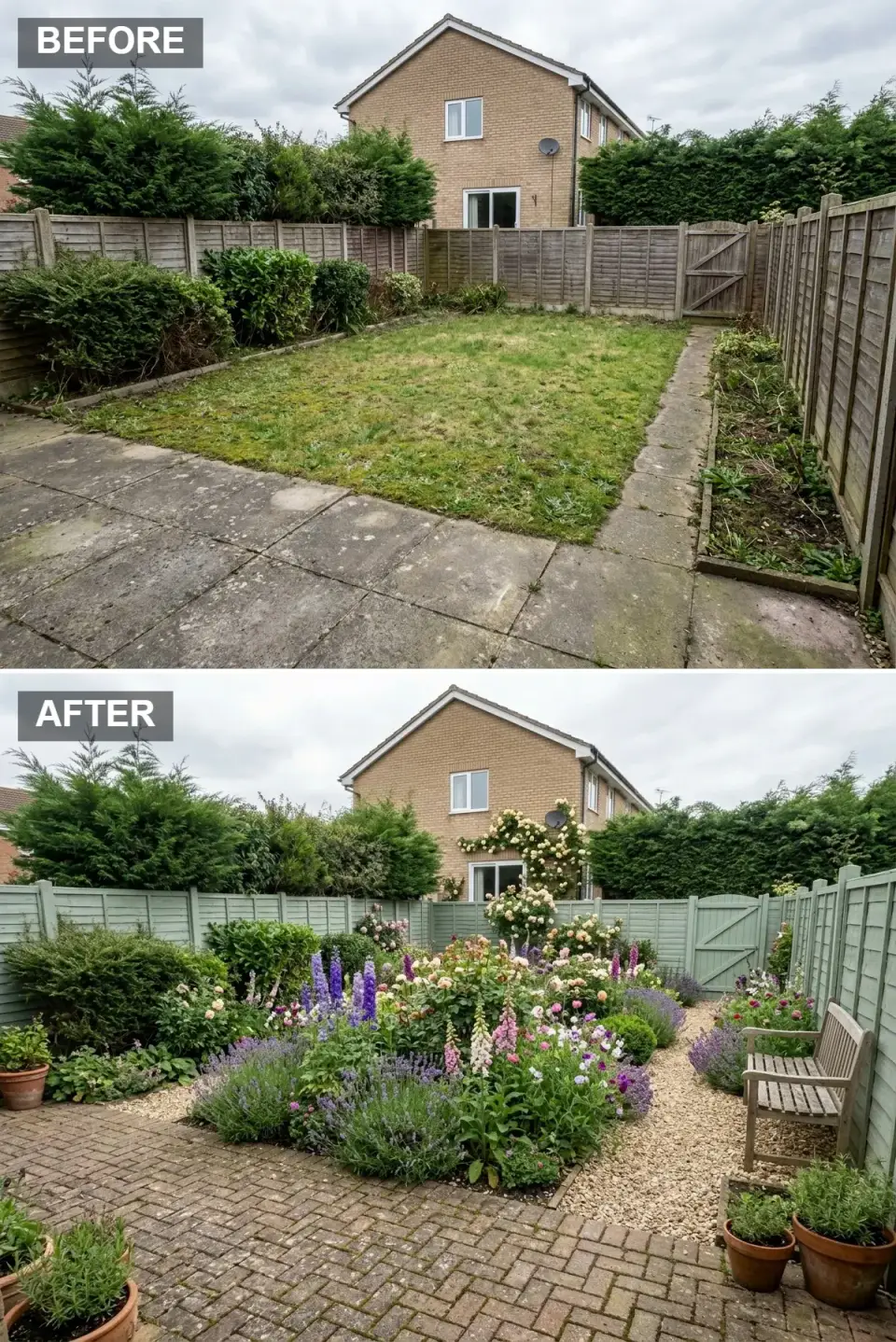
This is the direction I drew for a downtown Charleston client whose 1850s house south of Calhoun deserves a backyard that reads as old as the building. The fence comes in painted Farrow and Ball Green Smoke No.47, the sage that recedes behind any shade of green planting and never reads "wall" against the foliage. The hardscape is reduced — fewer pavers, more soil — and the patio is laid in reclaimed Charleston brick from Old Carolina Brick Company, set in a herringbone pattern with sand-swept joints. A pea gravel path winds toward a heart pine garden bench from Country Casual Teak. The planting is the working hero — David Austin English roses (Olivia Rose Austin and Boscobel hold up best in Charleston humidity), foxgloves, delphiniums (the Pacific Giants series — they read short-lived in our heat but stay through May), salvia May Night, and Limelight hydrangeas at the back of the border. A clematis Jackmanii climbs a simple iron tuteur. The whole composition reads collected over forty years even when it has been in for one.
Color Palette
F and B Green Smoke No.47
#8F9C85
A soft green that recedes visually and complements the planting
Reclaimed Charleston Brick
#8B4513
Warm and weathered, period-correct in the historic district
Beige Pea Gravel
#EEDCB3
Light and informal, a natural contrast to the brick
Aged Heart Pine
#A08060
A rustic wooden focal point at the end of the path
Styling Notes for This Look
- Reclaimed Charleston brick is the period-correct paver in the historic district. Old Carolina Brick and Pine Hall Brick both stock authentic salvage; modern brick stamped to look reclaimed reads obvious within a year.
- David Austin roses in Charleston humidity need afternoon shade and weekly disease prevention. Olivia Rose Austin and Boscobel are my two most reliable specifications; the Austin reds (Munstead Wood) struggle here.
- An English border layers in three depths: tall (delphinium, foxglove, hollyhock) at the back, mid (rose, salvia, baptisia) in the middle, low (lambs ear, lady's mantle, hardy geranium) at the edge. Skip a layer and the planting reads thin.
- An iron tuteur for a clematis lives 30 years in Charleston salt air. The cedar version rots in five. The price difference pays back in the first replacement cycle.
Tropical Luxe: Resort-Style Outdoor Lounge
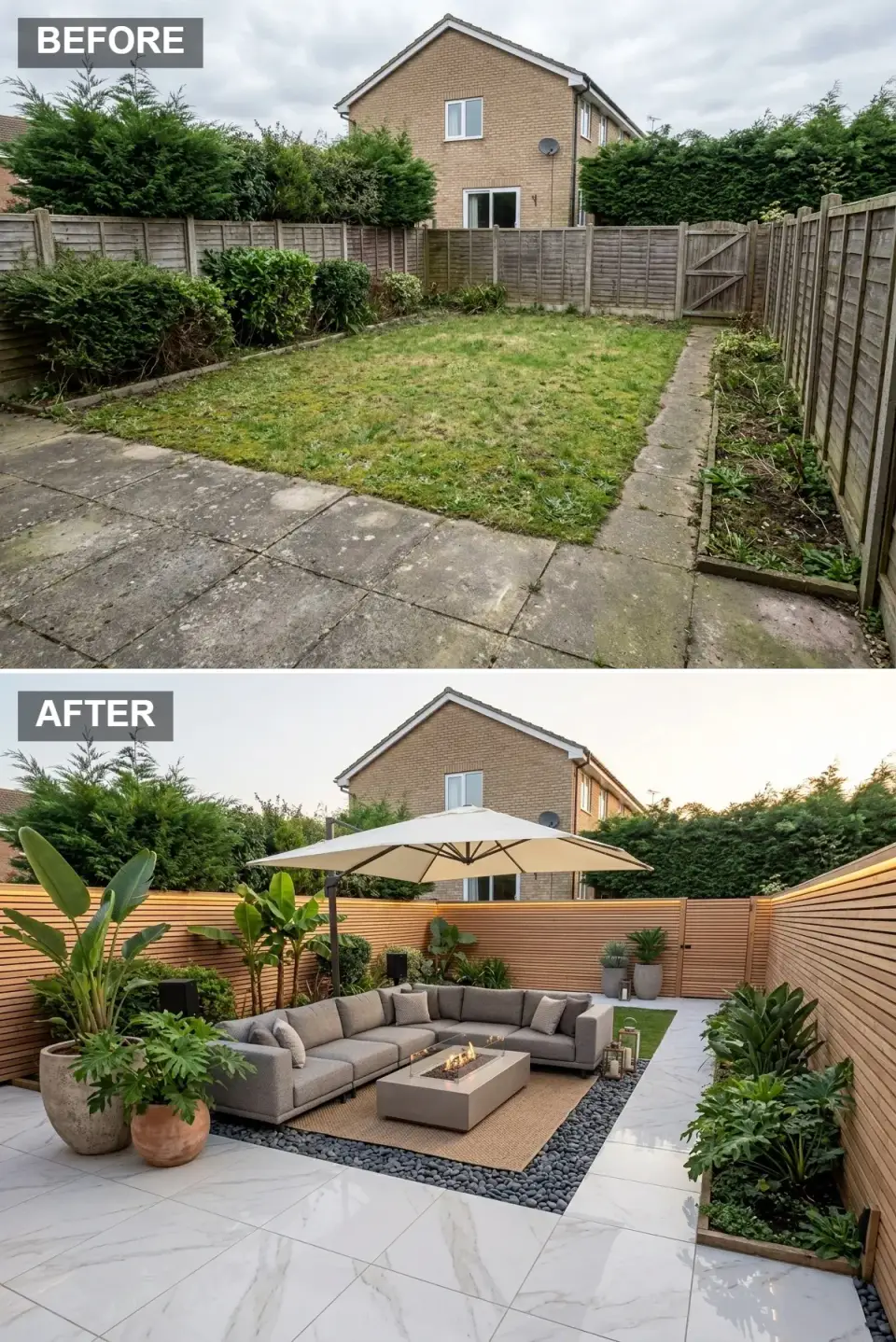
An Isle of Palms client with a barrier-island lot wanted a backyard that did the work of a vacation house — a resort lounge five steps from the back door. The buckled fence is clad with horizontal cedar 1x4 slats with a 1/2-inch reveal, stained Cabot Bleaching Oil to age silver in the salt air rather than fight it. The patio shifts to large-format 24x48 white marble-effect porcelain (Florim StonePeak Plane Calacatta or MSI Statuario Premium 20mm exterior-rated) — the marble look without the staining risk that real marble would carry near a saltwater pool. A Crate and Barrel Casa Carmen sectional or Outer Aralia in a bone-white Sunbrella performance fabric anchors the lounge zone, around a sleek 60-inch concrete fire pit table from Restoration Hardware or Solus Decor. Oversized terracotta pots from Campania International hold an Ensete ventricosum Maurelii (red banana), a Strelitzia nicolai (giant white bird of paradise), and a windmill palm. The overall read is Tulum-meets-Charleston without slipping into theme-park.
Color Palette
#C19A6B
Warm horizontal lines that age beautifully on the coast
Marble-Effect Porcelain
#F2F2F2
Bright underfoot — bounces island light around the lounge
#9E9E9E
Industrial mid-tone that balances the warm wood
#E2725B
Earthy containers grounding the oversized tropical foliage
Styling Notes for This Look
- Cedar slat cladding on an existing fence is roughly $14-$22 per linear foot installed in Charleston, and the visual move is the single highest-impact upgrade in any tropical-leaning garden. Skip the pressure-treated yellow pine version — it warps within two summers.
- Red banana (Ensete ventricosum Maurelii) is winter-tender below 28 degrees. In Charleston I treat it as a one-season specimen plant or pull and over-winter the corm in an unheated garage.
- Sunbrella performance fabric in bone-white shows nothing in dry conditions but mildews in standing humidity. Specify cushion covers that zip off and tumble dry, and pull them inside before any hurricane warning.
- Marble-effect porcelain is dramatically more forgiving than real marble in a working lounge. Real Calacatta stains permanently from red wine and citrus within a single dinner party.
Zen Minimalism: A Japanese-Inspired Sanctuary
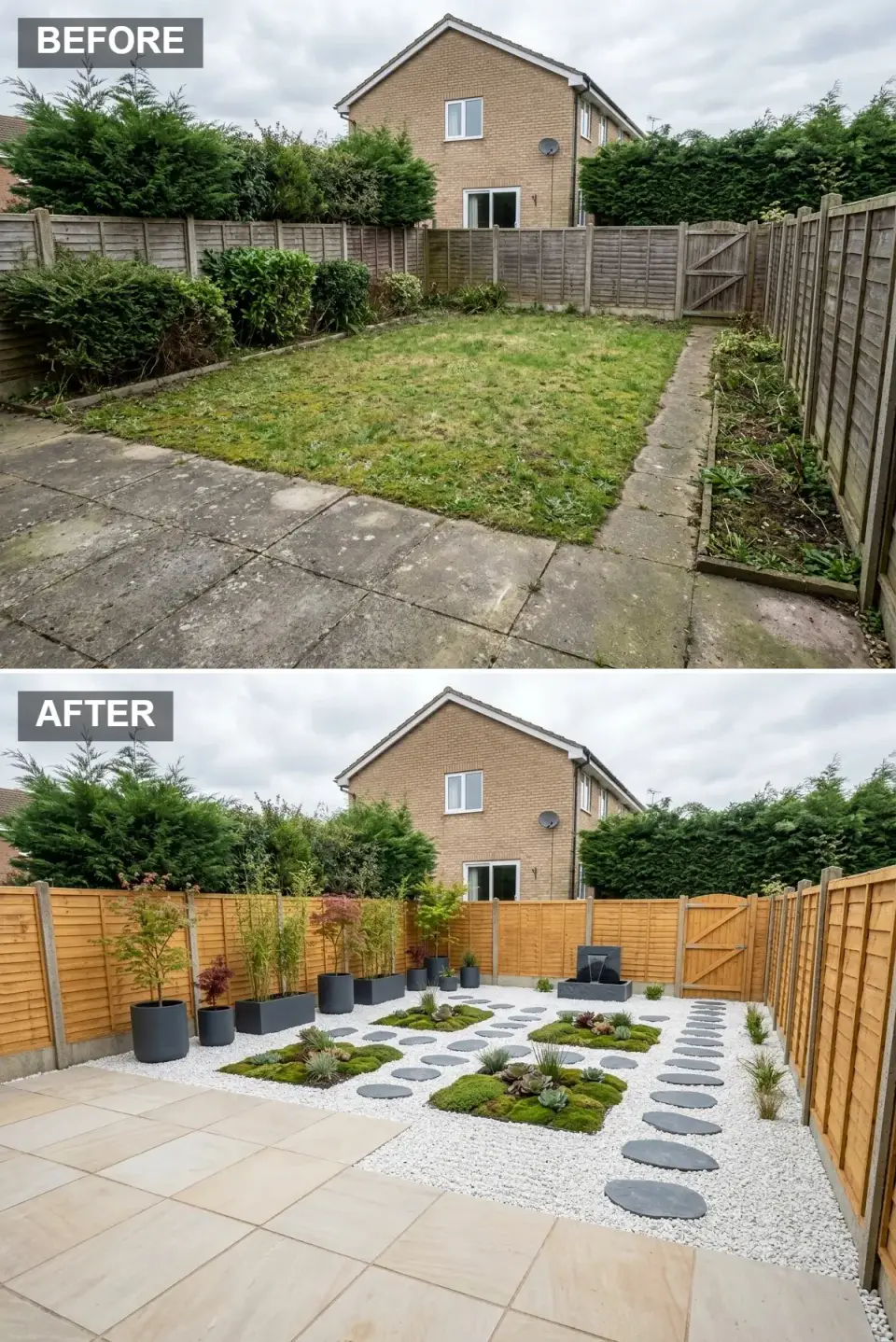
A Mount Pleasant couple, both physicians, asked me to draw a backyard that did the same job their primary bath did — a decompression chamber that asked nothing of them. The space is structured around a sea of #21 white marble pebbles raked weekly into pattern, broken by 24x24 honed dark slate stepping stones from Tile Bar's outdoor collection and small islands of Irish moss and Sedum Angelina. The fence is a clean horizontal cedar with a Penofin honey-toned oil that warms the cool ground palette. Planters are 24-inch matte charcoal Campania Tate troughs holding clumping black bamboo (Phyllostachys nigra in root barriers — never plant running bamboo in Charleston soil) and a single Acer palmatum Bloodgood as the seasonal anchor. The water feature is a custom 36-inch basalt column with a hidden Aquascape pump reservoir — the splash carries roughly 20 feet and mutes the next-door HVAC and traffic noise. The whole composition reads quiet rather than minimal.
Color Palette
White Marble Pebbles
#FAFAFA
Bright negative space that emphasizes the planted islands
#4A4A4A
Strong grounding presence against the bright pebble field
#D4B483
Adds the warmth a strict mineral palette would otherwise lack
Honed Dark Slate
#696969
Functional rhythm laid into the white pebble field
Styling Notes for This Look
- Running bamboo is invasive in Charleston soil — never specify it without a 60-mil HDPE root barrier installed to 36-inch depth, and even then plan annual root inspection.
- White marble pebbles brighten the entire garden but stain green from algae in shaded Charleston yards within two years. Specify decomposed granite in matching tone for full-shade zones.
- Acer palmatum (Japanese maple) survives Lowcountry summers only with afternoon shade and consistent moisture. The Bloodgood and Tamukeyama cultivars are most reliable; the lacy dissectum varieties scorch.
- The water feature must have a pump rated 1.5x the head height of the column. A undersized pump produces a trickle, not the meditative splash that defines the room acoustically.
Mediterranean Warmth: Terracotta and Texture
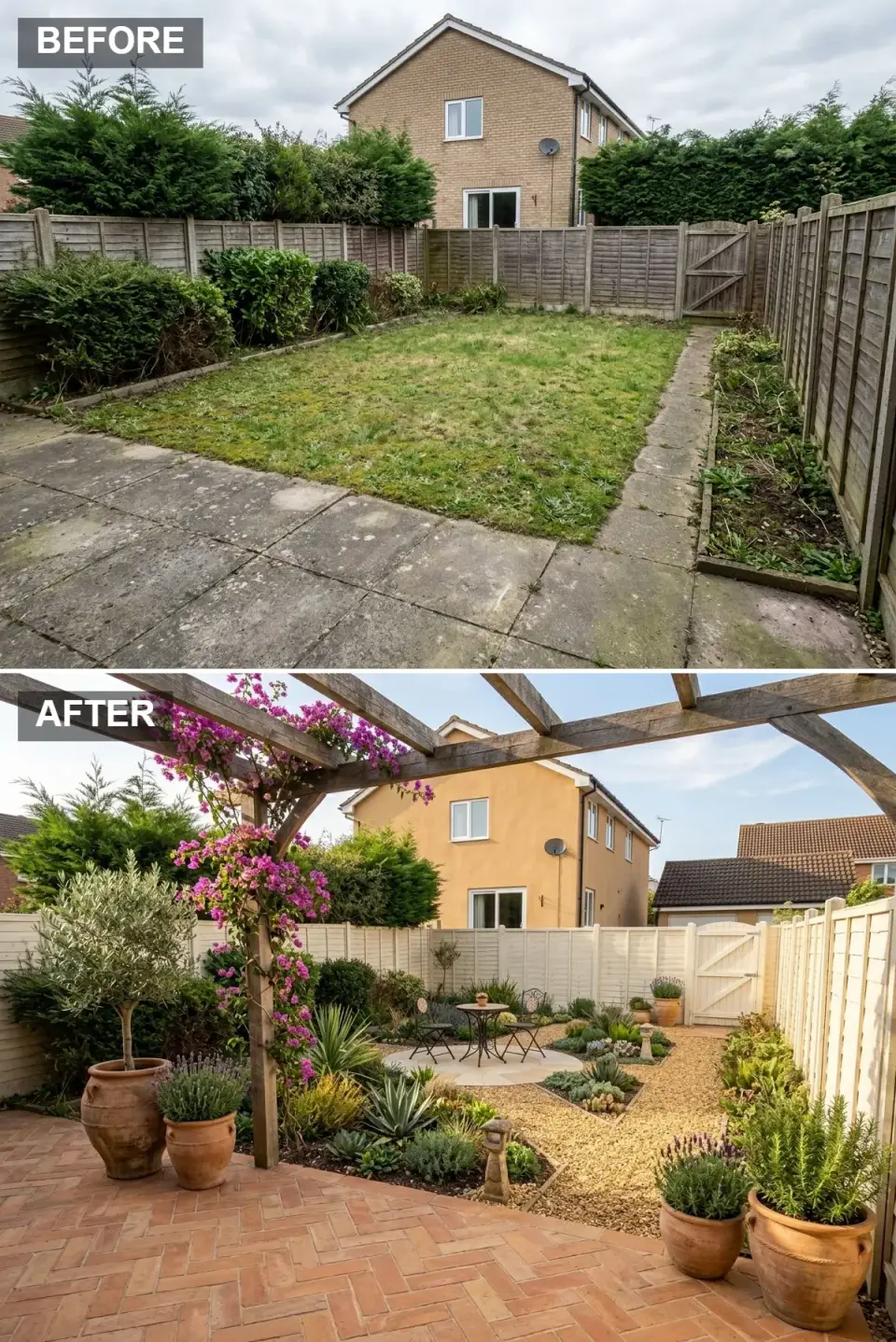
A Beaufort client with a 1920s stucco house wanted a backyard that read as the south of France translated to South Carolina. The dreary concrete is replaced with terracotta brick laid in herringbone (Pine Hall Brick's Pathway Sienna or Old Carolina handmade brick), set tight without grout for the period-correct feel. The fence is painted Sherwin-Williams Whole Wheat SW 6121 — a creamy off-white that bounces afternoon Lowcountry light into the planting. A 12x12 timber pergola in weathered cypress holds a Barbara Karst bougainvillea and a Cape jasmine for fragrance, and the pots are oversized terracotta from Campania holding rosemary, lavender Provence, an olive tree (Arbequina or Mission, both reliable in Zone 8b microclimates), and a single dwarf citrus. Gravel is warm beige tan, raked weekly. The whole garden reads sun-drenched even on a December afternoon.
Color Palette
#CC6633
The defining Mediterranean tone — warm, earthy, and aged
SW Whole Wheat Off-White
#FDFBD3
Brightens boundaries and reflects sunlight into the planting
Weathered Cypress
#7F6B5D
Aged timber that adds character and supports the bougainvillea
Areas Warm Beige Aggregate
#E0CDA8
Textural counterpoint to the herringbone brick
Styling Notes for This Look
- Olive trees survive a Charleston winter in protected microclimates; they will not survive an unprotected Inland-South yard at sub-20-degree wind. Plant in a sheltered courtyard, against a south-facing wall, or accept that a hard winter every five years will require a replacement.
- Bougainvillea is winter-deciduous in Zone 8b and reliably hardy only in Zones 9 and warmer. In Charleston I treat it as a 90-percent reliable specimen — wrap in burlap when temperatures drop below 28 degrees.
- Herringbone brick laid tight without mortar joints needs polymeric sand swept into the gaps and reapplied every 3-5 years. Skip the resand and weeds populate the joints by year two.
- Dwarf Meyer lemon and Improved Meyer survive in containers in Charleston when wheeled into a garage during freeze events. In-ground is gambling on a mild winter.
Industrial Edge: Concrete, Corten, and Festoon Lighting
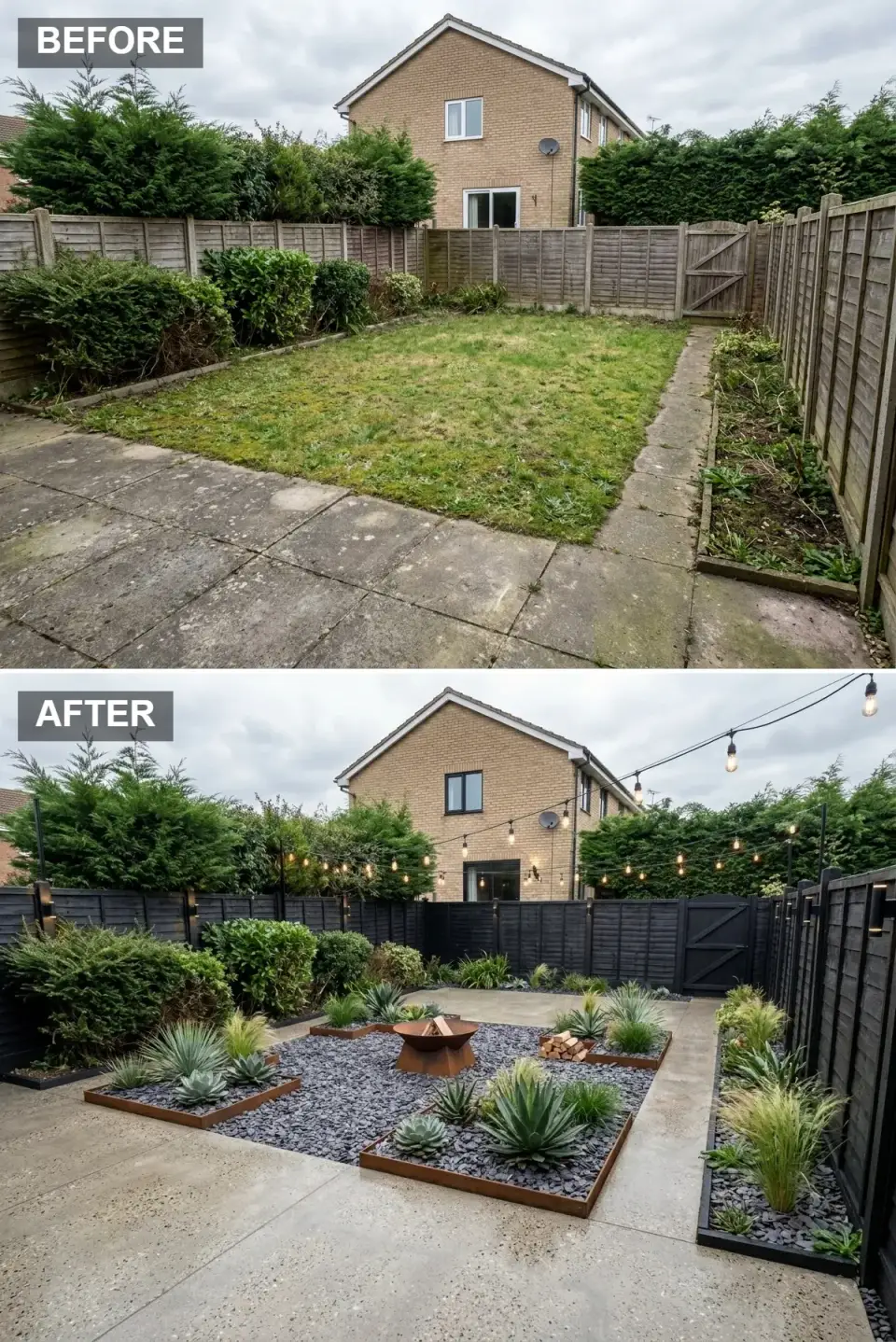
I drew this for a downtown Charleston client whose house is a 2008 modern infill on Society Street, an architecturally edgy outlier on a historic block. The fence is painted Benjamin Moore Black Beauty 2128-10 in exterior eggshell — true matte black for a fence reads as too theatrical, while a slight sheen catches Charleston light and reads architectural. The hardscape is a smooth-troweled and acid-stained concrete pad, sealed twice annually with a penetrating siloxane. Corten weathering steel raised beds (specified from a Greenville fabricator at 24-inch height for visual weight) flank the lounge zone, and a 36-inch matching Corten fire bowl from Magma Firepits sits in the center of the seating circle. The dark slate ground cover is #2 crushed slate from Charleston Stone Yard, set on a compacted base with weed barrier. The festoon lighting is the design move — strung in a zigzag at 9-foot hang height, commercial-grade Wintergreen sets with shatterproof bulbs, on a Caseta-controlled circuit that warms to 2200K at sundown.
Color Palette
#212121
A receding backdrop that makes every other element pop
Polished Concrete
#BDBDBD
Sleek industrial surface with subtle reflectivity
Features Corten Weathering Steel
#B85C38
A warm, textural rust that ages dramatically year over year
Dark Slate Chippings
#474F57
Reinforces the moody palette and improves drainage
Styling Notes for This Look
- Corten steel weeps rust runoff for the first 6-12 months — never install Corten directly on white pavers, light gravel, or a pristine concrete pad without a sacrificial buffer or you will permanently stain the surface. A 6-inch dark slate chip border is the standard buffer.
- Acid-stained concrete in a Charleston backyard needs a penetrating siloxane sealer every 18-24 months; skip a cycle and salt creep and freeze-thaw will craze the surface.
- Festoon lighting strung at 9-foot hang creates a ceiling effect; below 8 feet reads as a tent, above 11 feet disappears into the canopy. Specify commercial-grade sets, not seasonal-holiday strands that fail in two seasons.
- An industrial garden lives in an industrial-adjacent house. Dropping this treatment into a 1928 cottage or an 1850s historic-district lot reads as a rejection of the architecture, not a complement.
Scandi Bright: A Light-Filled Minimalist Escape
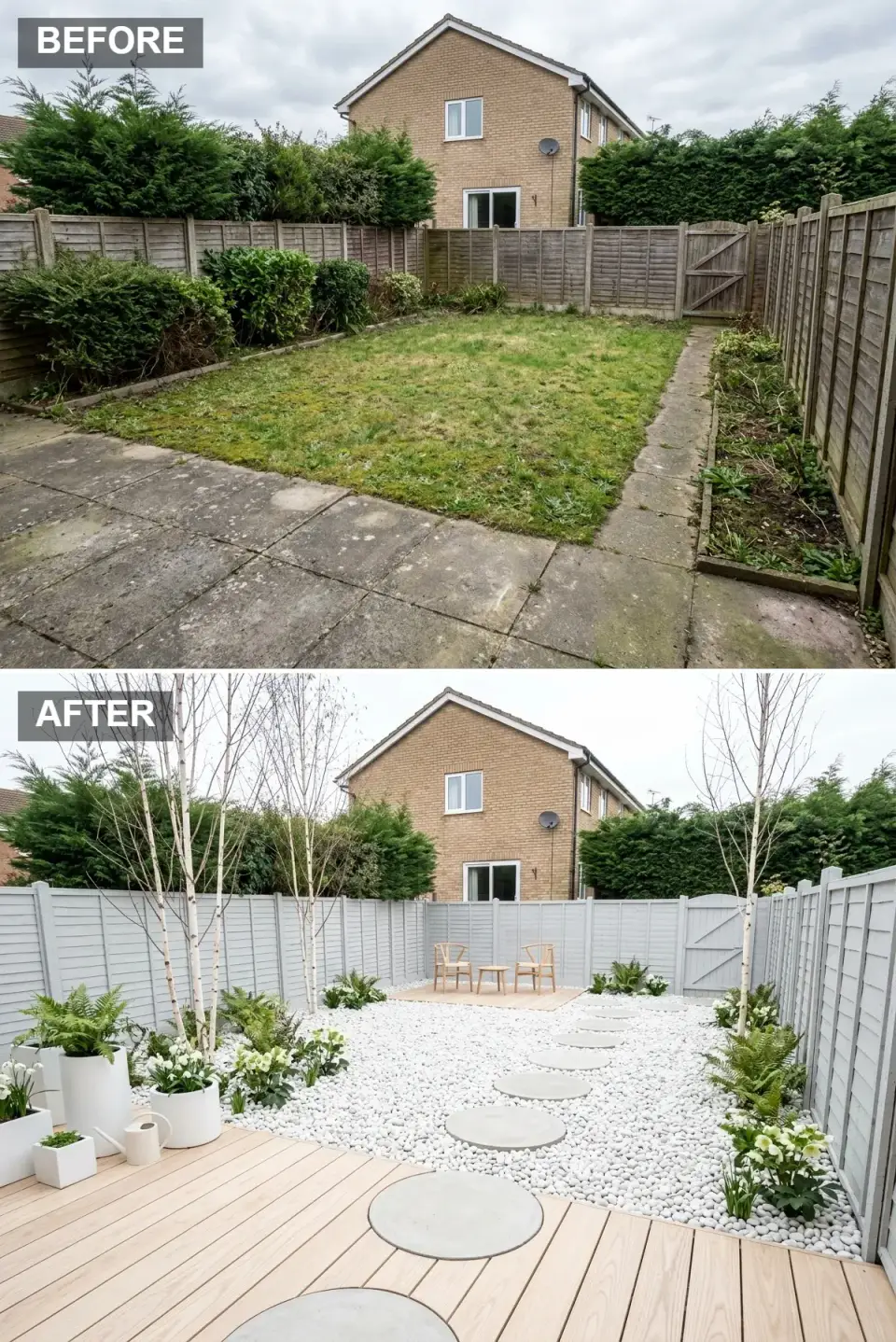
A Daniel Island client who'd lived in Stockholm for six years asked for a backyard that held the same calm she'd built her morning routine around overseas. The fence is painted Benjamin Moore Stonington Gray HC-170 — pale, cool, and the most reliable greige I specify in coastal markets. The deck is FSC-certified white oak from Stuga, finished with Rubio Monocoat 2C in a natural tone — in a Charleston yard with shade cover this finishes a year longer than ipe at half the cost. Furniture is Sweden-correct minimalist: a Skagerak Rib teak dining set or, for a tighter budget, the IKEA Bondholmen line. The ground cover is large white river pebbles with smooth concrete stepping stones from Florensis, and the planting is restrained to a backbone of multi-stem river birch (Betula nigra Heritage — better than European silver birch in Charleston heat), Annabelle hydrangea, ferns, and white-flowering Rosa Iceberg. White Campania Cadiz planters anchor the corners. The whole composition reads serene and airy.
Color Palette
BM Stonington Gray HC-170
#DCDCDC
Maximizes light reflection and creates a calm boundary
#E3CFA3
Essential warmth and natural texture in the bright space
Cover and Planters Pure White
#FFFFFF
Clean, crisp, and bright — the Scandi signature
Smooth Concrete
#CCCCCC
Quiet rhythm without breaking the visual flow
Styling Notes for This Look
- European silver birch (Betula pendula) does not survive Charleston summers reliably — substitute river birch (Betula nigra Heritage), which has the same multi-stem visual read with proper heat tolerance.
- White ground cover stays bright in full sun and stains green in shade. Limit the white pebble specification to seasonal sun zones; switch to decomposed granite in shadier corners.
- Light oak decking in a Charleston yard needs a UV-stable hardwax oil reapplied every 3-4 years. Standard polyurethane yellows in coastal sun within two seasons.
- Multi-stem trees provide screening without the wall effect of solid hedges. Birch and Crepe Myrtle (especially the Natchez and Tonto cultivars) both work; specify five-stem minimum for the right read.
The Jungle Lagoon: Immersive and Lush
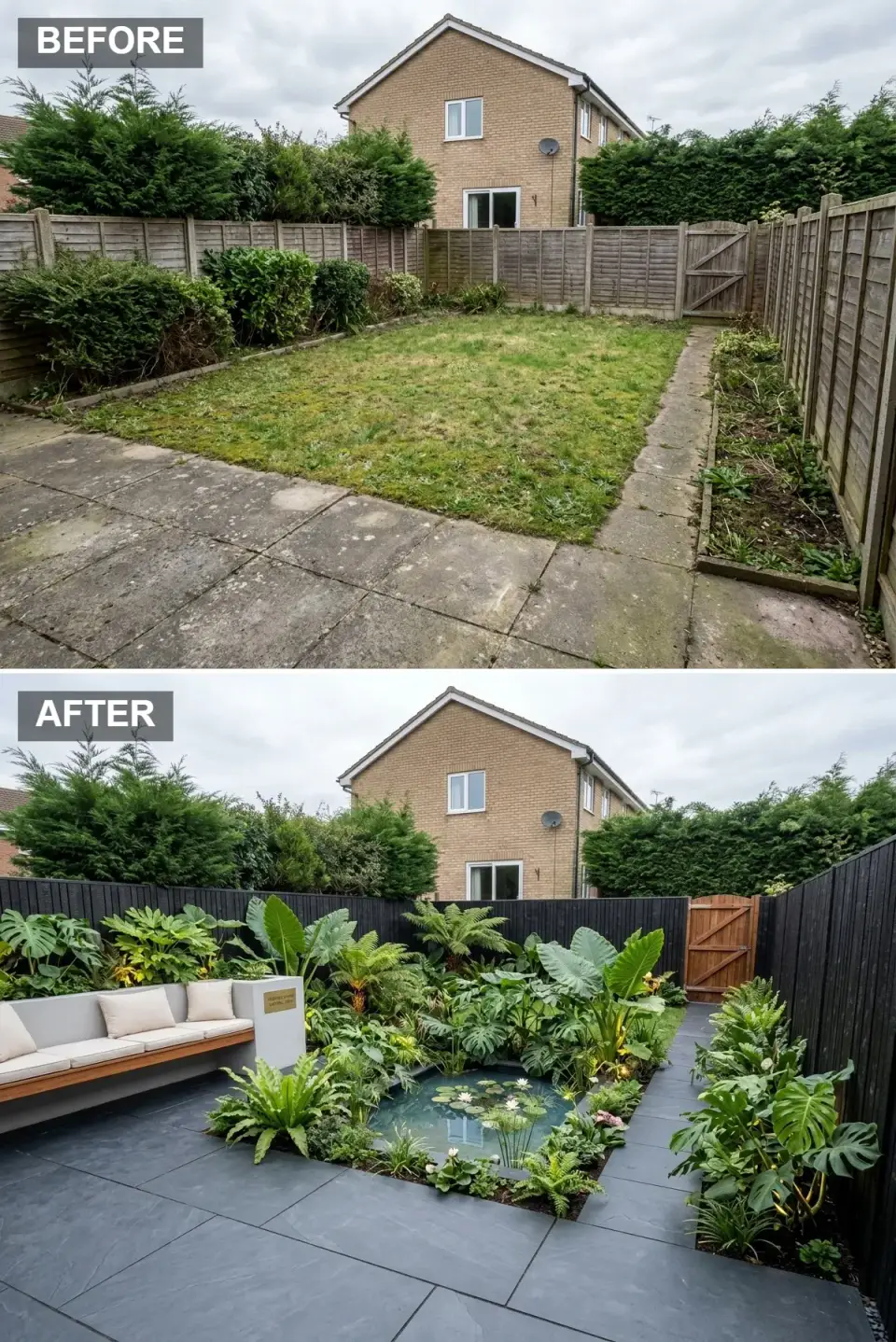
An Edisto Island client wanted her backyard to swallow the house whole on summer evenings — a private green wall instead of a backyard with a view of the next house. The fence is painted Sherwin-Williams Tricorn Black SW 6258 to disappear behind the planting, the move that turns a 25x40 foot lot into a green room. The patio is 24x24 honed dark slate — Tile Bar's outdoor slate or Turkish Mountain Stone — leading to a 6-foot kidney pond with a Aquascape liner and a Beckett pump rated for 1,200 GPH (overspec the pump for the algae control). A built-in 12-foot concrete bench with a warm cypress seat anchors the viewing zone. The planting is the work — gunneras, fatsias, hostas in shade, oakleaf and Annabelle hydrangeas at the layered middle, banana plants and cast iron plants for tropical drama, and a Sabal palmetto as the architectural anchor. Water lilies (white Marliacea Albida) and pickerel weed soften the pond edge.
Color Palette
SW Tricorn Black
#1A1A1A
Vanishes the boundary and intensifies the planted green
Dark Slate Blue-Grey
#4F5B66
Moody natural stone that complements the pond
Structure Smooth Concrete
#999999
A solid modern architectural element under the wood seat
Seat and Gate Warm Cypress
#8F6F4B
A necessary touch of warmth in the cool composition
Styling Notes for This Look
- Black fencing in a lush garden vanishes behind the planting and intensifies every shade of green. Specify exterior eggshell or low-sheen — a true matte chalks within three years in Charleston salt air.
- A pond rated under 1,000 gallons turns green within a season without aggressive filtration. Specify a pump at 1.5x the pond volume per hour and a UV clarifier inline; both pay back in algae prevention.
- Banana plants, fatsias, and gunneras read tropical even in a Zone 8b yard. The trick is layering: ground cover (creeping fig, mondo grass), mid-layer (hosta, fern), upper canopy (banana, Sabal palmetto). Skip a layer and the jungle reads thin.
- A Sabal palmetto (the South Carolina state tree) reads more authentically Lowcountry than a windmill palm or a Mexican fan palm in this composition. Source from a Lowcountry palm farm rather than a big-box.
The Sustainable Sanctuary: Wildflower Meadow and Raised Beds
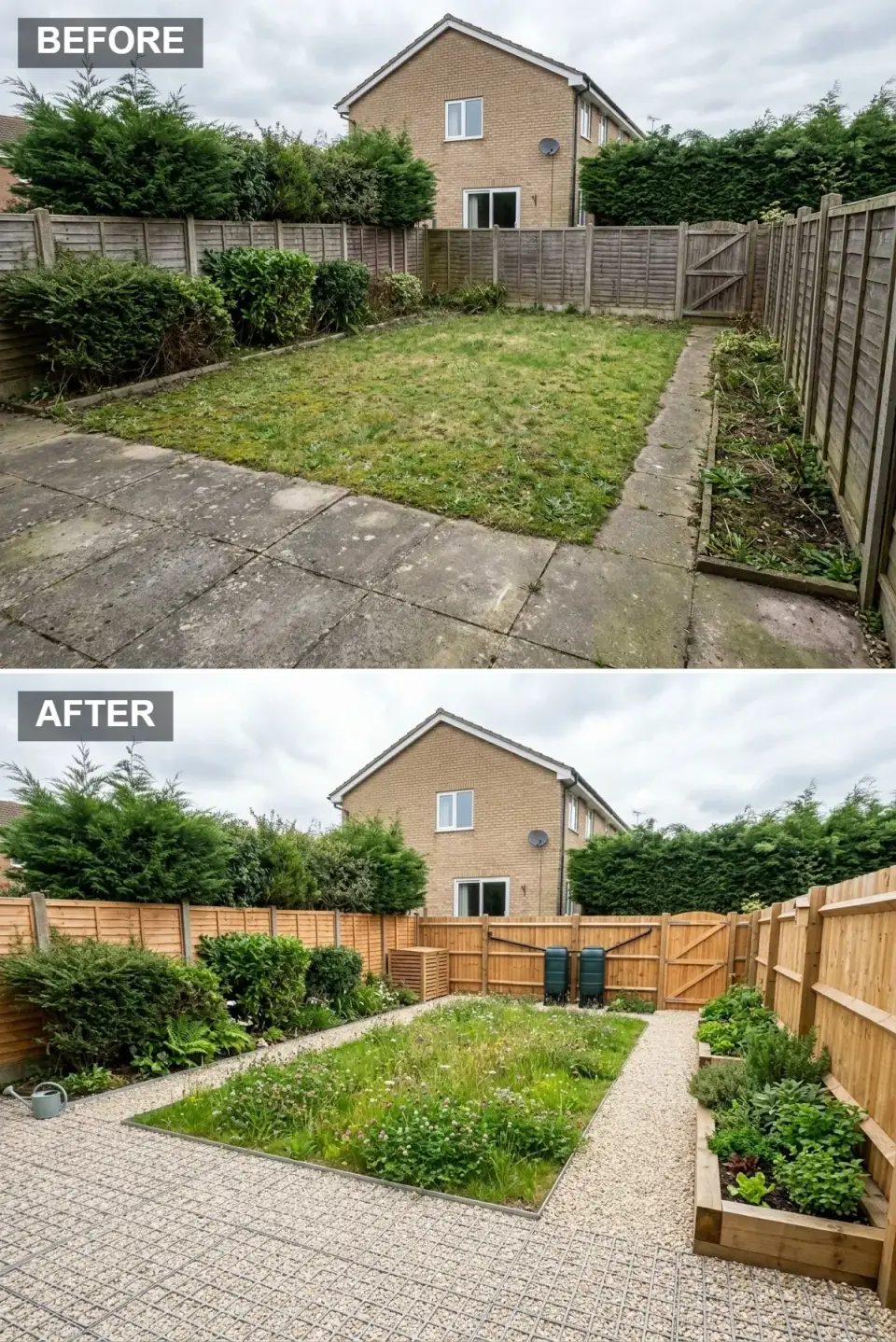
A Wadmalaw Island client with a school-age family asked for a backyard that did three jobs at once — pollinator habitat, kitchen garden, and outdoor classroom. The lawn comes out completely (no grass to mow in a Charleston August is a feature, not a loss) and is replaced with a Lowcountry-appropriate wildflower mix from American Meadows or Eden Brothers — bee balm, coreopsis, black-eyed Susan, partridge pea, native milkweed, with a cool-season overseed of poppies and bachelor buttons. Raised beds are 4x8 cedar sleeper construction at 24-inch height, three of them, planted on the Lowcountry Zone 8b calendar (March: tomatoes, peppers, basil; September: collards, kale, lettuce, Swiss chard). Pathways are stabilized gravel with a TRUEGRID Pro Plus grid base for permeability. Fencing is rough-sawn cypress in the natural finish. Water butts are forest-green polyethylene rain barrels (200-gallon capacity, fed from the gutters), and a wood-slat composter sits in the back corner. The bee count tripled within the first season for the family I drew this for.
Color Palette
#B49B7E
Untreated wood that fits the rustic, sustainable theme
Light Gravel
#E6DBC4
Permeable surface that handles Charleston rain events
#3B5338
Functional rain capture that disappears into foliage
#8F7E66
Functional utility integrated into the design from day one
Styling Notes for This Look
- Lowcountry-appropriate wildflower mixes are different from generic regional blends — specify a Coastal Plain seed source (Carolina Native Nursery, Dixondale Farms, or Eden Brothers Southeast mix) for genuine pollinator success.
- Cedar raised beds at 24-inch height eliminate stooping and outlast pressure-treated pine by three to one in Charleston humidity. Budget a wax bottom-board renewal every 8-10 years.
- Rain barrels are practical, not decorative. Tucking them behind a pollinator border keeps the function without the visual clutter; daisy-chain them with overflow valves for total capacity.
- Wildflower meadow turf in Charleston needs a fall-burn or fall-mow cycle every other year to refresh native seed germination. Skip the maintenance cycle and the meadow reverts to crabgrass within three seasons.
The Outdoor Entertainer: Built-In Kitchen and Lounge
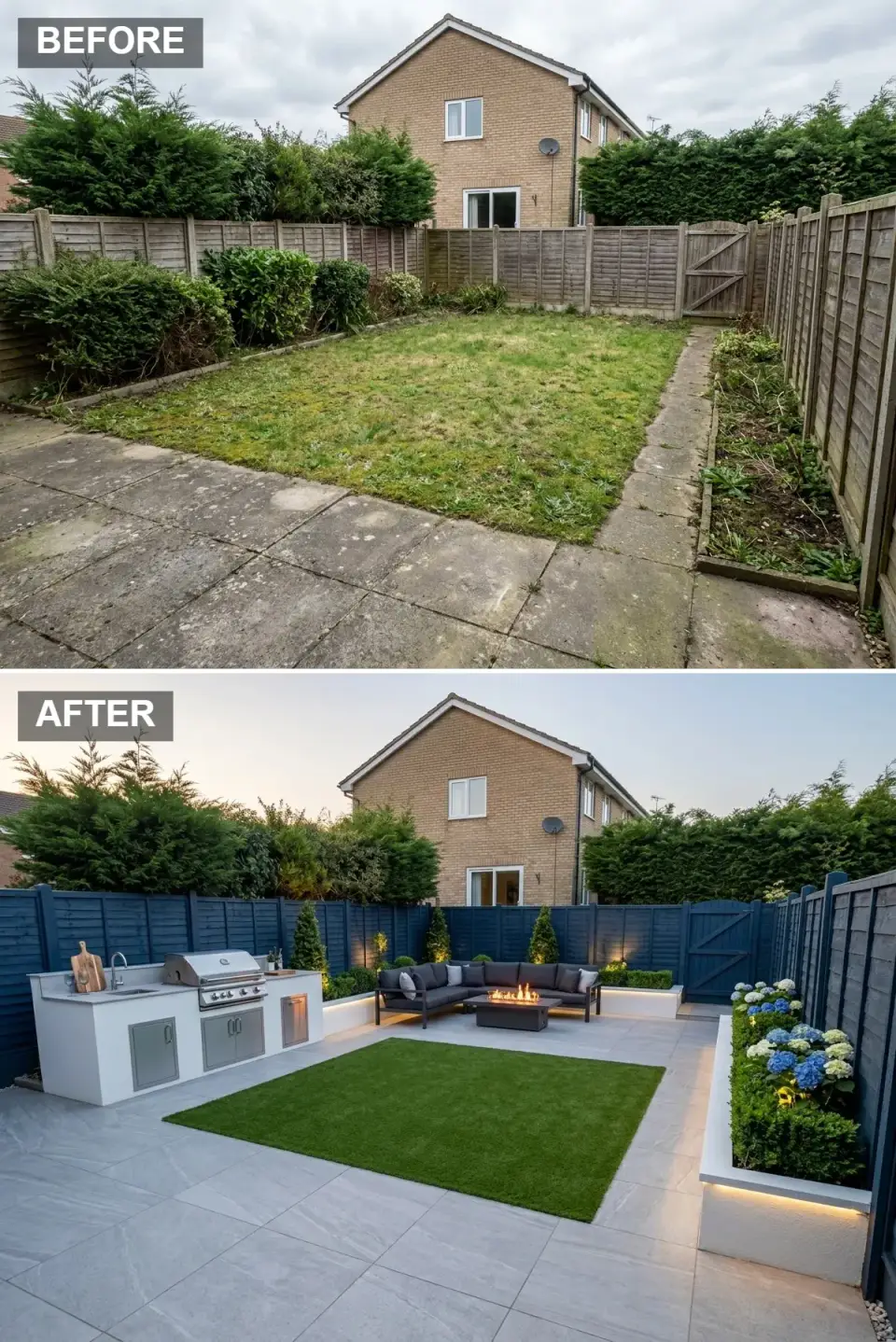
A Kiawah client whose family hosts seven nights a week in summer wanted the backyard to read as a high-end extension of the house, not a backyard with a grill. The footprint is dominated by a custom L-shaped outdoor kitchen — white-rendered CMU block walls, a 96-inch run with a 36-inch DCS or Lynx grill, a 24-inch outdoor refrigerator, an integrated sink, and a Polycor honed granite countertop. The fence is painted Benjamin Moore Newburyport Blue HC-155 — a deep dark blue-grey that reads sophisticated rather than navy-cliche against the white render. The lounge is a Restoration Hardware Provence corner sectional or West Elm Portside teak sectional in Sunbrella greige, arranged around a 48-inch concrete fire pit table. Pavers are 24x24 light grey porcelain on a compacted base. The lawn is 18mm artificial grass (SYNLawn or NewGrass — both rated for pet and child use), framed by white-rendered planters of Endless Summer hydrangeas in true coastal blue. Festoon lighting overhead at 9-foot hang and integrated downlights under the kitchen counter complete the read.
Color Palette
BM Newburyport Blue HC-155
#344152
A deep blue-grey that contrasts sharply with the white render
#F7F7F7
Crisp modern read that makes the kitchen the architectural hero
Light Grey Porcelain
#C0C0C0
Durable, sleek modern flooring that holds up to traffic
Stainless Steel
#E0E0E0
Professional finish on the working surfaces
Styling Notes for This Look
- Outdoor kitchens need a 200-amp electrical sub-panel and a dedicated water line installed before any countertop work begins. Retrofitting the utilities later is the most common $4,000-$8,000 surprise in this build.
- Honed granite or quartzite handles outdoor use; engineered quartz fades and yellows in direct UV within five years. Specify Polycor honed black granite or natural white quartzite, never an indoor-rated quartz brand.
- Artificial grass is a polarizing specification — the right call for high-use entertaining yards with kids and pets, the wrong call for a stylist's-eye showcase yard. Specify a 1.6-inch pile minimum and a polyurethane backing for Charleston UV survival.
- Endless Summer hydrangeas turn true coastal blue in acidic soil (pH 5.5-6.0). Test soil before planting and amend with aluminum sulfate annually if you want the blue to hold; alkaline Charleston soil shifts them to pink without amendment.
Pro Tips From My Project Files
- Treat the fence as a wall, not a boundary. Painting or staining a fence dark (charcoal, black, deep navy) recedes the wall and intensifies plant color; painting it pale (Stonington Gray, Whole Wheat off-white) bounces light. The unpainted yellow-pine 1x6 panel is the single most expensive aesthetic mistake in a Lowcountry yard, because it reads as un-finished even when fully installed.
- Define zones with material change. A backyard that uses one paving material throughout reads as a slab; a backyard that uses three (deck, paver, gravel) reads as a series of rooms. The foot picks up the change before the eye does.
- Lighting is non-negotiable. A Charleston backyard is unusable after dark without intentional layered lighting — ambient (festoon strings, lanterns), task (cooking and dining surface lights), and accent (tree uplighters, fence wash). Builder-grade flood lights ruin every direction above. Specify Caseta-controlled low-voltage LED on a separate circuit.
- Plan for hurricane season. Anything not bolted to the deck or weighing under 50 pounds becomes a projectile in a Category 1 wind event. Specify weighted bases on umbrellas, anchored fire pits, and store cushions inside any time a named storm enters the Atlantic basin.
- Plan for the seven-month rule. Charleston yards are realistically livable from October through April and again in May; June through September the mosquitoes and humidity will drive most clients indoors. Design for the 70-percent of the year you'll actually use the yard, not for the photo shoot.
- Drainage is invisible until it isn't. Every direction above assumes a French drain or dry well system installed before the first paver goes down. Charleston's annual rainfall (51 inches) plus low elevation makes drainage the structural choice that lets all the aesthetic choices survive.
- Specify plants for Zone 8b heat tolerance, not Pinterest. European silver birch, English roses, French lavender, and Japanese maple all appear in the inspiration boards but require thoughtful Charleston substitutions (river birch, Olivia Rose Austin, Provence lavender on a microclimate site, Bloodgood maple in afternoon shade). Skip the substitution and 30 percent of the planting plan dies in year one.
- Soil amendment beats fertilizer. Charleston's native sandy loam holds nothing — water, nutrients, structure all leave the root zone within hours. Amending the planting beds with 4-6 inches of compost (PalmettoPride or Charleston Pride) and a 2-inch hardwood mulch top is the difference between a thriving border and a struggling one.
Regional Fit Across the Southeast
Not every direction above translates to every Southeast market. Climate, soil, salt exposure, and architectural context determine which look reads resolved versus costume. Here is how I match the direction to the geography:
- Charleston, Mount Pleasant, Sullivan's Island, Kiawah: Cottage Retreat, Tropical Luxe, Jungle Lagoon, English Country Charm, and Sustainable Sanctuary suit Lowcountry conditions and architecture. Salt air and 95-percent summer humidity rule out most cool-climate plant specifications without substitution.
- Savannah, Beaufort, Bluffton: Cottage Retreat, English Country, Mediterranean, and Formal Parterre pair with antebellum and Victorian architecture. Avoid Industrial Edge in the historic districts — the architecture rejects it.
- Naples, Sarasota, Palm Beach, 30A: Tropical Luxe, Mediterranean, and Outdoor Entertainer dominate. Strong Florida light flattens dark color schemes; lean toward light palettes and architectural foliage.
- Atlanta, Charlotte, Nashville: Contemporary Cool, Zen Minimalism, Industrial Edge, and Sustainable Sanctuary work in new-construction and intown lots. Atlanta's Decatur and Charlotte's NoDa neighborhoods support the industrial direction; Nashville's East and 12 South favor the contemporary.
- Asheville, Greenville, Hendersonville: Cottage Retreat, English Country, and Sustainable Sanctuary fit the mountain markets, where the architecture often supports cottage and craftsman bones. Tropical Luxe falls flat at elevation.
- Washington DC metro and Richmond: Formal Parterre, English Country, and Outdoor Entertainer suit the Federal and Georgian housing stock; Industrial Edge works in the Manchester-district loft conversions in Richmond.
What Each Direction Actually Costs
These are Charleston-market ranges for a 600-1,200 square foot backyard makeover in 2026 — fencing, hardscape, planting, lighting, furniture, and labor on an existing footprint with no major grading or drainage rework. Naples and Nashville run 8-12 percent higher; Greenville and Asheville run 5-10 percent lower. Major drainage or French drain installation adds $3,500-$9,000. Removing existing concrete adds $2,500-$5,000 depending on disposal distance.
| Direction | Budget Range | Main Cost Driver |
|---|---|---|
| Sustainable Sanctuary | $14,000 - $26,000 | Wildflower turf, raised cedar beds, basic gravel paths |
| English Country Charm | $22,000 - $38,000 | Reclaimed brick patio, layered cottage planting, period bench |
| Cottage Retreat | $24,000 - $42,000 | Willow hurdles, flagstone, timber pergola, layered planting |
| Scandi Bright | $28,000 - $48,000 | White oak deck, river birch, white-painted fence and planters |
| Mediterranean Warmth | $32,000 - $54,000 | Herringbone brick, cypress pergola, terracotta pots, drought planting |
| Zen Minimalism | $36,000 - $62,000 | Slate stepping stones, basalt water feature, charcoal planters |
| Formal Parterre | $42,000 - $72,000 | Patterned tile patio, boxwood parterre, cast-stone planters |
| Industrial Edge | $44,000 - $76,000 | Acid-stained concrete, Corten beds and fire bowl, festoon system |
| Contemporary Cool | $48,000 - $84,000 | Composite deck, large-format porcelain, rendered LED planters |
| Tropical Luxe | $52,000 - $92,000 | Cedar slat cladding, marble-effect porcelain, oversized planting |
| Jungle Lagoon | $58,000 - $108,000 | Pond and pump system, dense layered planting, built-in concrete bench |
| Outdoor Entertainer | $78,000 - $148,000 | Built-in outdoor kitchen, fire pit, artificial turf, full lighting design |
Figures assume an existing yard with a salvageable footprint and mature soil. Major regrading, retaining walls, or a new septic line within the footprint adds $8,000-$25,000. Pool integration adds $45,000-$120,000 separately. Permit and engineering fees in Charleston historic districts add 8-12 percent on top of construction.
Frequently Asked Questions
How long does a full backyard makeover like these take?
In the Charleston market, a 600-1,200 square foot backyard build runs 6-12 weeks start to finish, assuming permits move on time and there is no significant grading or drainage rework. Sustainable Sanctuary and English Country are the fastest at 4-6 weeks because the hardscape is minimal. The Outdoor Entertainer and Jungle Lagoon directions add 4-8 weeks for built-in kitchen utility runs and pond installation respectively. Custom Corten steel fabrication adds 4-6 weeks of lead time.
Which of these directions is the most forgiving for a partial DIY project?
Sustainable Sanctuary is the most forgiving because the labor is mostly soil prep, raised-bed framing, and seed sowing — all skills a confident homeowner can reach in a long weekend with a wheelbarrow and a rented tiller. English Country is second — painting a fence, sweeping in a brick patio, and planting a layered border is a phase-able project across one growing season. The Outdoor Entertainer, Jungle Lagoon, Industrial Edge, and Contemporary Cool directions all require trade-level work (electrical, plumbing, large-format paver installation, custom metalwork) and should not be attempted as a first DIY project.
Will any of these directions date quickly?
The most trend-exposed directions are Industrial Edge and the Outdoor Entertainer because both rely on specific design moments — Corten steel and built-in outdoor kitchens — that read distinctly "early 2020s." Cottage Retreat, English Country, Sustainable Sanctuary, Mediterranean, and Formal Parterre age best because their material and plant logic has held up for centuries. If long-term resale matters, lean toward those five. If this is a forever yard, commit to whichever direction matches how you actually use the outdoor space.
How do I handle drainage in a Charleston backyard makeover?
Start with a drainage plan before any hardscape goes in. Most Lowcountry lots benefit from a French drain along the low-side property line, a dry well at the bottom of any patio downspout, and 1-2 percent slope away from the house in every paver field. Skipping drainage is the most expensive mistake in a coastal yard — it surfaces as paver heave, paint failure, and root rot within two years and requires demolition to fix.
What is the most expensive mistake people make in a backyard renovation?
Pouring a concrete pad before resolving drainage and grading. I have seen clients pay $6,000 for a 12x16 patio that started crowning toward the house within eighteen months because the subgrade was not properly prepared, requiring full demolition and re-grade ($9,000-$15,000) before any aesthetic work could move forward. The second most expensive mistake is specifying plants by Pinterest rather than by USDA Zone — Zone 8b Charleston substitutions are different from Zone 9 Florida or Zone 7 Atlanta, and ignoring the difference kills 30 percent of the planting plan in year one.
Can I mix directions — a Mediterranean patio with Zen planting, for example?
Rarely works. Each of these directions has a coherent material, color, and plant logic, and crossing them usually reads as indecisive rather than layered. The one successful crossover I have drawn is Sustainable Sanctuary with touches of Cottage Retreat — both lean on natural cypress and layered informal planting. Most other combinations fight on the ground. If you love elements of two directions, take the hardscape from one and the planting from the other; never split the architectural surfaces between two competing palettes.
Do I need a landscape designer for a backyard at this scale?
For any direction in the $40,000-plus range above, yes — and not only for aesthetic reasons. A designer's value at this level shows up in trade pricing on plants and hardscape (15-30 percent below retail), correct early specification of drainage and electrical that prevents the expensive mistakes I described in question five, and procurement coordination across plant lead times, custom metal fabrication, and contractor scheduling. A 10-15 percent design fee on a $80,000 backyard pays for itself in trade discounts and avoided mistakes.
Sources and References
- USDA Plant Hardiness Zone Map (2023 Revision) — Zone 8b classification for Charleston, James Island, Mount Pleasant, and the Lowcountry; substitution guidance for cool-climate plant lists.
- Clemson Cooperative Extension Home and Garden Information Center — Lowcountry-specific plant selection, soil amendment guidelines, and pest management recommendations.
- South Carolina Native Plant Society — native pollinator and meadow plant lists for the Coastal Plain ecoregion.
- International Code Council Residential Code (IRC) 2021, Chapter 4 — frost depth and footing requirements for pergola, fence, and retaining wall construction.
- National Concrete Masonry Association (NCMA) Technical Manual — segmental retaining wall and outdoor kitchen CMU construction standards.
- Interlocking Concrete Pavement Institute (ICPI) Specifier's Guide 2024 — paver installation, joint sand specification, and drainage detail standards.
- NFPA 58 Liquefied Petroleum Gas Code — gas line clearance and combustion air requirements for outdoor kitchen LP installations.
- Aquascape and Atlantic Water Gardens Pondless Water Feature Installation Guides — pump sizing, reservoir capacity, and freeze-protection specifications for Zone 8b applications.
- Belgard, Pine Hall Brick, and Old Carolina Brick Company Technical Data Sheets — paver and brick dimensional tolerance, finish, and installation guidelines for Lowcountry humidity.
- Florim StonePeak and Marazzi Outdoor Porcelain Specifications — 20mm exterior-rated porcelain installation, pedestal-set, and sand-set methods.
- SYNLawn and NewGrass Artificial Turf Technical Specifications — pile height, drainage rate, UV stability, and pet-rated infill standards.
- Trex Transcend and Fiberon Paramount Composite Decking Warranty and Installation Guides — fade and stain resistance specifications for direct Charleston sun exposure.
- Remodeling Magazine 2024 Cost vs. Value Report, South Atlantic Region — backyard makeover cost benchmarks for Charleston, Atlanta, Richmond, and Nashville markets.
- RSMeans 2026 Residential Cost Data, Southeast Region — regional labor and material indices for landscape construction.
- Author's project notes and invoice records — Charleston, Mount Pleasant, Sullivan's Island, Kiawah, James Island, Edisto, Beaufort, Savannah, and Asheville client backyard projects, 2018-2026.
Final Thoughts
Twelve directions out of one neglected Lowcountry backyard — and I would happily live in five or six of them myself. The useful exercise here isn't picking the "best" direction; it's seeing how much the same fixed footprint can stretch when you commit to a coherent palette, a single material story, and restraint in the planting. A neglected backyard is not a design problem. It's a blank canvas with the property lines already drawn and the soil already in place.
If you're sorting through your own twelve directions, the same thinking that runs through this study shows up in our twelve-direction backyard makeover guide and our eleven-direction neglected-yard study. For a different scale of the same problem, the thirteen mud-pit-to-paradise transformations walk through the larger-yard variation, and our twelve incredible backyard transformations piece focuses specifically on the planting and lighting decisions that carry the most weight.
Start with the direction that suits your architecture, your climate zone, and how you actually use the outdoor space. Everything else — the fence color, the paver, the pergola, the planting plan — follows from that one decision.

Elise Marchetti
Transformations Editor · Charleston, South CarolinaBefore-and-after projects with the invoices attached. Elise runs the Transformations desk — interiors, exterior facades and outdoor spaces across the Lowcountry and the wider South — and writes up what actually changed, what it cost, and which three decisions moved the room.
More from Elise →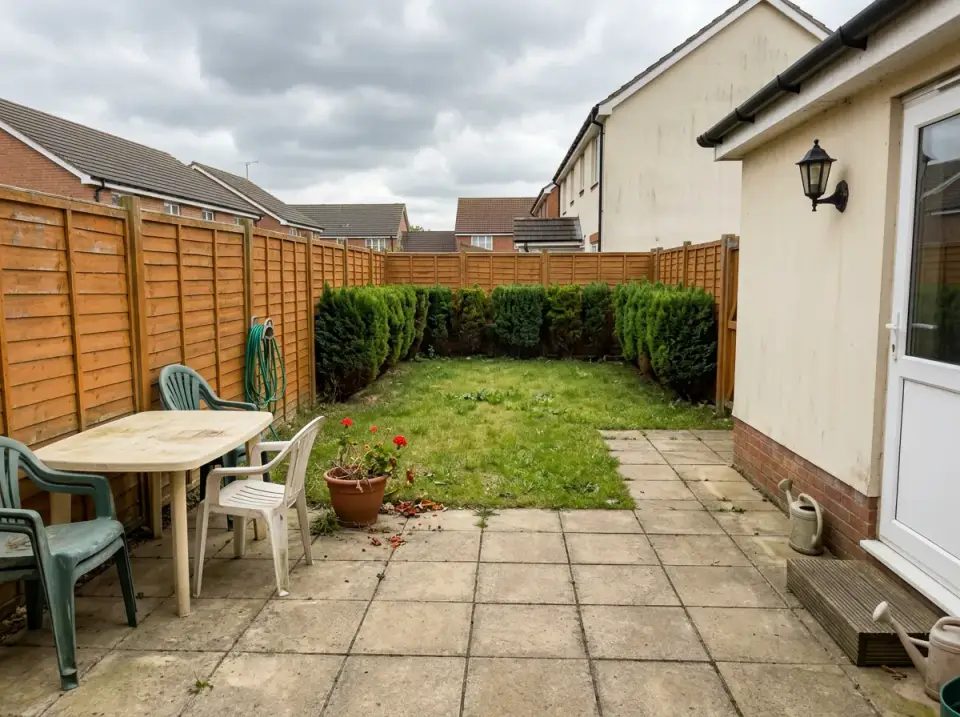
Reader notes