


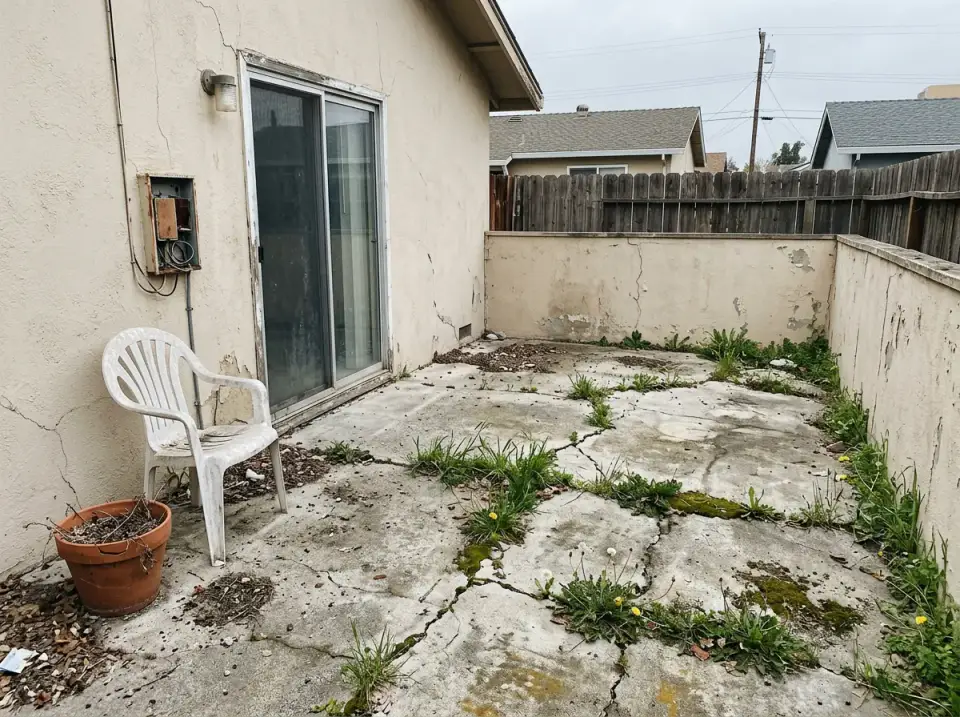
A 35-by-40-foot rectangle behind a West Ashley one-story — concrete slab patio with hairline cracks, a vinyl privacy fence in its tenth summer, and a stretch of compacted Bermuda lawn that hadn't been edged in three years. The owners couldn't agree on a direction, so I rendered eleven. What follows is the same backyard rendered in eleven completely different finishes, with honest notes on what each direction actually costs to install in the Lowcountry, which plant lists survive zone 8b, and which renderings photograph beautifully but stop working by year three. Use it as a planning document for your own yard, not a styled lookbook.
Contents
- 1. English Cottage Garden
- 2. Tropical Getaway with Tiki Bar
- 3. Rustic Zen Retreat with Water Feature
- 4. Sleek Modern Lounge with Fire Pit
- 5. Vibrant Bohemian Courtyard
- 6. Classic Pergola with Wisteria
- 7. Sun-Drenched Mediterranean Courtyard
- 8. Ultra-Modern Minimalist Retreat
- 9. Charming Farmhouse Outdoor Dining
- 10. Breezy Coastal Chill Zone
- 11. Sophisticated Outdoor Living Room
- Pro Tips from the Field
- Frequently Asked Questions
- Sources & References
- Final Thoughts
1. English Cottage Garden
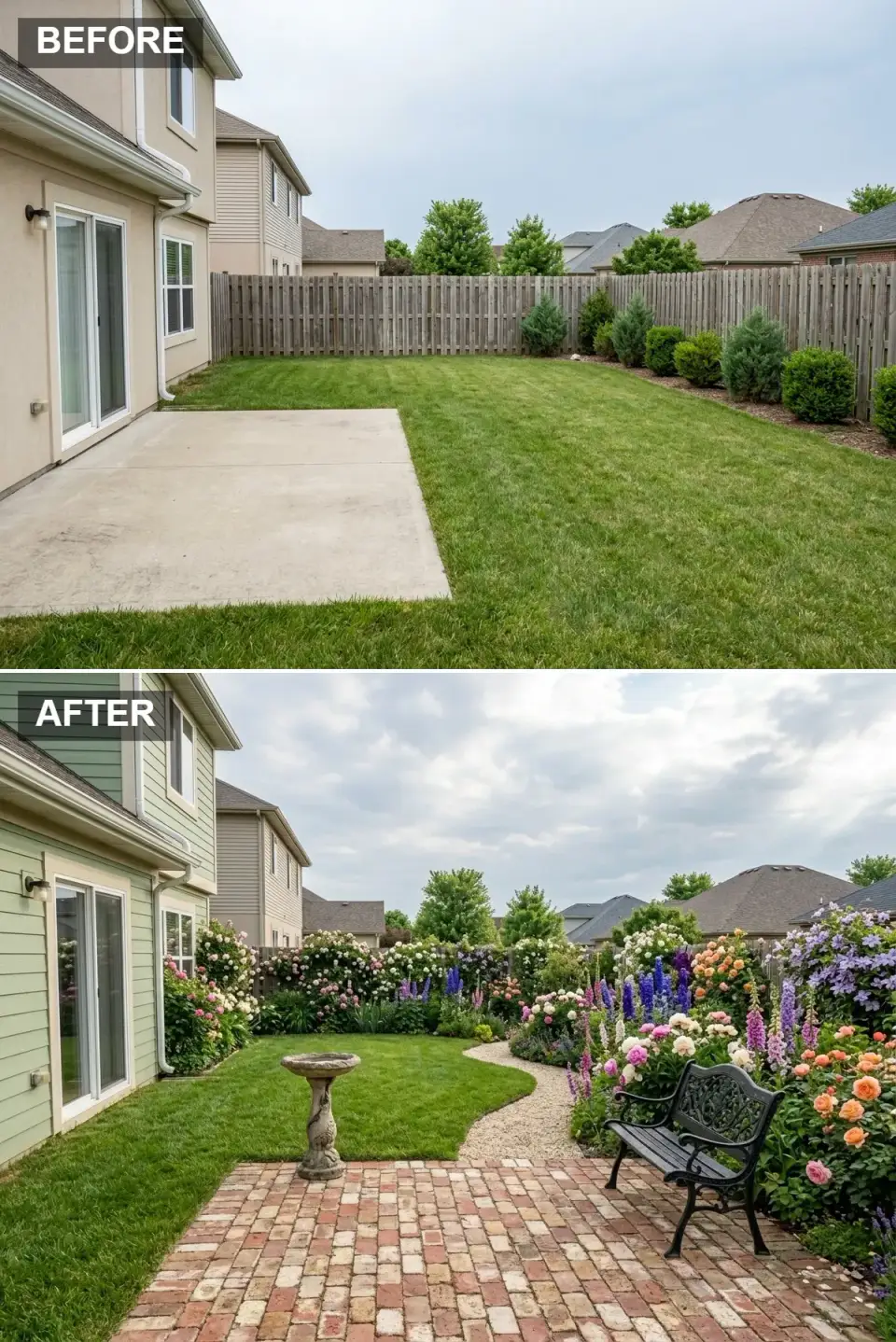
An honest cottage direction in Charleston needs a regional plant edit. The rendering shows roses, hydrangeas, and delphiniums — the first two work beautifully here, the third doesn't. Delphiniums collapse in our July humidity within their first season, so substitute foxglove for the spring vertical and salvia 'Black and Blue' for summer. Antique brick pavers on a sand bed read more authentic than tumbled concrete pavers and develop the right patina against Lowcountry rain. The sage green siding is the move that makes this composition: a soft, slightly grey-toned green reads cottage-romantic while still feeling current — Sherwin-Williams Acacia Haze or Benjamin Moore Pashmina are the two I specify most often. The classic black metal bench is the anchor; I'd choose cast iron with a marine spar finish over powder-coated steel, which chips at every contact point within three winters.
Color Palette
Soft Sage
#A2BFA3
A muted green that recedes behind the planting and never fights the flowers.
Antique Brick
#B37E6D
Tumbled or reclaimed brick laid on a sand bed for that worn, layered patina.
Path Natural Gravel
#D9D2C5
Pea gravel only, never crusher run — softer underfoot and quieter visually.
Matte Black Cast Iron
#2C2C2C
A heavy classic that anchors the planting and reads as found, not bought.
Styling Notes for This Look
- Substitute foxglove and salvia for delphinium in zones 8b and warmer — same vertical, real Southern survival.
- Reclaimed brick from Charleston Brick or salvage yards costs $1.20–$2.40 per brick versus $0.65 for new tumbled pavers, but the patina is unbuyable.
- Curve the gravel path deliberately. A straight path through a cottage garden reads suburban; a slight curve reads English.
- Cast iron benches need wax-paste protection twice a year in coastal humidity, not paint.
2. Tropical Getaway with Tiki Bar
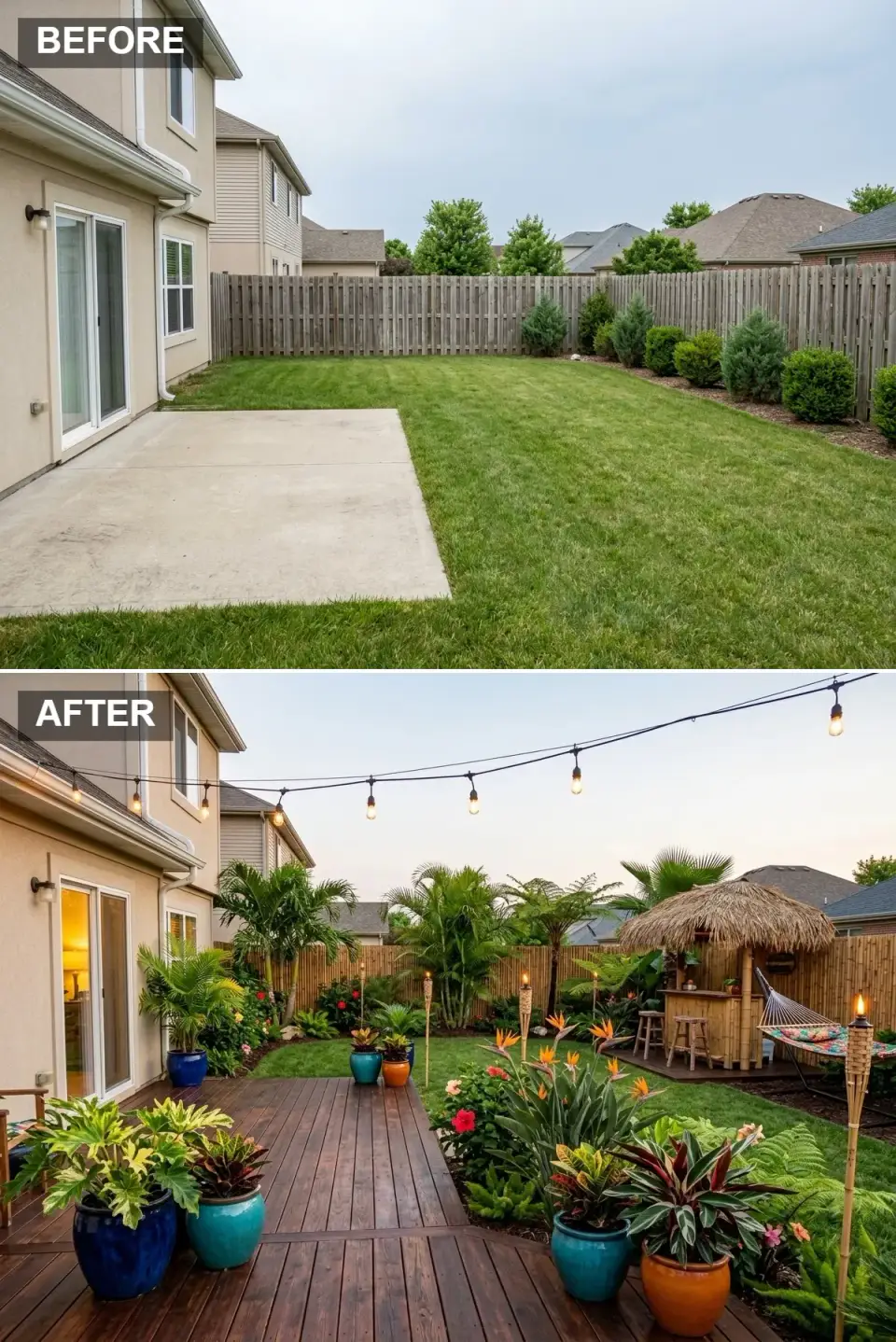
Tropical translates better in Charleston than most clients expect — we're zone 8b coastal, and the cold-hardy palm list is longer than the rendering suggests. Sabal palmetto (our state tree), windmill palm (Trachycarpus fortunei), and needle palm (Rhapidophyllum hystrix) all overwinter without protection. Avoid the queen palms and royal palms shown in stock tropical photography; they don't survive a real Charleston freeze. The bamboo fence cover is the part of this direction that ages worst — bamboo roll over an existing vinyl fence reads great for two summers and starts splitting by year three. If you want the look long-term, plant clumping bamboo (Bambusa multiplex) as a living screen instead. The tiki bar is a permitting question in most Mount Pleasant and James Island HOAs — verify before specifying.
Color Palette
Dark Walnut
#4E3B31
Specify ipe or kebony — both hold this color tone and survive ground contact.
& Bar Natural Bamboo
#D2B48C
Authentic when fresh; expect 3–5 years before sun and humidity show their work.
Pots Ocean Blue
#005B96
Glazed ceramic in a deep ocean blue, three or four pots staged at varying heights.
#FFB347
Warm-white LED string lights at 2400K, not the cooler 3000K usually sold as warm.
Styling Notes for This Look
- Specify cold-hardy palms only: sabal palmetto, windmill, and needle palm. Skip queen and royal palms — they will not survive a Charleston freeze night.
- Clumping bamboo as a living fence beats bamboo roll over vinyl — same look, twenty-year lifespan instead of three.
- Tiki bars trigger HOA review in most Lowcountry neighborhoods. Get the architectural committee letter before you order materials.
- String lights need a GFCI-protected exterior outlet, not a cord run from inside. Code, hurricane disconnect, peace of mind.
3. Rustic Zen Retreat with Water Feature
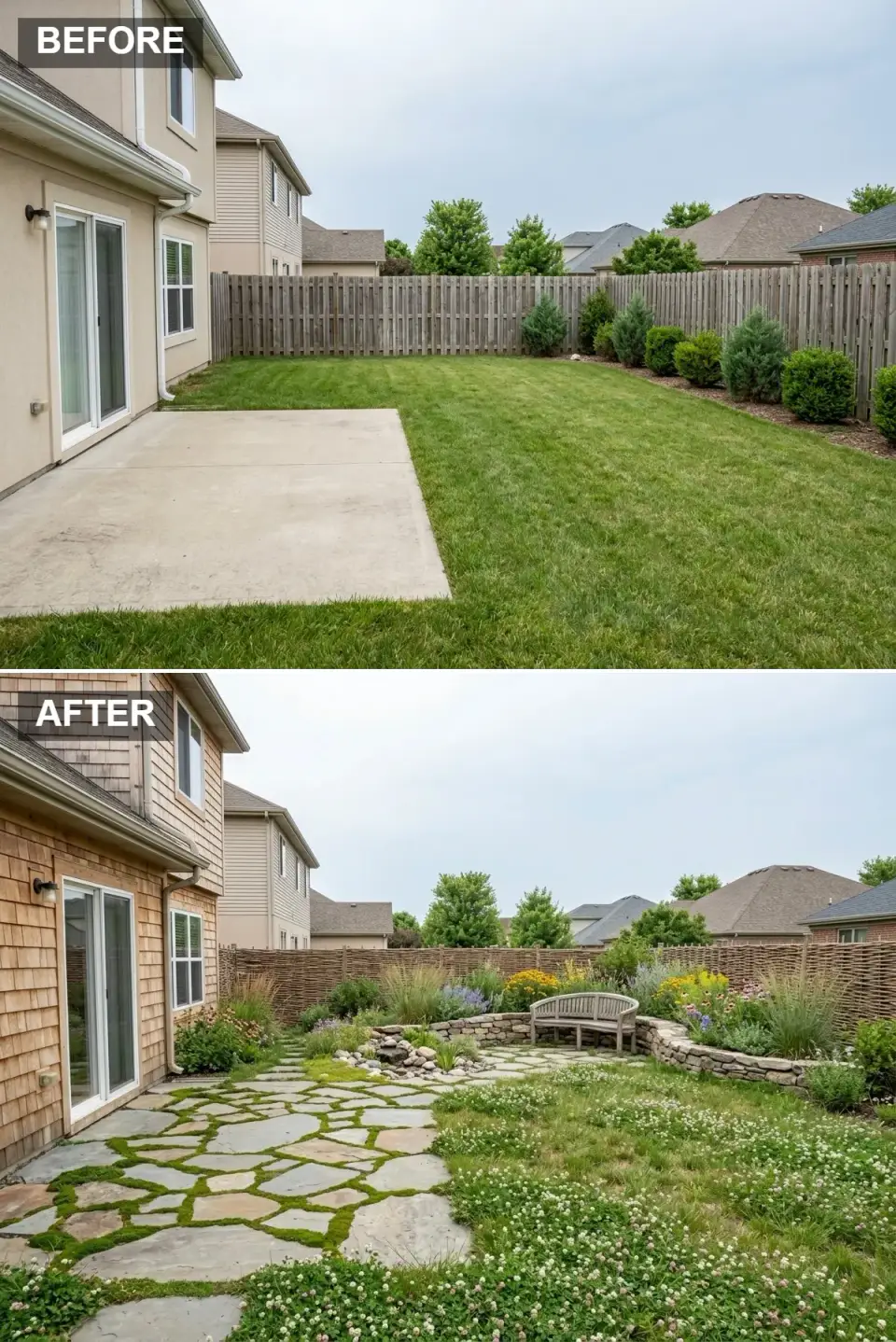
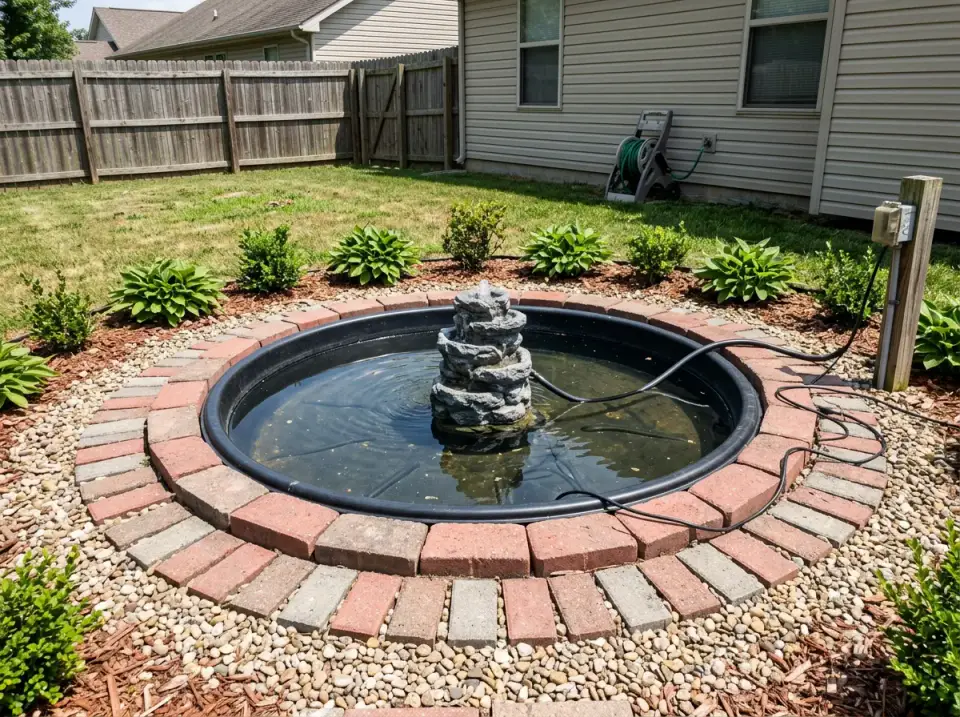
Irregular flagstone with moss-filled joints is the most beautiful patio surface I specify, and the most location-dependent. Moss requires consistent shade and consistent moisture; full-sun yards in Charleston will cook the moss out by mid-July no matter how aggressively you water. Reserve this look for north-facing yards or yards under mature canopy. Cedar shake siding is gorgeous in Charleston but needs a borate treatment for termites and a clear penetrating sealer every three to four years — budget the maintenance honestly. The dry-stack stone wall with integrated bench is the smartest detail in this rendering: built-in seating doesn't blow away in a hurricane and never needs to be dragged inside before a tropical storm. A small bubbling rock costs $850–$2,200 installed (pump, basin, electrical) and is the single most calming addition to any Lowcountry backyard.
Color Palette
Cedar Shake
#A8886B
Western red cedar shakes, borate-treated, sealed clear and resealed every 3–4 years.
& Wall Varied Flagstone
#8C8C82
Tennessee fieldstone or Pennsylvania bluestone — irregular shapes, mixed greys and tans.
Weathered Teak
#9E8A72
Grade A teak silvers gracefully outdoors and outlasts every alternative.
Joints Moss Green
#4F6D3A
Irish moss or Scottish moss between joints — only viable in shade.
Styling Notes for This Look
- Moss joints work only in shade. Full-sun yards need polymeric sand or fine gravel between flagstones instead.
- A bubbling rock water feature is the highest emotional ROI in this entire list. Run the pump line in conduit during install — retrofitting is a pain.
- Native grass plant list for the Lowcountry: muhly grass, switchgrass, little bluestem. Skip Mexican feather grass (winter dies in zone 8b).
- Built-in masonry seating eliminates hurricane prep entirely. Always recommend it over freestanding when budget allows.
4. Sleek Modern Lounge with Fire Pit
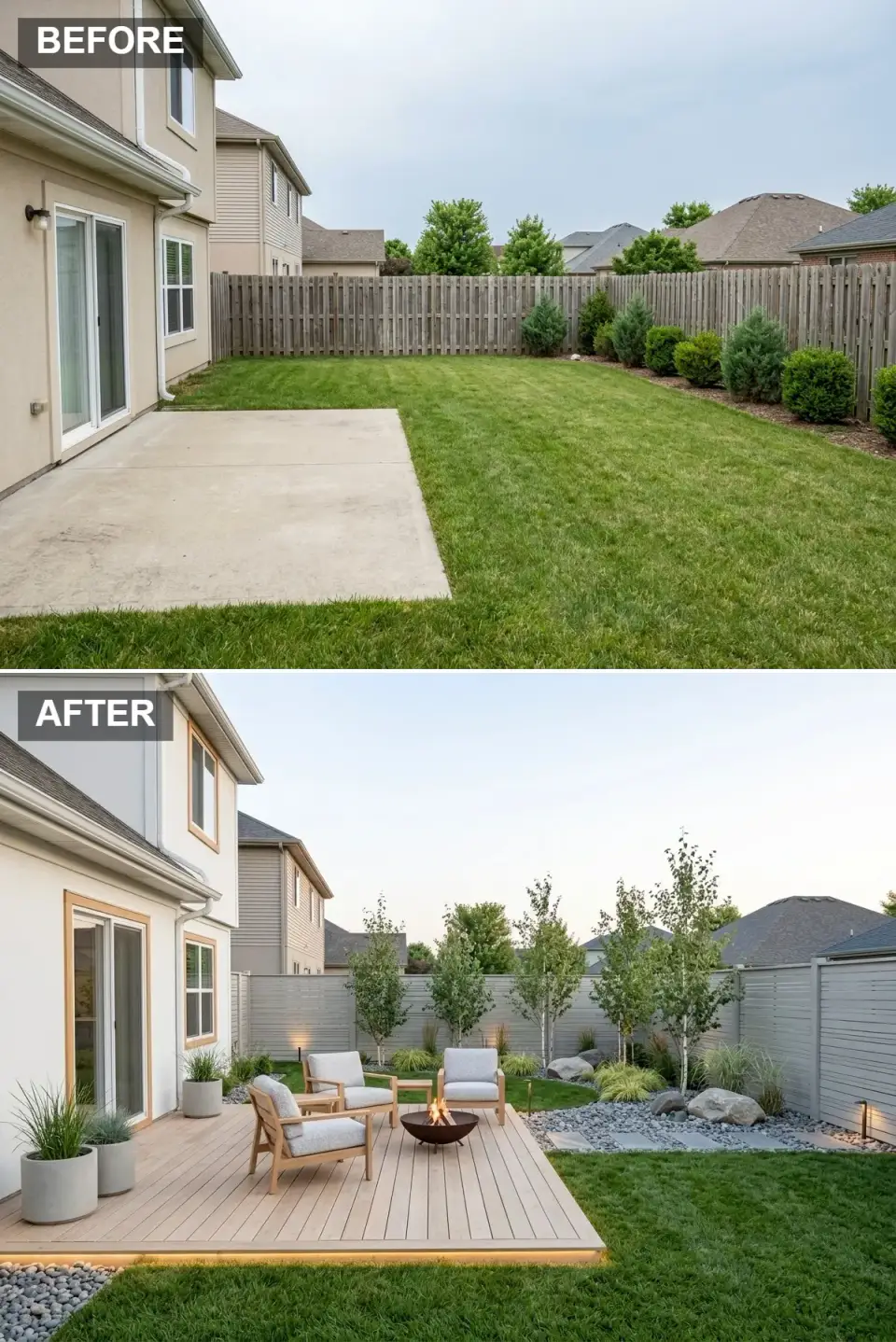
The integrated LED step lighting in this rendering is the highest-impact $400 line item I add to outdoor projects — it transforms how the space reads at night and prevents the missed-step incident on a wine-blurred summer evening. Specify warm-white 2700K LEDs, not the cooler 3000K usually sold as warm; the difference is noticeable. The horizontal grey slat fence is correctly contemporary but needs a critical detail the rendering glosses over: a 1.5-inch gap between slat and structural frame so air can move through and the slats don't trap moisture. Without that gap, the fence rots from the inside in five years. The biggest plant correction here: birch trees fail in Charleston. River birch (Betula nigra) is the regional substitute — same papery bark, native, humid-tolerant. The clumping form is what you want, not the single-trunk landscape variety.
Color Palette
Light Oak
#CBBFA3
Thermally-modified ash or kebony stays this tone with a yearly clear-seal coat.
Cool Grey
#8F959B
Powder-coated metal slats over a treated frame — no painting, no rot.
Charcoal Steel
#363636
Heavy-gauge steel bowl, gas-line ready. Solo Stove and Tymber Cove are the two I specify.
Pale Grey Sunbrella
#D1D1D1
Four matching chairs, Sunbrella performance fabric — the one outdoor textile that survives.
Styling Notes for This Look
- River birch, not paper birch. Native to the Southeast, clumping form, papery bark, won't die in summer.
- Integrated LED step lighting is roughly $40–$80 per fixture installed during a deck build, $150+ retrofitted. Do it during construction.
- Horizontal slat fences need 1.5-inch ventilation gap between slat and frame. Without it, the fence rots from inside.
- Gas-fed fire pits beat wood-burning in HOA neighborhoods — no smoke complaints, instant on/off, no ash cleanup.
5. Vibrant Bohemian Courtyard
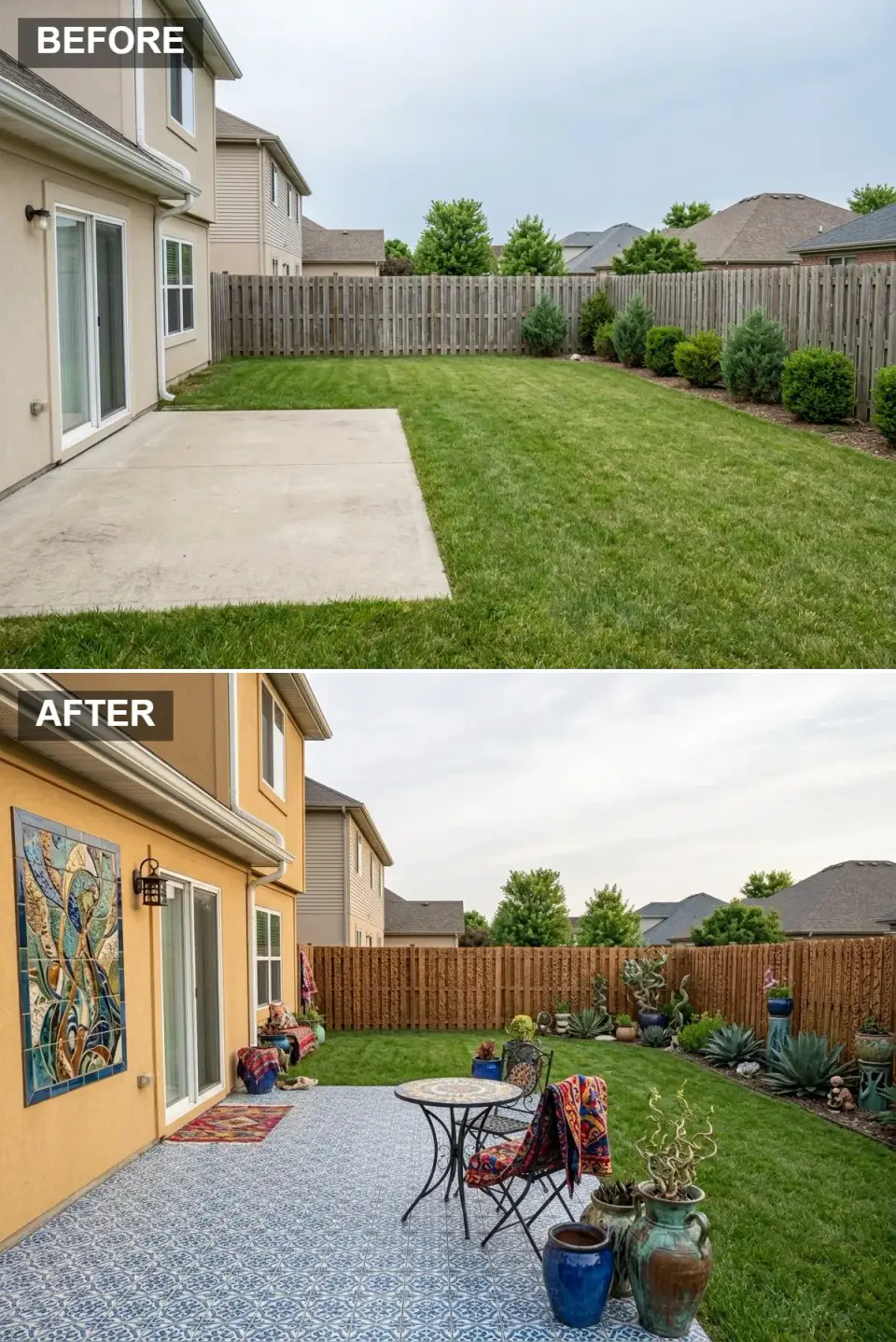
Patterned tile in a Charleston outdoor courtyard is gorgeous and demands the right tile. Encaustic cement tiles look the part but require sealing every 18 months in our humidity and discolor under standing water; for full-exposure outdoor floors, I specify a glazed porcelain printed with the encaustic pattern instead — it survives our rain without compromise. The terracotta wall colour reads beautifully but stucco painted terracotta in the Lowcountry needs an elastomeric coating, not standard exterior latex, to handle the wall's expansion-contraction cycle. The mosaic art piece is the moment to support a regional artist — Charleston, Savannah, and Beaufort all have working tile mosaicists doing custom commissions in the $1,800–$5,500 range, and a commissioned piece outvalues a stock mural every time.
Color Palette
Floor Blue & White Tile
#0048BA
Glazed porcelain printed with encaustic pattern — outdoor-rated freeze-thaw tile.
Warm Terracotta
#C06C40
Elastomeric coating over stucco — never standard exterior latex on wall masonry.
Texture Carved Wood
#7B5438
Sandblasted cedar or routed sapele panels for real depth and grain reveal.
Decor Jewel Tones
#A91B0D
Ruby, sapphire, and emerald in textiles and pottery — never all three on one rug.
Styling Notes for This Look
- Outdoor patterned tile must be glazed porcelain rated IPX5 or higher. True encaustic cement only works under cover or in covered courtyards.
- Commission the wall mosaic from a regional artist. The conversation about it lasts longer than the wall.
- Bohemian goes wrong when every surface is patterned. Pick one hero (the tile) and let textiles repeat its colors quietly.
- Outdoor rugs need a polypropylene weave — never wool or cotton. Replace every 3–4 years and accept that as part of the look.
6. Classic Pergola with Wisteria
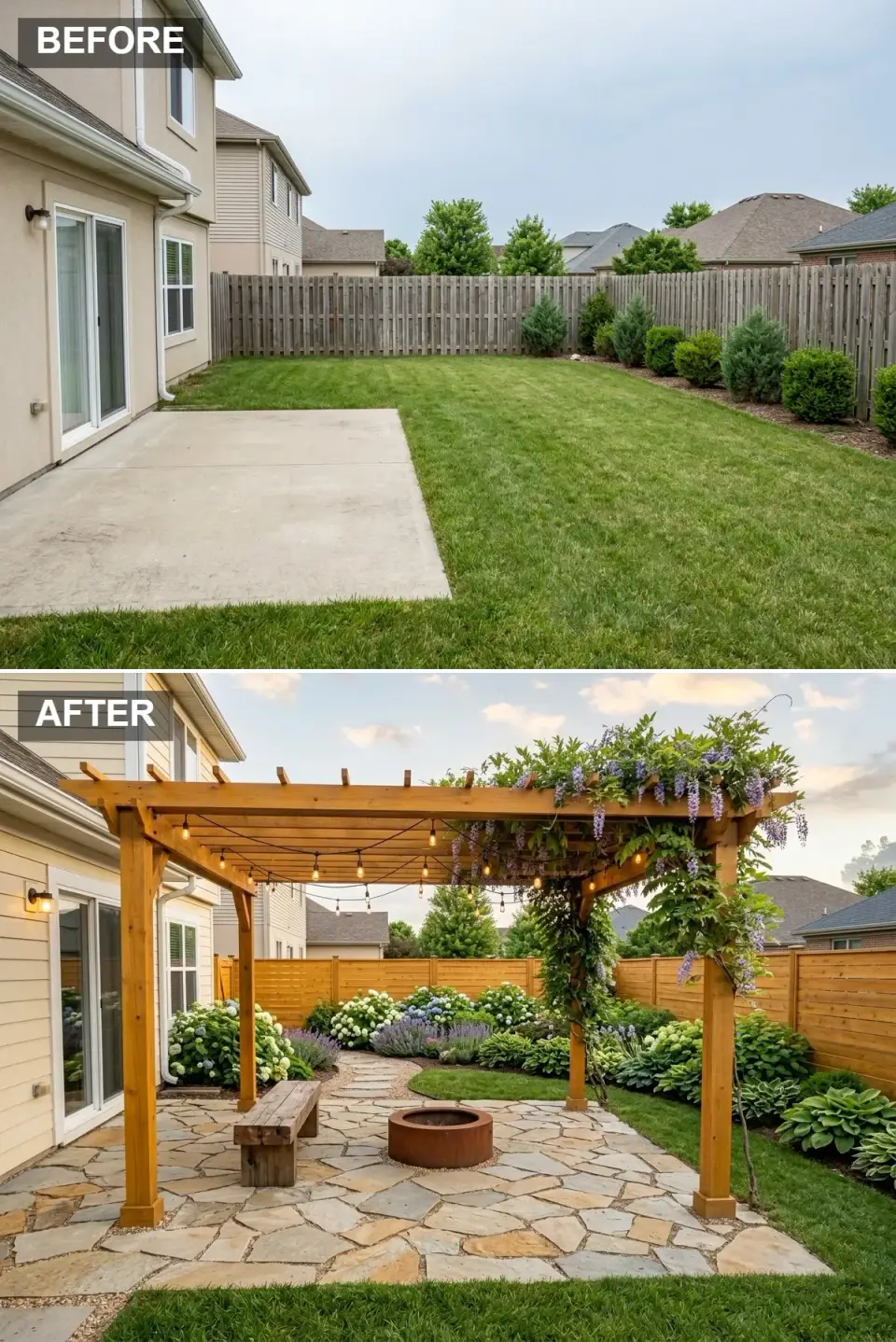
A wisteria-draped pergola is one of the most photographed Lowcountry garden directions and one of the most commonly mis-specified. The Asian wisteria (Wisteria sinensis) sold at every box-store nursery is invasive in the Southeast and will rip a pergola apart with vine torque inside ten years. American wisteria (Wisteria frutescens, especially the cultivar 'Amethyst Falls') is the regional correction — native, well-behaved, and still spectacular in bloom. The pergola itself wants to be cedar or treated southern yellow pine with a stained finish; box-store kit pergolas in pressure-treated lumber warp within two summers. The plant list around the pergola needs a Lowcountry edit too: hostas struggle in zone 8b heat. Substitute heuchera, autumn fern, and cast iron plant for the same shade-textural effect with real survival here.
Color Palette
Structure Golden Cedar
#B88C51
Western red cedar, semi-transparent stain. Avoid pressure-treated kit pergolas.
Tan Flagstone
#BDB095
Pennsylvania bluestone in tan family or Tennessee fieldstone, mortared joints.
Rusted Steel
#7F452F
Corten steel ring, gas insert, fire-brick core for actual durability under flame.
#6D5B46
Reclaimed white oak or cypress, oiled annually with tung oil rather than varnished.
Styling Notes for This Look
- American wisteria (Wisteria frutescens 'Amethyst Falls') over Asian wisteria. Native, non-invasive, won't tear the pergola apart.
- Substitute heuchera, autumn fern, and cast iron plant for hosta. Real Lowcountry heat tolerance, same textural read.
- Engineer the pergola for vine load — mature wisteria adds 200–400 pounds of weight. Box-store kits aren't built for it.
- Mortar your flagstone joints. Sand-set joints in a Lowcountry rain pattern wash out within three years of foot traffic.
7. Sun-Drenched Mediterranean Courtyard
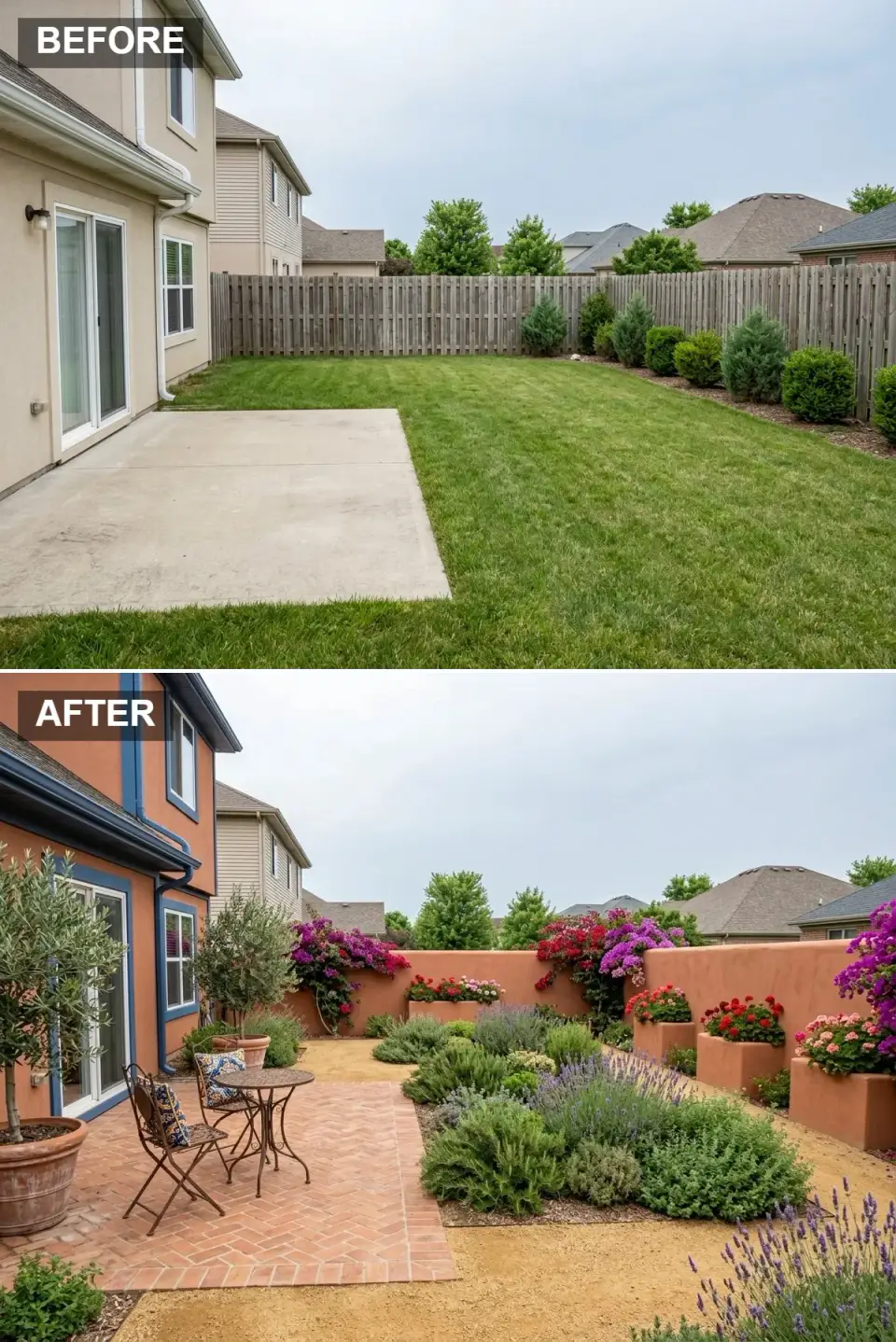
The Mediterranean direction is one I've specified more often in Charleston than anywhere else outside Naples — the south-facing courtyard plant palette translates remarkably well to our climate. Olive trees survive zone 8b in the ground if you choose Arbequina or Mission cultivars; a 25-gallon pot is the safer specification for a first-time owner. Bougainvillea is reliably hardy here against a south-facing wall with overhead protection from the worst freeze nights. The plant correction in this rendering is lavender — true English lavender (Lavandula angustifolia) rots in our humidity. Spanish lavender (L. stoechas) and rosemary deliver the same silver-foliage effect with real Lowcountry hardiness. Herringbone brick is the right pattern for this direction; specify it mortared on a concrete slab, not sand-set, or every Charleston downpour relays your patio.
Color Palette
#B55B3F
Integral-color stucco beats painted stucco — color holds when the wall inevitably cracks.
#003366
A classic contrast that defines architectural lines and reads Mediterranean immediately.
Classic Brick Red
#8C4130
Mortared herringbone over concrete — reliable through Lowcountry rain seasons.
& Pots Earthenware Clay
#A97C5B
Real terracotta from Italy or Mexico — frost-fired, not the soft greenware sold cheap.
Styling Notes for This Look
- Arbequina or Mission olive trees over generic nursery olives. Real cold tolerance, real fruit if pollinator pairs are planted.
- Spanish lavender and rosemary substitute for English lavender in the Lowcountry. Same silver foliage, real survival.
- Mortared herringbone brick on a concrete slab — never sand-set in this climate.
- Integral-color stucco hides the inevitable hairline cracks. Painted stucco shows every one of them after the first hurricane season.
8. Ultra-Modern Minimalist Retreat
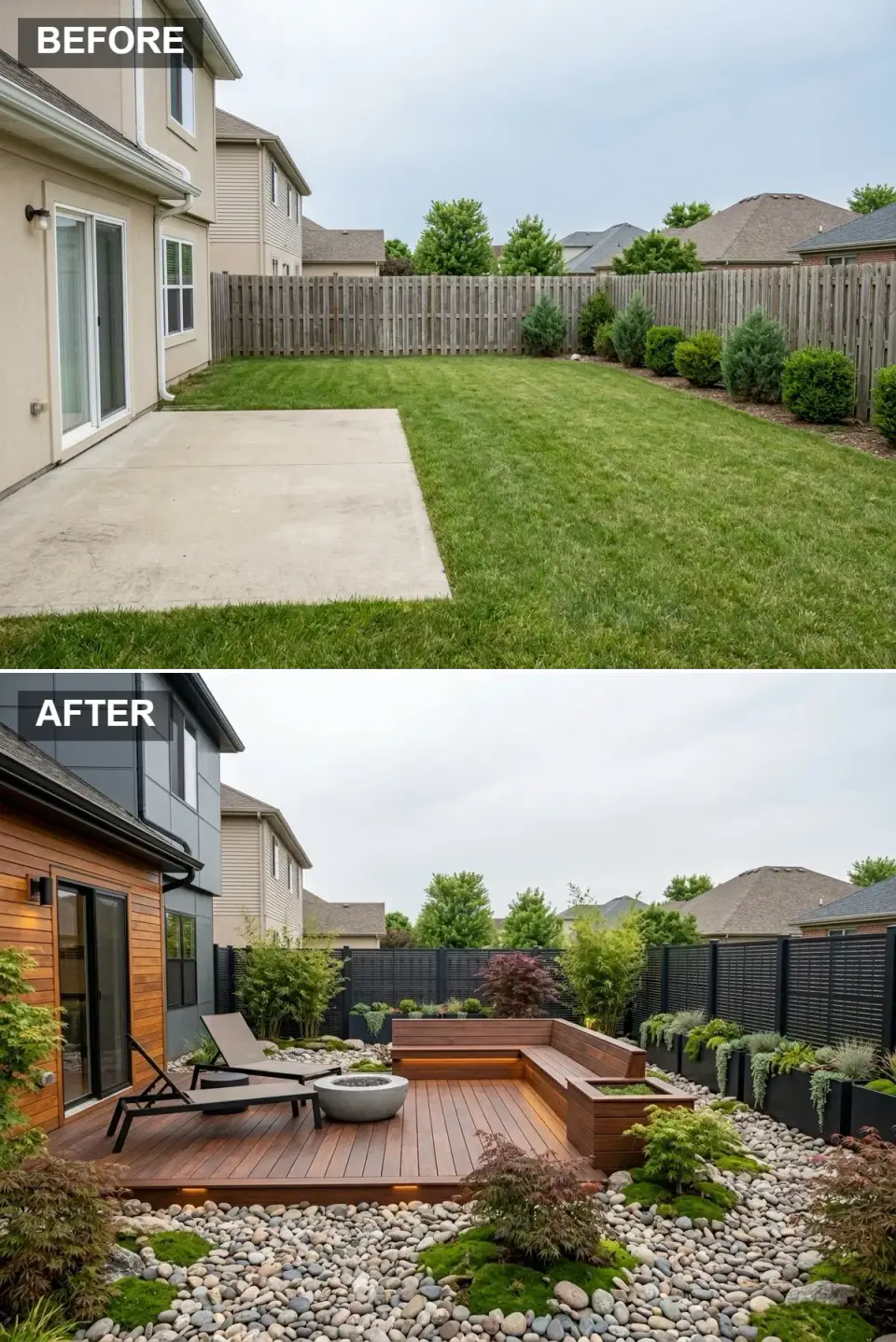
The most graphic and committed direction here, and the one with the biggest hidden cost trap: dark wood and matte-black surfaces in Charleston afternoon sun reach 150°F and stress every material they touch. Specify ipe or thermally-modified ash if you want the dark wood look — both hold up; pressure-treated lumber stained black does not. The Japanese maple (Acer palmatum) wants partial shade and afternoon protection in zone 8b, so siting matters: under canopy on the north or east side of the yard, never west-facing in full sun. The grey river stone ground cover is low-maintenance in concept and a leaf-trap nightmare in practice — specify a landscape fabric underneath and plan for an annual blower-out cleanup. The minimalism in this rendering reads as luxury only when the material specs are honest; cheap substitutes age into hardware-store backyard within five years.
Color Palette
& Siding Dark Ipe Wood
#3D2B1F
Ipe holds the deep tone with annual oil; thermally-modified ash is the lower-cost alternate.
& Accent Siding Matte Black
#1A1A1A
Powder-coated metal slats only. Painted wood at this color repaints every five years.
Smooth Concrete
#7A7A7A
Cast concrete with a glass-fiber additive — handles freeze-thaw without spalling.
Grey River Stone
#696969
1.5–3 inch river stone over commercial-grade landscape fabric. Plan annual cleanup.
Styling Notes for This Look
- Ipe or thermally-modified ash for dark decking. Pressure-treated lumber stained black warps within two summers in our humidity.
- Site Japanese maples under canopy or on the north-east side of the yard. Full west sun will scorch them by mid-July.
- River stone ground cover needs landscape fabric under it and annual leaf-blower cleanup. Budget the time.
- Black-painted wood reaches 150°F surface temp on a Lowcountry summer afternoon. Specify metal slats or aluminum-clad wood instead.
9. Charming Farmhouse Outdoor Dining
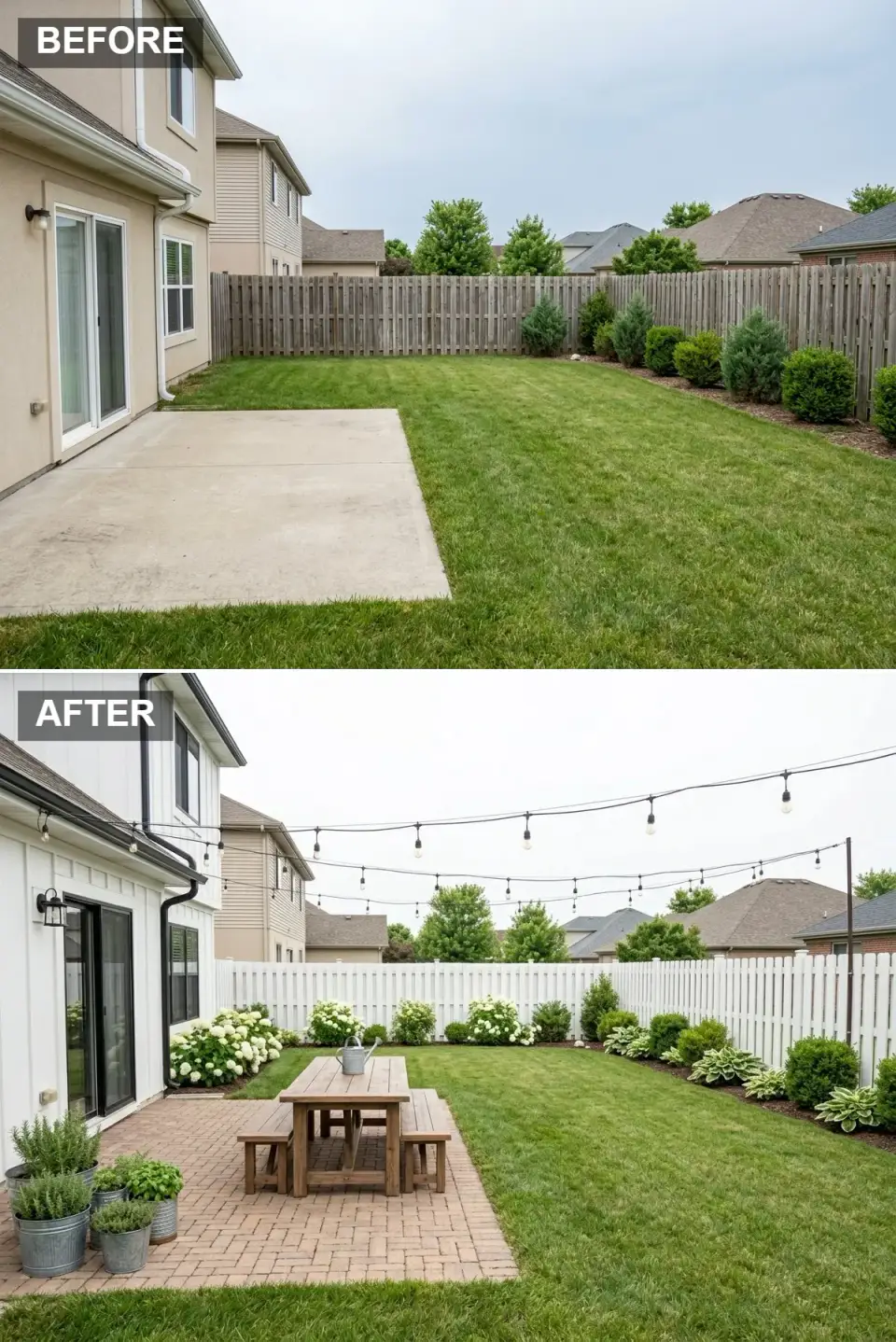
White board-and-batten with black trim is the most-requested farmhouse exterior in the Charleston metro right now — I've worked on six of them in the past two years. The detail that separates a real Southern farmhouse from a Pinterest-board version is the trim profile: a wide 5–6 inch flat board behind a 3–4 inch projecting batten reads correctly; the narrow vinyl batten kits sold cheaply read suburban no matter how white the paint. The reclaimed wood farmhouse table is the heart of this composition; specify it with breadboard end caps to limit seasonal cupping, and accept that a real reclaimed table will check (split) along the grain over time — that's the patina, not a defect. White picket fences in the Lowcountry need every-three-year repaint cycles; the brilliant alternative is a solid-stained Cape Cod grey, which reads as honest and saves you the maintenance.
Color Palette
Clean White Board-and-Batten
#F0F0F0
Benjamin Moore Simply White or Sherwin-Williams Pure White — read warmer in afternoon sun.
White Picket
#FFFFFF
Real wood picket — repaint every three years, or stain Cape Cod grey for lower maintenance.
Reclaimed Oak
#8B5A2B
Reclaimed white oak, breadboard end caps, oiled with tung oil annually outdoors.
Traditional Brick
#A0522D
Reclaimed Charleston or Savannah brick gives the right texture and history.
Styling Notes for This Look
- Wide flat board with projecting batten reads as authentic Southern farmhouse. Vinyl narrow-batten kits read suburban.
- Reclaimed wood tables will check along grain over time. That's patina. Sealing them never works.
- Limelight panicle hydrangeas tolerate full sun in the Lowcountry. Mophead hydrangeas need afternoon shade.
- Cape Cod grey solid-stain on a picket fence cuts repaint cycles from 3 years to 8 years and reads honest, not lazy.
10. Breezy Coastal Chill Zone
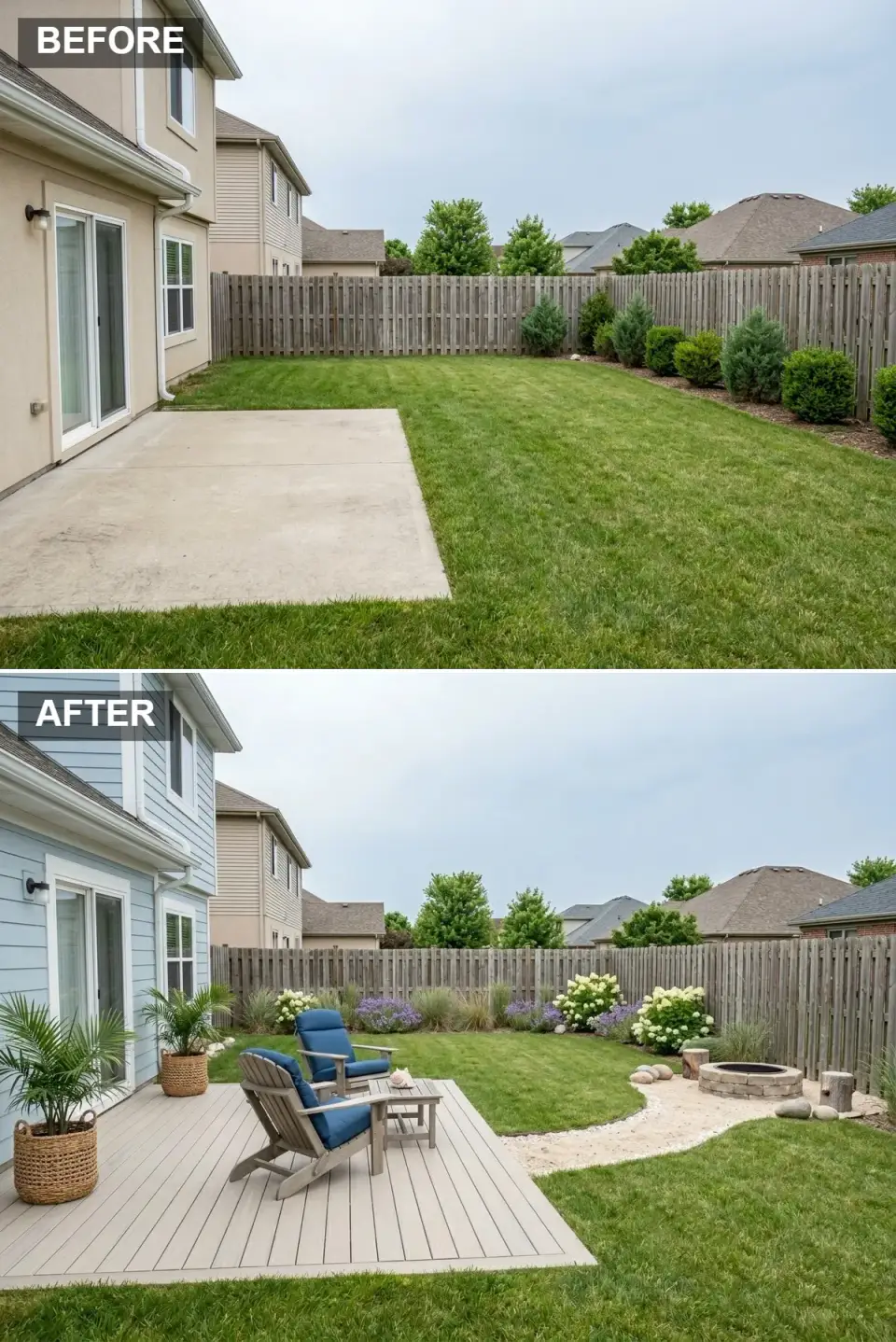
This is my home territory — Charleston, Folly Beach, Sullivan's Island, Outer Banks. The light blue and driftwood grey palette reads coastal-grandmother on every beachfront block from Naples to Cape Cod. The honest caution: pea gravel as a primary walking surface fails in heel-and-stroller households. Specify decomposed granite (DG) or self-binding gravel for paths people actually walk on; reserve pea gravel for the fire-pit zone, where you sit more than walk. Adirondack chairs in genuine teak will silver to a beautiful driftwood grey in 18 months and last 25 years; painted Adirondacks need annual touch-ups and look tired by year five. The composite deck is correctly specified for coastal exposure — Trex Transcend or TimberTech Azek both handle the salt air without warping. White hydrangeas (Annabelle for shade, Limelight for sun) are the right plant choice; deciduous, easy, regionally honest.
Color Palette
Sky Blue
#A4BFCF
Sherwin-Williams Atmospheric or Benjamin Moore Iceberg — soft, salt-air-tested.
Driftwood Grey Composite
#B0B0B0
Trex Transcend in Island Mist or TimberTech Azek in Coastline — salt-air rated.
Area Sandy Pea Gravel
#CDC0B0
Pea gravel only in the fire-pit zone — DG or self-binding gravel for paths.
& Fire Pit Weathered Teak & Stone
#7F8C8D
Genuine teak silvers to driftwood grey in 18 months and never needs paint.
Styling Notes for This Look
- Decomposed granite for walking paths, pea gravel only in seating zones. The path-vs-zone distinction matters.
- Genuine teak Adirondacks beat painted ones long-term. Silvering is the look — let it happen.
- Trex Transcend or TimberTech Azek for coastal decks. Salt-air rated, no warping, 25-year warranty.
- Annabelle hydrangeas tolerate shade; Limelight panicles handle full sun. Choose by orientation, not by color preference.
11. Sophisticated Outdoor Living Room
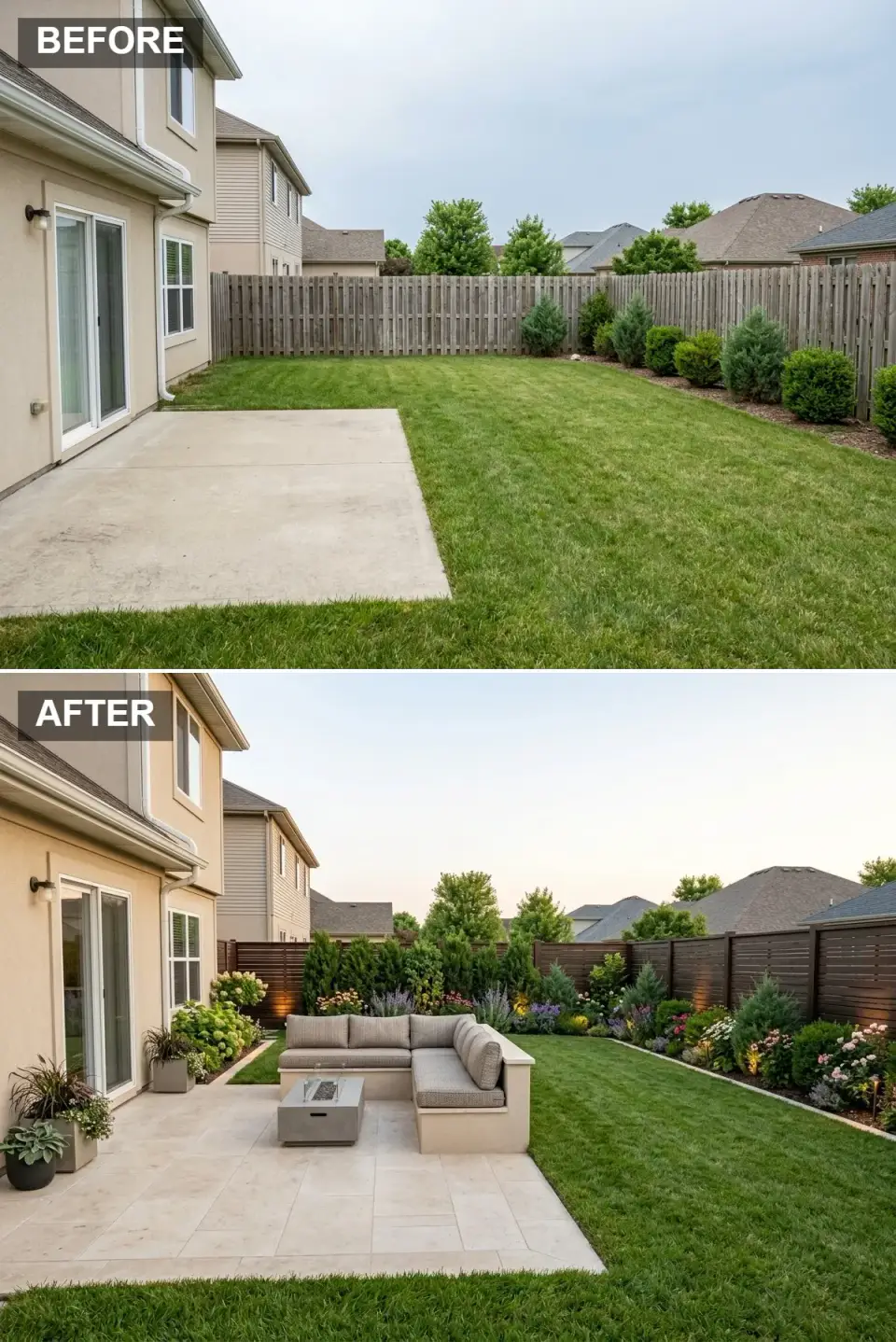
The most luxurious direction on the list and the one I'd execute only with proper exterior-grade specs. Large-format porcelain tile pavers (the 24x48 size shown in the rendering) need a 20mm thickness, not the 10mm interior tile clients sometimes try to substitute — exterior pavers handle freeze-thaw and point loading; interior tile cracks under furniture legs within a season. The built-in sectional is a genuinely permanent commitment ($14,000–$32,000 to fabricate, depending on cushion specification), so the layout has to be right the first time; mock it up in plywood for a full weekend before you pour the masonry. The integrated fence lighting is the high-ROI detail — low-voltage strip LED behind the slats reads expensive at night without ever being visible during the day. Sunbrella performance fabric is the only outdoor textile I specify for built-in cushions; everything else fades or molds within two seasons of Charleston humidity.
Color Palette
Beige Porcelain Tile
#D6CFC0
20mm exterior porcelain pavers in 24x48. Never substitute interior tile thickness.
Dark Espresso Wood
#3F3024
Stained sapele or thermally-modified ash with integrated low-voltage LED strip lighting.
Cushions Greige Sunbrella
#A9A199
Sunbrella performance fabric only — the one outdoor textile that survives Charleston humidity.
Polished Concrete
#8C8C8C
Cast concrete with glass-fiber additive, gas-fed flame, marine-grade burner ring.
Styling Notes for This Look
- 20mm exterior-rated porcelain pavers only. Interior tile thickness cracks under furniture point loads within a season.
- Mock up the built-in sectional in plywood for a full weekend before pouring masonry. Permanent layout, permanent regret if it's wrong.
- Low-voltage LED strip behind fence slats is the night-time signature of this direction. Run conduit during fence build, not after.
- Sunbrella for every cushion. No cotton blends, no acrylic-cotton, no exceptions in coastal humidity.
Pro Tips from the Field
- Solve drainage before you design. The single biggest reason Lowcountry backyard transformations fail in year two is unresolved drainage. Before any paving, planting, or seating goes in, make sure water has somewhere to go in a Charleston summer thunderstorm. A $2,800 French drain at the design stage beats a $14,000 retrofit after the patio is in.
- Zone your yard like an interior floor plan. A 1,200 sq ft backyard with one seating area reads as a patio; the same square footage with three distinct zones (lounge, dining, planting) reads as outdoor rooms. Level changes, surface changes, and planted screens all do the zoning work without walls.
- Outdoor lighting returns more on every dollar than any other line item. Budget 10–15% of the total project for warm-white string lights, signature uplighting, low pathway fixtures, and task lighting at any cooking surface. The day-to-night transformation is what people remember.
- Specify climate-appropriate plants, not rendering-appropriate plants. At least three of the eleven directions above include plant lists that fail outright in zone 8b without regional substitutions. Cross-check every plant against the USDA hardiness map — the rendering doesn't care when the lavender rots in July.
- Hurricane-anchor every freestanding element over 18 inches. Planters, pergolas, umbrellas, fire pits, large pots. Category 1 winds move anything not physically secured to a footing or a slab. A $40 ground-anchor kit costs less than one replaced planter.
- Run irrigation conduit before plants go in. Drip irrigation at original build runs $1,800–$4,800 depending on yard size; retrofitting after planting is established costs 2.5x because of access issues. The cheapest moment to install is before the first plant arrives.
- Keep one element from the original yard if you can. An existing live oak, a mature gardenia hedge, a usable concrete pad. Preserving one mature element gives the renovation a relationship to the lot that a full teardown never achieves — and it shaves real money off the scope.
Frequently Asked Questions
How much does a full backyard transformation actually cost in Charleston and the Lowcountry?
The range is wide by direction and finish level. A budget-conscious transformation working with existing bones (Direction 1 Cottage Garden, Direction 5 Bohemian) lands $9,500–$24,000. A mid-budget hardscape build with new paving, fencing, planting, and lighting (Directions 4, 6, 9, 10) runs $32,000–$72,000. Full-build directions with custom concrete, built-in seating, integrated lighting, or fire features (Directions 2, 7, 8, 11) are $75,000–$195,000+ depending on finish level. Always get three written bids from licensed Lowcountry landscape contractors before committing.
Which of these eleven directions hold up best in Charleston's climate?
Directions 1 (Cottage), 6 (Pergola), 7 (Mediterranean), 9 (Farmhouse), and 10 (Coastal) are the strongest fits for Lowcountry climate and material longevity once the regional plant substitutions are made. Direction 3 (Rustic Zen) works beautifully but requires shade and willing maintenance. Direction 8 (Minimalist) works only with proper material specs (ipe, metal slats, modified ash) — it fails fastest with cheap substitutes.
Can these transformations be done in stages or does it have to be all at once?
Most can be staged in this order: drainage first, then hardscape and structural elements, then fencing, then built-ins, then planting, then furniture, then lighting. Drainage and any built-in masonry must come first because retrofitting later means tearing up finished work. Staging across two or three seasons typically saves 18–25% versus all-at-once execution because the homeowner can self-project-manage labor across the breaks.
How long does a backyard transformation take in the Charleston metro?
Smaller paint-and-plant directions are 3–6 weeks. Mid-scope hardscape projects with permitting are 8–14 weeks. Full-build projects with built-in sectionals, gas-fed fire features, or integrated outdoor kitchens run 14–24 weeks. Always add 4–6 weeks to the contractor's first estimate for Charleston permitting, HOA architectural review, and weather delays. Hurricane season (June–November) reliably adds another 2–4 weeks to any active project.
Do I need a landscape architect or is a good landscape contractor enough?
For paint-and-plant directions and simple paver patios, a strong landscape contractor with a design eye is plenty. For projects involving built-in masonry, drainage engineering, gas-fed fire features, outdoor kitchens, or integrated lighting, retain a licensed landscape architect or pair the contractor with a civil engineer for the drainage plan. Licensed landscape architect fees on residential work in this market run $4,200–$13,000 — typically the best-spent dollars in the project.
How do I select materials that survive Lowcountry humidity and salt air?
Specify mildew-resistant integral-color stucco, marine-grade stainless or HDPE for any outdoor cabinetry, breathable penetrating sealers on concrete and stone, ipe or thermally-modified hardwood for ground-contact lumber, and Sunbrella-only for outdoor textiles. Composite decking should be salt-air rated (Trex Transcend, TimberTech Azek). The regional material premium runs 12–20% above standard residential spec and pays back within four to six years through avoided replacement costs.
How much does a backyard transformation add to a Charleston home's market value?
According to Remodeling Magazine's 2024 Cost vs. Value Report South Atlantic data, a well-executed backyard transformation in Charleston, Savannah, and similar Southeastern coastal markets returns 70–82% of project cost at resale — competitive with mid-range interior renovations. The day-to-day use value over the typical ten-year ownership period usually exceeds the eventual resale premium. NAHB's most recent home-buyer surveys consistently rank outdoor living among the top three most-wanted features in this region.
Sources & References
- Remodeling Magazine, 2024 Cost vs. Value Report — South Atlantic regional figures for hardscape, deck, and outdoor-living ROI.
- USDA Plant Hardiness Zone Map (2023 update) — zone 8b/9a specifications for Lowcountry and coastal South Carolina plant selection.
- NAHB Economics, What Home Buyers Really Want, 2024 Edition — survey data on outdoor-living priorities among Southeastern buyers.
- Clemson Cooperative Extension, South Carolina Home Landscape Plant Guide — regional plant selection for residential gardens.
- International Residential Code (IRC) 2021 — Sections R324 (coastal wind anchoring), R701 (exterior wood framing), and G2422 (outdoor gas appliances) for hurricane-zone and gas-feature compliance.
- Western Red Cedar Lumber Association — species guidance on cedar fencing, decking, and shake siding in humid climates.
- Sunbrella Performance Fabrics technical guide — outdoor textile specifications for coastal humidity and UV exposure.
- Trex and TimberTech composite deck product specifications — salt-air-rated decking warranty terms and installation details.
- Author's project notes — Lowcountry, Charleston metro, and Naples FL backyard transformation projects, 2019–2026.
Final Thoughts
Eleven directions for one backyard is intentionally more than any single client will seriously execute — and that's exactly the point of running them side by side. The renderings force the honest conversation about how a household actually wants to live outside: cook, gather, garden, contemplate, host, hide. Once that question is settled, most of the eleven directions fall away as obvious non-fits and the real decision narrows to two or three. The West Ashley couple whose backyard started this study landed on a hybrid of Directions 6 and 10 — the wisteria pergola from the Classic Pergola direction, paired with the Coastal Chill Zone fire-pit area and Adirondack chairs — with a real drainage plan installed before the first paver went down. They chose against the outdoor living room (too permanent for a five-year-horizon family) and against the bohemian courtyard (the wife loved it, the husband didn't). The hybrid won the negotiation.
If your starting yard is closer to mud than mine was, the thirteen-direction Mount Pleasant study walks the same exercise on a worse base condition with a longer field-notes section on Lowcountry drainage and material longevity. For the planning sequence laid out as a step-by-step process rather than a directional comparison, my ultimate backyard makeover guide covering twelve transformation paths is the best companion read. The eleven neglected-yard before-and-after pieces apply the same methodology to a different starting lot, and for the patio-focused finished version of Direction 11, our patio transformation from black hole to luminous living is the lived-in reference. If your starting condition is a small urban or courtyard lot rather than a suburban yard, the urban garden transformation piece works through the same decision logic on a tighter site with stricter access constraints.
— Johan Martez, Charleston, SC

Elise Marchetti
Transformations Editor · Charleston, South CarolinaBefore-and-after projects with the invoices attached. Elise runs the Transformations desk — interiors, exterior facades and outdoor spaces across the Lowcountry and the wider South — and writes up what actually changed, what it cost, and which three decisions moved the room.
More from Elise →
Reader notes