


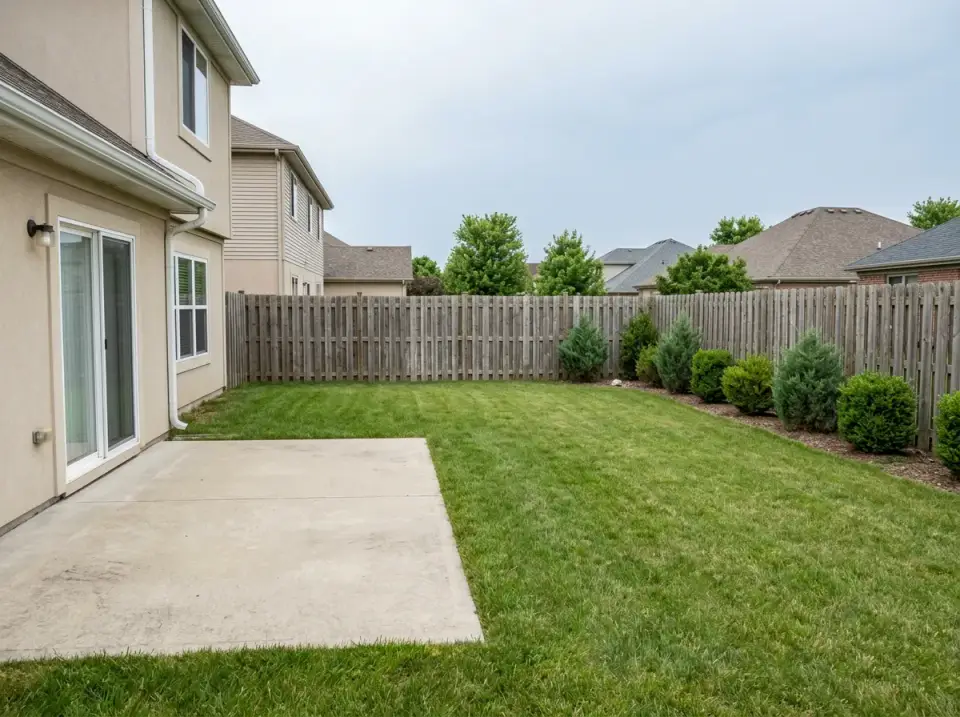
A Summerville client handed me a 1,400 sq ft backyard last fall — concrete slab, chain-link fence, patchy fescue — and asked what I could realistically do with a $40,000 ceiling. This gallery walks through twelve distinct directions I drew up from that same starting shell: a modern black-and-green garden, a Tuscan courtyard, a resort poolside, a Japanese rock garden, a family-first lawn, and the rest. Each one gets the material and color palette, my styling notes from the project files, and the Southeast regional context where it really works.
Table of Contents
- Modern Meets Wild: Black Siding and Native Grasses
- Classic Elegance: Formal English Garden
- Desert Minimalist: Low-Water Gravel and Cacti
- Resort Living: Tropical Poolside
- Bohemian Rhapsody: Pergola Lounge
- Farmhouse Chic: Dining and Fire Pit
- Sleek Entertainer: Outdoor Kitchen and Lounge
- Tuscan Dream: Old World Courtyard
- Rustic Charm: Stone Patio and Cottage Garden
- High-Tech Modern: Louvered Pergola and View Deck
- Zen Sanctuary: Japanese Rock Garden
- Family Fun: Playful and Practical
- Pro Tips From My Project Files
- Regional Fit Across the Southeast
- What Each Direction Actually Costs
- Frequently Asked Questions
- Sources and References
- Final Thoughts
Modern Meets Wild: Black Siding and Native Grasses
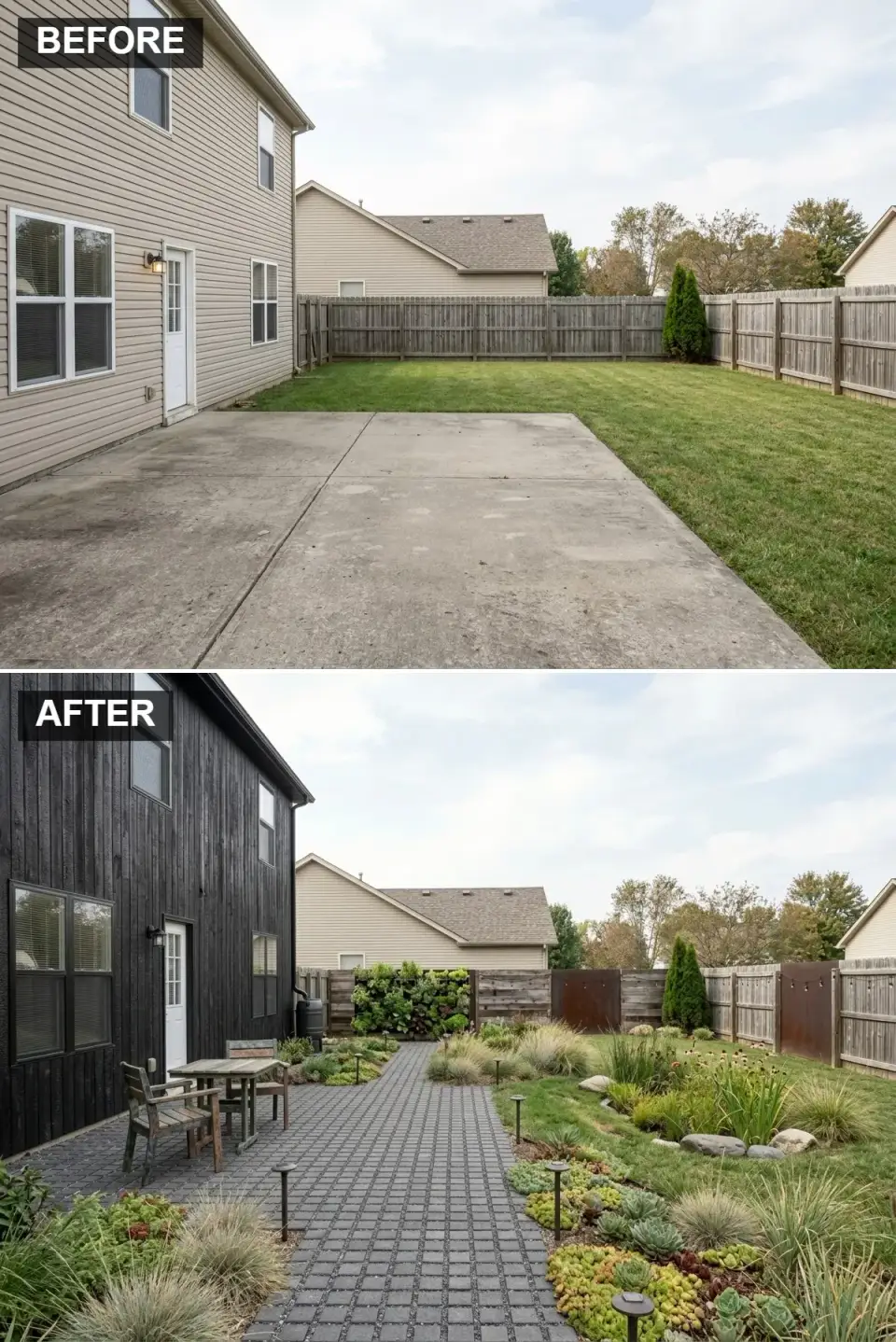
I pitched this direction for a Charlotte Plaza Midwood client who wanted something that felt current but not gimmicky. The rear elevation is refaced in a charred-wood-look fiber cement — the Shou Sugi Ban reading without the fire-treatment cost — and the concrete slab is lifted and replaced with 24x24 dark grey pavers set in a modular grid with crushed granite joints. The grass is gone. In its place: Muhlenbergia, Pennsetum Hameln, and a drift of native switchgrass, punctuated by a pair of Corten steel planters holding specimen agaves. The fence gets a vertical garden panel across one 12-foot section, planted with native Carolina jessamine. It reads architectural and low-water without tipping into Palm Springs pastiche.
Color Palette
Charred Charcoal Fiber Cement
#2A2A2A
Gives the Shou Sugi Ban reading at 40% of the cost
Slate Grey Porcelain
#5F6B75
24x24 format, permeable joint detail
Accent Ipé or Thermally Modified Ash
#8C7B6A
Used on bench tops and vertical garden frame
Rusted Corten Steel
#965A3E
Patinas naturally, never needs repainting
Styling Notes for This Look
- Dark siding absorbs heat. On a west-facing rear elevation in Charleston or Atlanta, this raises the patio micro-temperature noticeably. Plan shade over any seating area.
- Corten steel runs a staining bleed-off period during the first 12-18 months. Don't set it on light-colored patio without understanding the rust runoff.
- Permeable joints work only if the sub-base is properly graded and the crushed aggregate is the right size. Have the installer pass the ICPI permeable pavement guidelines before they pour.
- A vertical garden on a fence needs irrigation at every tier, not just the top. Drip emitters per plant, not a single header line.
Classic Elegance: Formal English Garden
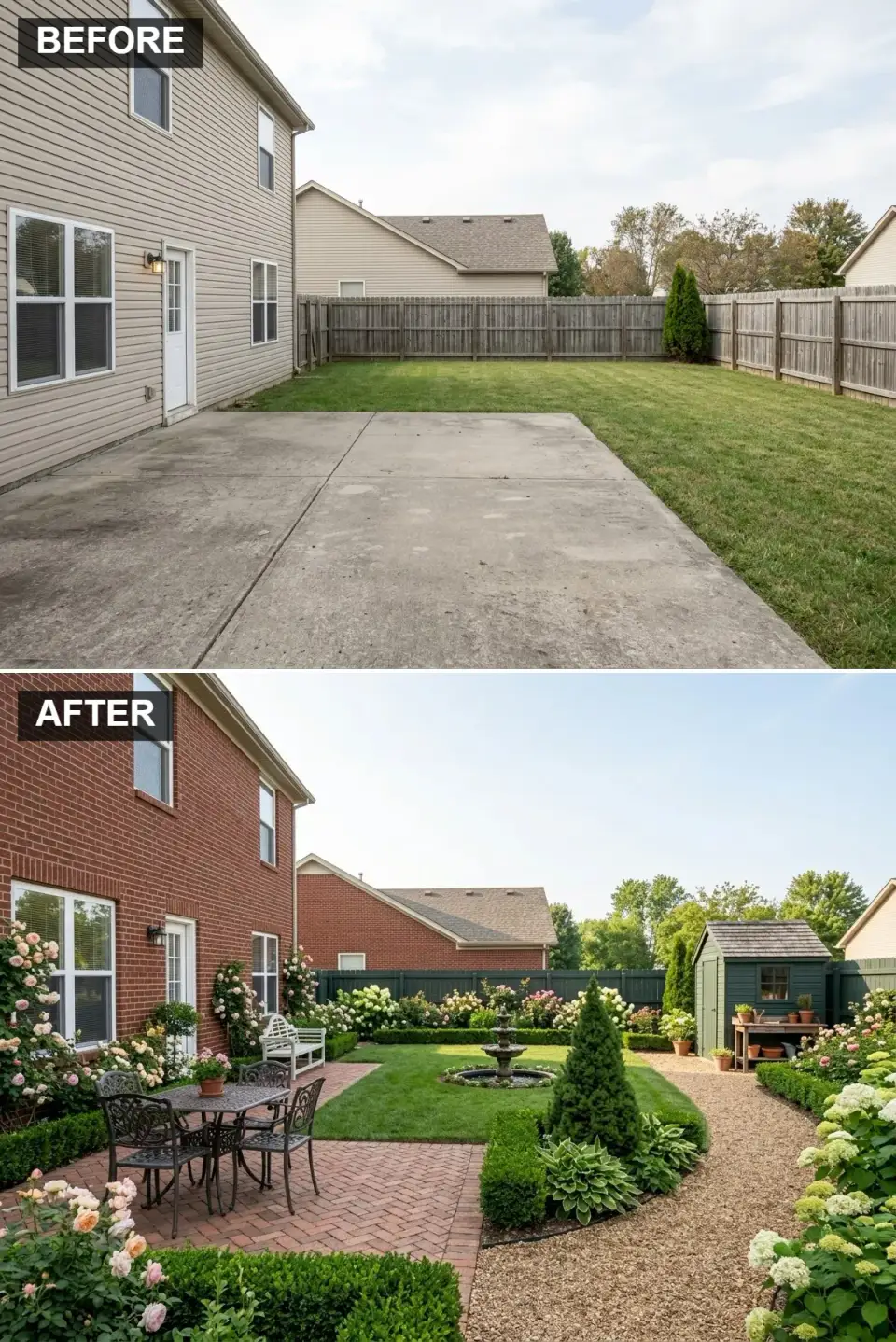
This is my direction for a Summerville historic-district lot or a Richmond Fan-district rear garden — places where the architecture and neighborhood already point to formal. Red clay brick on the rear elevation (or a painted-brick German-smear if the existing brick is dated), a herringbone brick terrace laid on a proper sand-and-stone base, and a symmetrical boxwood parterre with four quadrants around a central tiered limestone fountain. Roses in the outer beds — David Austin English shrub roses, not hybrid teas, so they hold their form through a Southern summer. The potting shed in the back corner gets a Farrow and Ball Studio Green paint, a slate roof, and a slim brass sconce. Pea gravel path, iron garden furniture, no wicker in sight.
Color Palette
Old Savannah Red Brick
#ABA194
Hand-molded face brick, traditional color range
Accent Studio Green
#2F4F4F
Deep heritage green, anchors the composition
Cast Iron Black
#111111
Powder-coated for Southern humidity
Pea Gravel Beige
#C8B497
3/8-inch aggregate with steel edging
Styling Notes for This Look
- Boxwood blight is real in the Southeast. Specify a blight-resistant cultivar like NewGen Freedom or Sprinter — not the old English Boxwood, which will be dead in three years.
- A tiered limestone fountain needs a freeze-protected shutoff. Drain it every December and refill in March.
- Pea gravel migrates. Steel edging — minimum 4 inches — keeps it contained. Budget $18-$25 per linear foot for the edging alone.
- David Austin roses handle Charleston and Savannah heat better than hybrid teas, but they still need morning sun and afternoon protection. Orient beds accordingly.
Desert Minimalist: Low-Water Gravel and Cacti
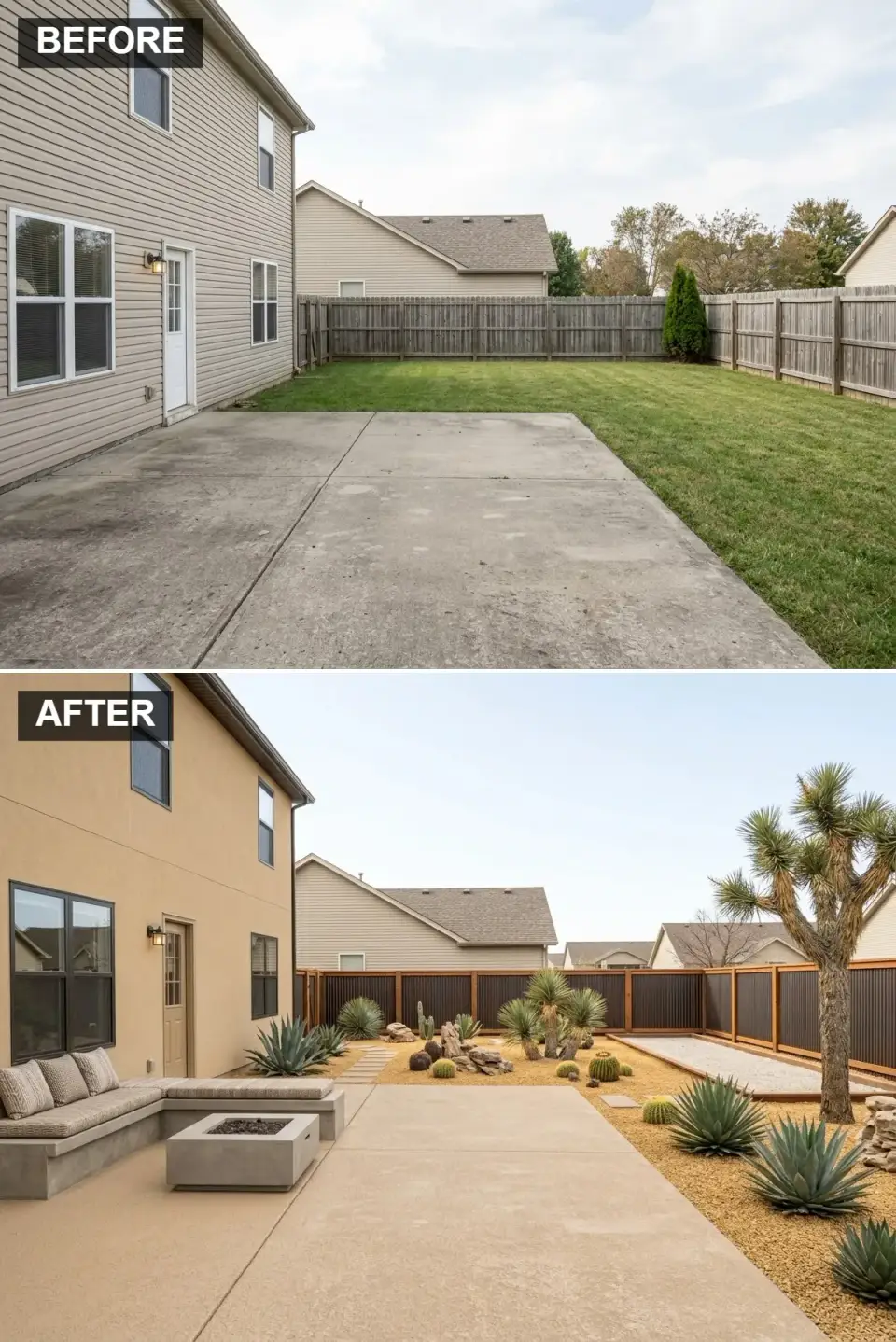
I know what you're thinking — desert xeriscape in the humid Southeast. The direction works in specific cases: a Naples client who wants to comply with South Florida irrigation restrictions, or an Atlanta homeowner whose county pushed a Level 2 drought limit two summers running and who's tired of replacing sod. The rear elevation goes in smooth tan stucco, the lawn disappears entirely, and the new ground plane is 3/4-inch decomposed granite over a weed-fabric underlayment. Specimen Southwest-adapted plants anchor the composition — Agave americana, barrel cactus, a single mature prickly pear — along with Southeast-friendly drought plants that read similarly: yucca, Russian sage, and Texas sage. A poured concrete bench, a rectangular gas fire pit, a corrugated steel fence accent, and a regulation bocce court finish the space.
Color Palette
#C2B280
Tan stucco wall, decomposed granite floor
Poured Concrete
#999999
Integral-color pour, broom finish for traction
Accent Rusted Corrugated Steel
#8B5A2B
Adds warmth and texture, patinas naturally
Posts Western Red Cedar
#C19A6B
Rough-sawn, clear stained to preserve tone
Styling Notes for This Look
- Not every Southwest plant survives Southeast humidity. Barrel cactus and prickly pear handle it; saguaros will rot. Check the USDA zone match before ordering.
- Decomposed granite compacts over time. Plan on a top-up every three to four years in coastal Charleston or Savannah, less often in Atlanta.
- A bocce court is easier to DIY than people think — a 13x60 foot lane with crushed oyster shell or oyster-shell-look DG over a gravel base runs $3,500-$6,500 in labor plus materials.
- Gas fire pits in HOA-managed neighborhoods need propane-line permits. Confirm with the county before pouring the slab.
Resort Living: Tropical Poolside
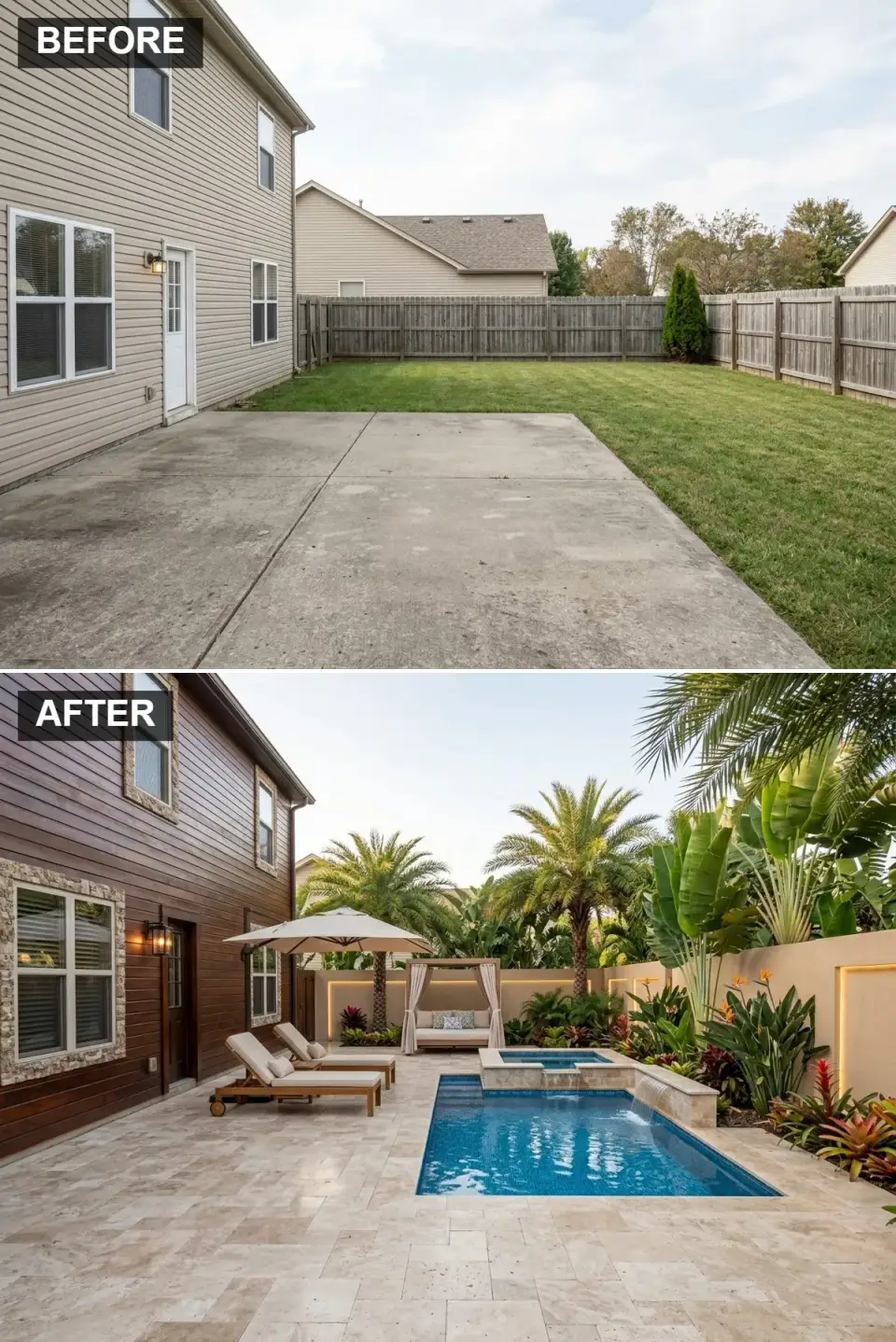
The big-budget direction, and the one clients most often ask me about in Kiawah, Naples, and 30A. A custom pool with an attached spa, honed travertine decking (not polished — polished is slippery and reads dated), dark tongue-and-groove cedar on the rear elevation, stacked stone veneer at the base. A cedar cabana with a daybed, integrated lighting under the copings, palms and bird of paradise forming a privacy screen, and a gas fire feature at the corner of the pool for evening ambiance. This is a $150,000-$300,000 project in most Southeast markets — not a weekend DIY.
Color Palette
Deck Honed Travertine
#E3D3B6
Slip-resistant when honed, stays cooler than granite
Interior Teal Pebble Tec
#008B8B
Reads aqua in direct sun, deeper blue in shade
Dark Walnut Cedar
#4A3321
Tongue-and-groove, marine-grade semi-transparent stain
Fabric Cream Sunbrella
#F5F5DC
Fade-resistant for 10+ years in direct Florida sun
Styling Notes for This Look
- Travertine needs a yearly penetrating sealer in pool decks — chlorine and pool chemicals degrade the stone's surface if it's not maintained.
- Pool fencing is required by code in every Southeast state. Read the local AHJ requirements before finalizing the deck layout; a four-foot-minimum barrier changes how you place lounge chairs.
- Palms that survive a Charleston winter: Sabal palmetto (native), Trachycarpus, Washingtonia robusta. Coconut palms do not survive north of Palm Beach reliably.
- Pool pumps and heaters run 60-70 decibels. Locate the equipment pad away from the cabana and the primary bedroom window. Plan a screening fence around it.
Bohemian Rhapsody: Pergola Lounge
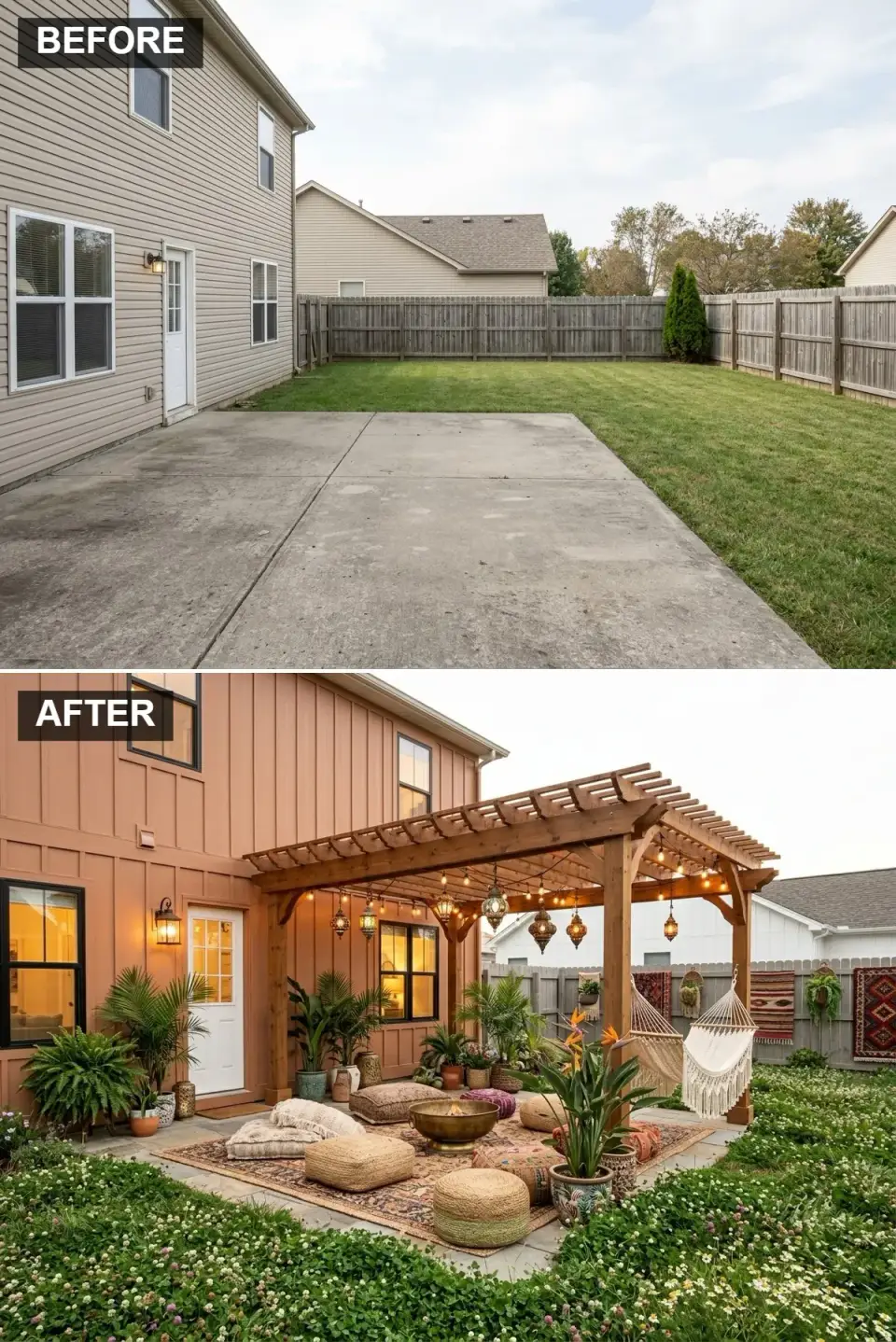
An Asheville client with a 1920s bungalow asked for something that matched the way she actually lived — informal, layered, personal. The rear wall got a warm terracotta stucco treatment (or a sanded paint finish if stucco is out of scope), a heavy cedar pergola defined the new outdoor room, and the ground got a flagstone patio with creeping thyme in the joints. Furnishings layer instead of coordinate: a pair of vintage Moroccan rugs, four floor cushions from a handweaver she found in Black Mountain, a steel-bowl fire pit, a hammock strung between two cedar posts. String lights zigzag across the pergola; punched-metal lanterns hang at random heights. The garden stays intentionally loose — a mix of Carolina wildflowers, clover, Russian sage, and a rosemary hedge.
Color Palette
#CC7A51
Warm base color that photographs beautifully at golden hour
Western Red Cedar
#A67B5B
Natural reddish-brown, clear stained for UV protection
Deep Red and Burnt Orange
#8A3324
Saturated rugs, cushions, and lantern accents
Aged Brass
#B5A642
Unlacquered, patinas through seasons
Styling Notes for This Look
- Outdoor rugs fade if they aren't actually rated for outdoor use. Buy polypropylene, not cotton. Budget a replacement every three to four years regardless.
- Flagstone with creeping thyme in the joints looks great and tolerates Asheville's cooler summers. In Charleston and Savannah, thyme struggles; substitute Blue Star creeper or Dwarf Mondo grass.
- A cedar pergola should be clear-finished, not painted. Paint on pergolas peels in the Southeast humidity within two years.
- Punched-metal Moroccan lanterns cast beautiful shadows. They also rust fast. Specify brass or bronze, or store them indoors during tropical storm season.
Farmhouse Chic: Dining and Fire Pit
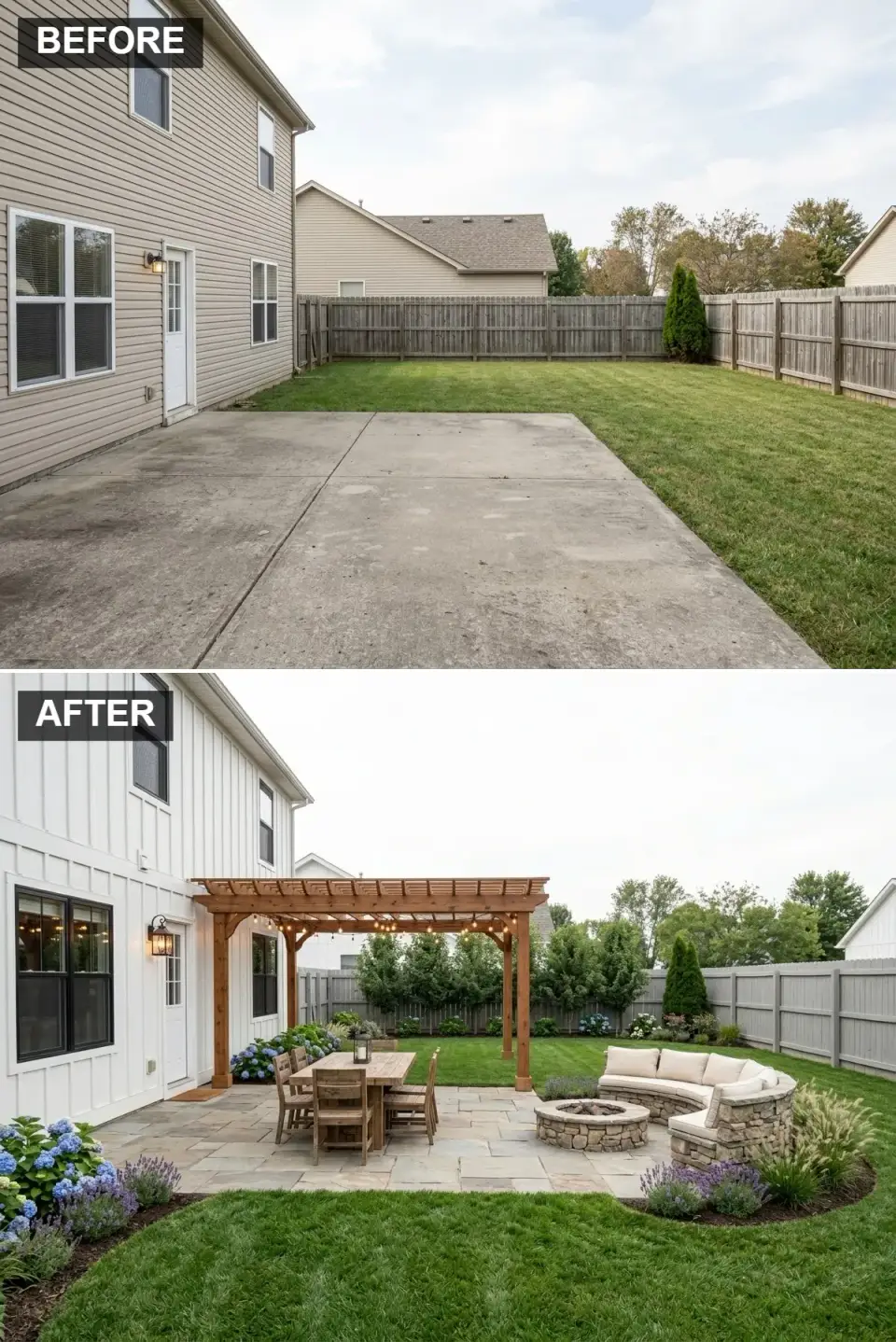
This is my default direction for a Mount Pleasant new-build or a Summerville farmhouse-style lot — neighborhoods where the architecture is already pointing toward modern farmhouse and the client wants the backyard to match. Rear elevation in white board-and-batten with black window frames, a flagstone patio zoned into two distinct rooms: dining under a cedar pergola with a reclaimed-wood farm table and a curved fieldstone seating wall around a circular gas fire pit. Planting stays disciplined — hydrangea drift along one fence, lavender edging the patio, a single Little Gem magnolia as a specimen tree in the back corner. The whole thing reads generous but not fussy.
Color Palette
Crisp White
#FFFFFF
Board-and-batten reading, black window accents
Tennessee Flagstone
#AFAFAF
Irregular grey-tan, set dry-laid on a sand base
Stacked Fieldstone
#8C8C7A
Dry-stacked look, mortared construction underneath
#7F5F3F
Semi-transparent, lets cedar grain read through
Styling Notes for This Look
- Hydrangeas in the Southeast need morning sun and afternoon shade. A west-facing drift will burn by July. Orient the planting plan around the sun arc.
- Lavender is a Mediterranean plant and hates Charleston summer humidity. Substitute Russian sage or a Mediterranean lavender cultivar bred for humid conditions (Phenomenal, Grosso, Provence).
- A curved fieldstone wall costs 40-60% more per linear foot than a straight one. If budget is tight, go straight with a curved planter at one end instead.
- Gas fire pits require a dedicated propane line or a buried natural-gas run with a permit. Wood-burning has fewer permit issues but requires smoke-management consideration with neighbors.
Sleek Entertainer: Outdoor Kitchen and Lounge
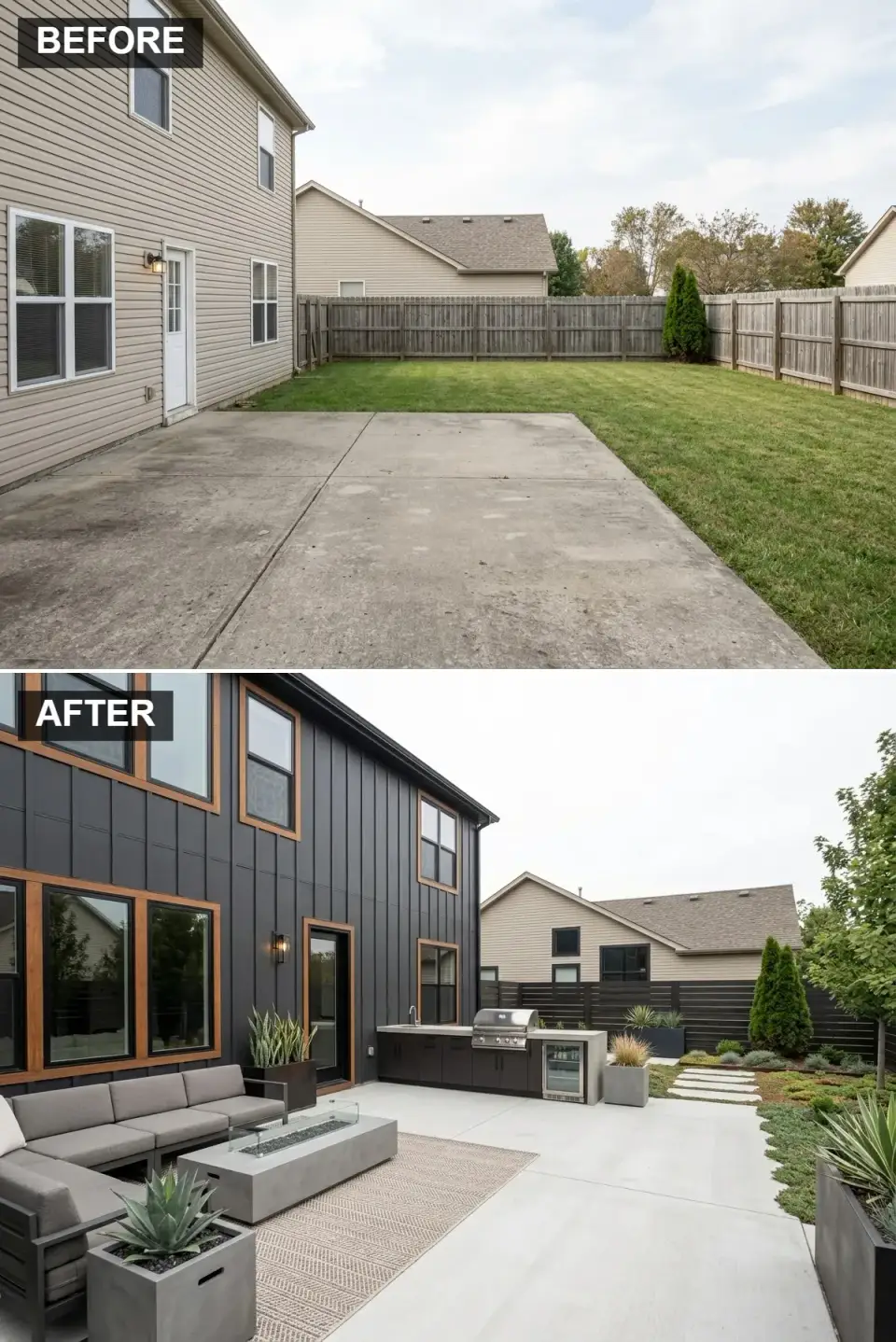
This direction suits an Atlanta Morningside or Charlotte South Park homeowner who entertains frequently and wants the outdoor space to function the same way the kitchen does indoors. Dark grey vertical siding on the rear elevation with warm teak trim, a poured concrete patio broom-finished for traction, and a full outdoor kitchen along the back wall — built-in grill, side burner, sink, refrigerator, bar seating in soapstone. A concrete fire table runs as the centerpiece of the lounge zone, paired with a large U-shaped sectional in teak and Sunbrella. Tall architectural planters in fiberglass hold fountain grasses and sculptural sansevieria. Pathways in stepping concrete pads.
Color Palette
Charcoal Grey
#363636
Dark vertical siding, matte finish
Broom-Finish Concrete
#B0B0B0
Integral color, saw-cut control joints on a grid
Trim Honey Teak
#C49866
Real teak on trim and furniture, silvers over time
Medium Grey Sunbrella
#7E7E7E
Fade and mildew resistant, minimum 10-year outdoor life
Styling Notes for This Look
- Outdoor kitchens need 30-amp electrical, gas rough-in, and dedicated cold water and drain lines. Plan the slab and the utilities before anyone starts forming.
- Stainless steel appliances in a coastal Charleston yard rust at joints within five years. Use marine-grade 316 stainless if you're within 20 miles of the coast, or expect regular replacement.
- Concrete fire tables look great. They also crack. Specify a steel internal frame with fiber-reinforced concrete, not a plain cast pour.
- Fiberglass planters read like concrete at a fraction of the weight. In coastal wind zones, that matters. A 36-inch concrete planter plus soil plus plant hits 400 pounds; the fiberglass equivalent is 80.
Tuscan Dream: Old World Courtyard
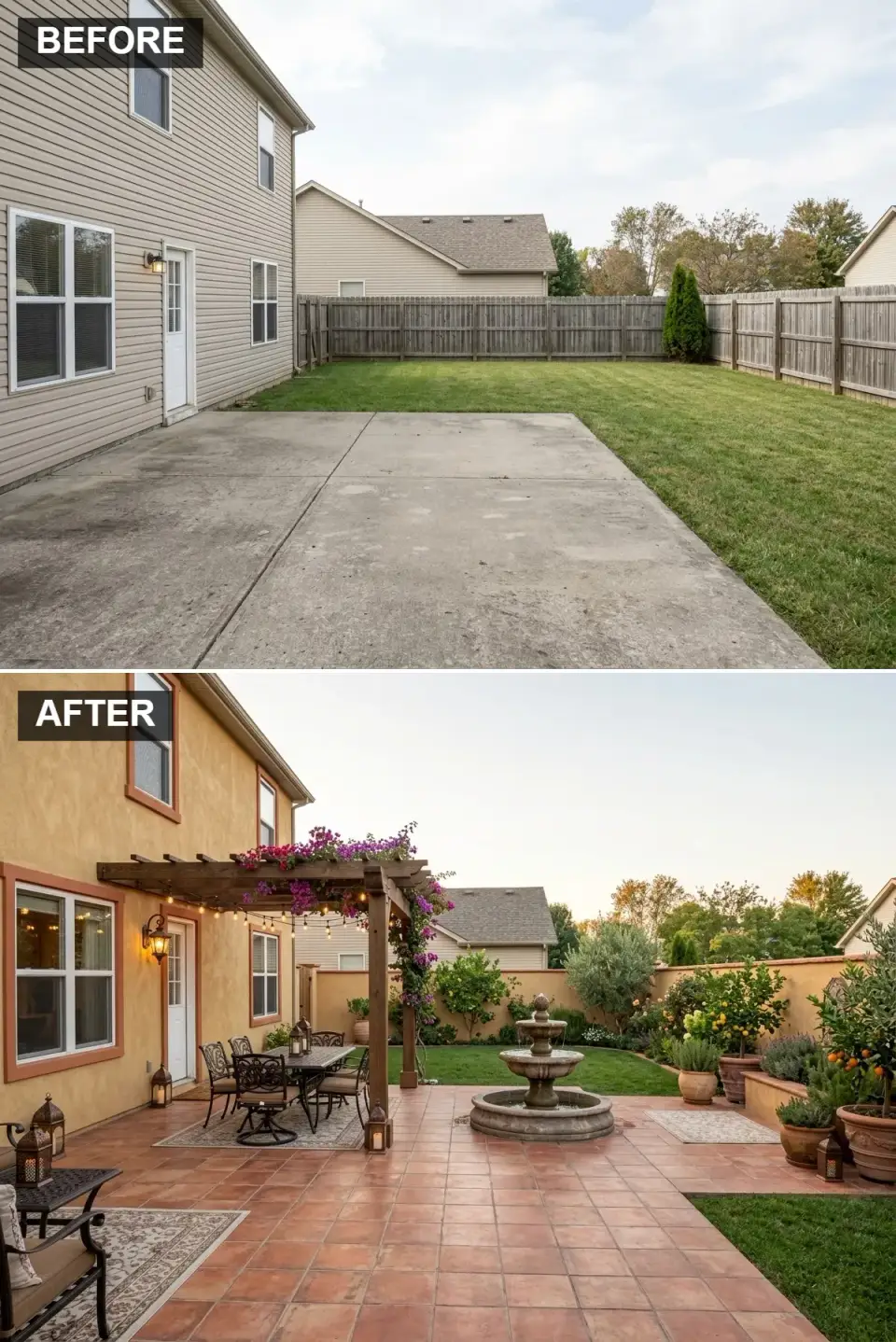
The Tuscan direction works beautifully for a Naples lot or a Savannah courtyard garden — places with enough sun for real Mediterranean plants and the right regional light for golden stucco to read as warm, not yellow. The rear elevation and the perimeter fence both go in Tuscan-gold stucco (the fence becomes a courtyard wall), paved in 16x16 unglazed terracotta tiles set in a running bond. A heavy hand-hewn cypress timber pergola shades the dining area; bougainvillea climbs it within two seasons. A tiered limestone fountain anchors the center, flanked by a collection of clay pots filled with Meyer lemon, Key lime, olive, and a rotating herb display.
Color Palette
Tuscan Gold Stucco
#D4A05A
Warm ochre, holds evening light beautifully
Unglazed Terracotta
#B86D4B
Saltillo or handmade tile, sealed annually
Dark Cypress Stain
#473223
Hand-hewn beams, deep penetrating stain
#9E5E3B
Large-format Italian pots, frost-resistant grade
Styling Notes for This Look
- Unglazed terracotta tile stains permanently if not sealed. Use a penetrating silane-siloxane sealer and reapply every two years in humid markets.
- Bougainvillea is gorgeous but freezes below 28°F. In Naples and coastal Florida it's permanent. In Savannah, plan to cut it back hard after any hard freeze. In Charleston it dies to the ground most winters.
- Meyer lemons and Key limes survive outdoors year-round in Naples. In Charleston, bring them into a garage or heated greenhouse for three months of the year.
- Tuscan gold reads differently at different scales. Test a 4x4 foot patch on the actual wall before committing to the whole elevation — it can read cartoonish in direct Southern sun.
Rustic Charm: Stone Patio and Cottage Garden
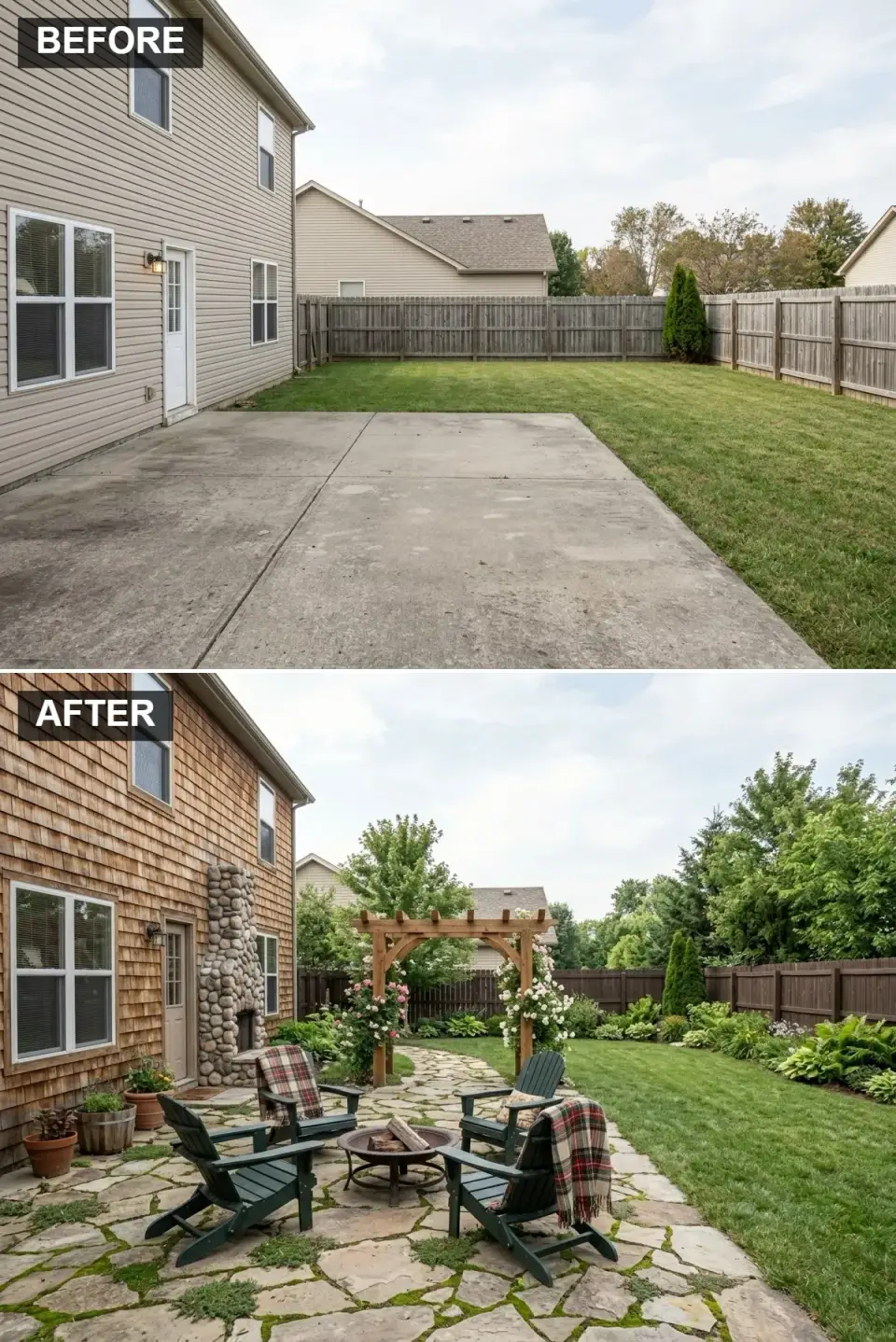
The cottage direction is my pick for Blue Ridge foothills lots — Asheville, Highlands, Brevard — and for older rural Greenville County properties where the house already has real craftsman bones. The rear elevation gets cedar shake siding with a stained finish and a new dry-laid river stone outdoor fireplace anchoring one end of the patio. The ground is irregular Tennessee flagstone with wide moss-planted joints. A wooden arbor with New Dawn climbing roses marks the entry to the garden beyond. The planting is a true English cottage garden — delphinium, foxglove, lady's mantle, catmint, peony, David Austin roses — grown a little wild, edged loosely. Four painted-green Adirondack chairs circle a simple cast-iron fire pit bowl.
Color Palette
Natural Cedar Shake
#A8865F
Semi-transparent stain, lets weathering read through
Mixed River Stone
#807B6E
Rounded natural stones, rubble-style construction
Tennessee Flagstone
#948D7D
Irregular shapes, moss or creeping thyme in joints
Forest Green
#2A4032
Cabin Green by Cabot, holds up through mountain winters
Styling Notes for This Look
- Irregular flagstone with planted joints needs a specialty installer. The joints have to be deep enough to hold soil and wide enough for plants, not filled flush with sand.
- Delphiniums and foxgloves prefer the cooler Asheville climate. In Charleston and Savannah they bloom once, fade fast, and usually die by July. Substitute salvia, phlox, or penstemon.
- Climbing roses need support. New Dawn is vigorous and forgiving; climbing Iceberg is pickier. Wire support behind the arbor, not just the arbor alone.
- River stone chimneys cost more than veneered ones. Budget $220-$340 per linear foot for a properly dry-laid river stone outdoor fireplace.
High-Tech Modern: Louvered Pergola and View Deck
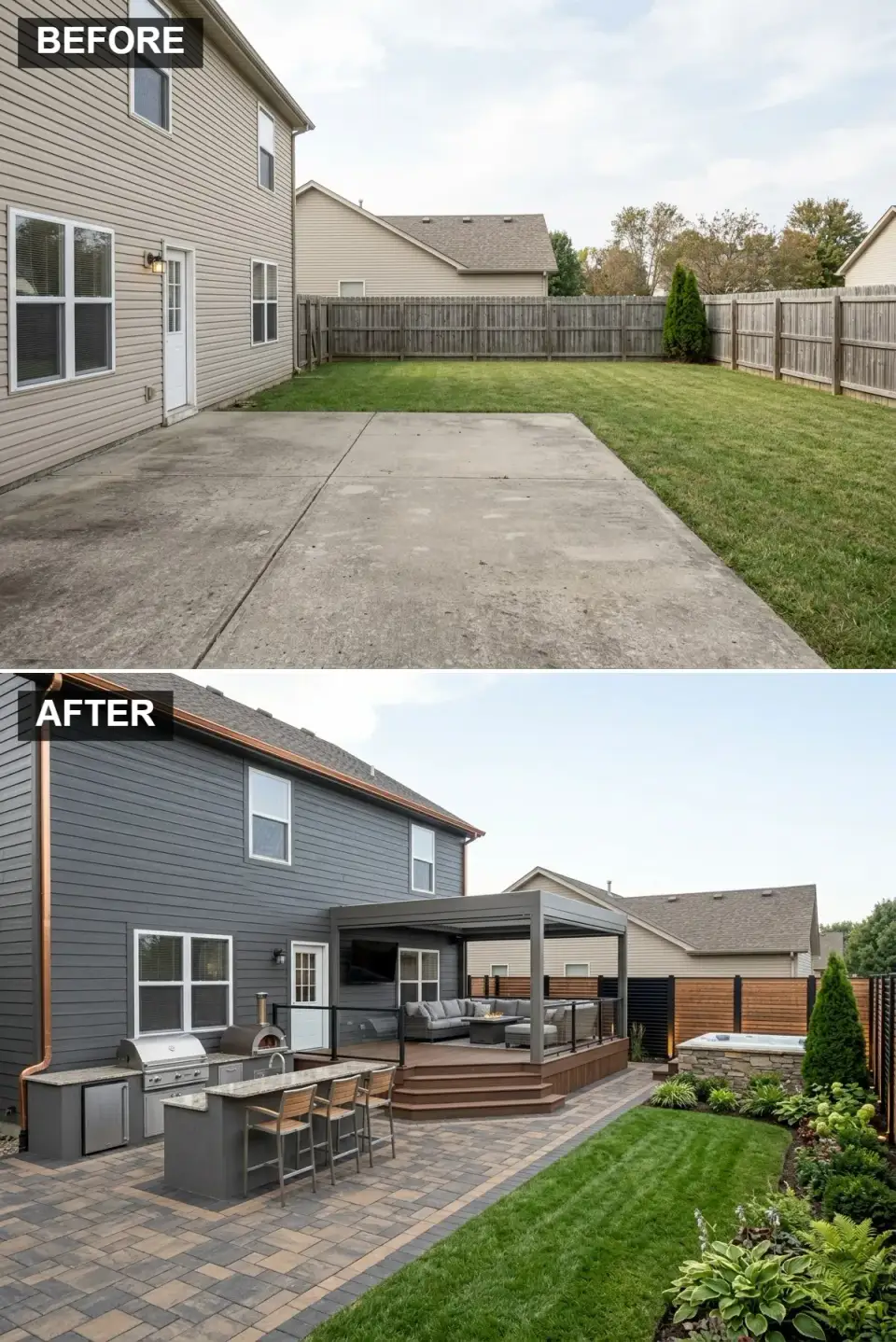
The tech-forward direction. I pitched this for a Nashville client whose job is running product for a home-automation company and who wanted a rear yard that tied into his system. Dark slate siding on the rear elevation, copper gutters, a multi-level composite deck (TimberTech AZEK Harvest Collection in coastline grey), frameless glass railings at the elevated level. A motorized louvered pergola — the StruXure or Renson type — opens and closes from a phone app. Underneath: a full outdoor kitchen with a dome pizza oven and six-person bar, a weatherproof 75-inch TV facing a sectional, and a separate hot tub zone visually screened by a horizontal slat wall. Landscape stays minimal; the technology is the feature.
Color Palette
Slate Blue-Grey
#4C5661
Deep slate, complements copper detailing
Composite Walnut
#6B4D38
Capped composite, 25-year stain warranty
Matte Black Aluminum
#1F1F1F
Powder-coated, marine-grade for humid climates
Concrete and Granite
#888888
Polished concrete island, leathered granite countertops
Styling Notes for This Look
- Motorized louvered pergolas run $18,000-$38,000 installed depending on span. They need a dedicated electrical circuit, and the louver actuators need annual servicing.
- Frameless glass railings require a structural engineer sign-off on the deck framing. The base anchors have to be specified to handle wind and code-required horizontal load.
- An outdoor TV has to be an actual outdoor-rated model (Samsung Terrace, SunBriteTV, etc.) — standard TVs fail within a year in humid Southeast weather even when protected.
- Pizza ovens need a proper gas line or wood-fired venting. Dome ovens cast radiant heat in a surprising direction; plan seating at least 8 feet away.
Zen Sanctuary: Japanese Rock Garden
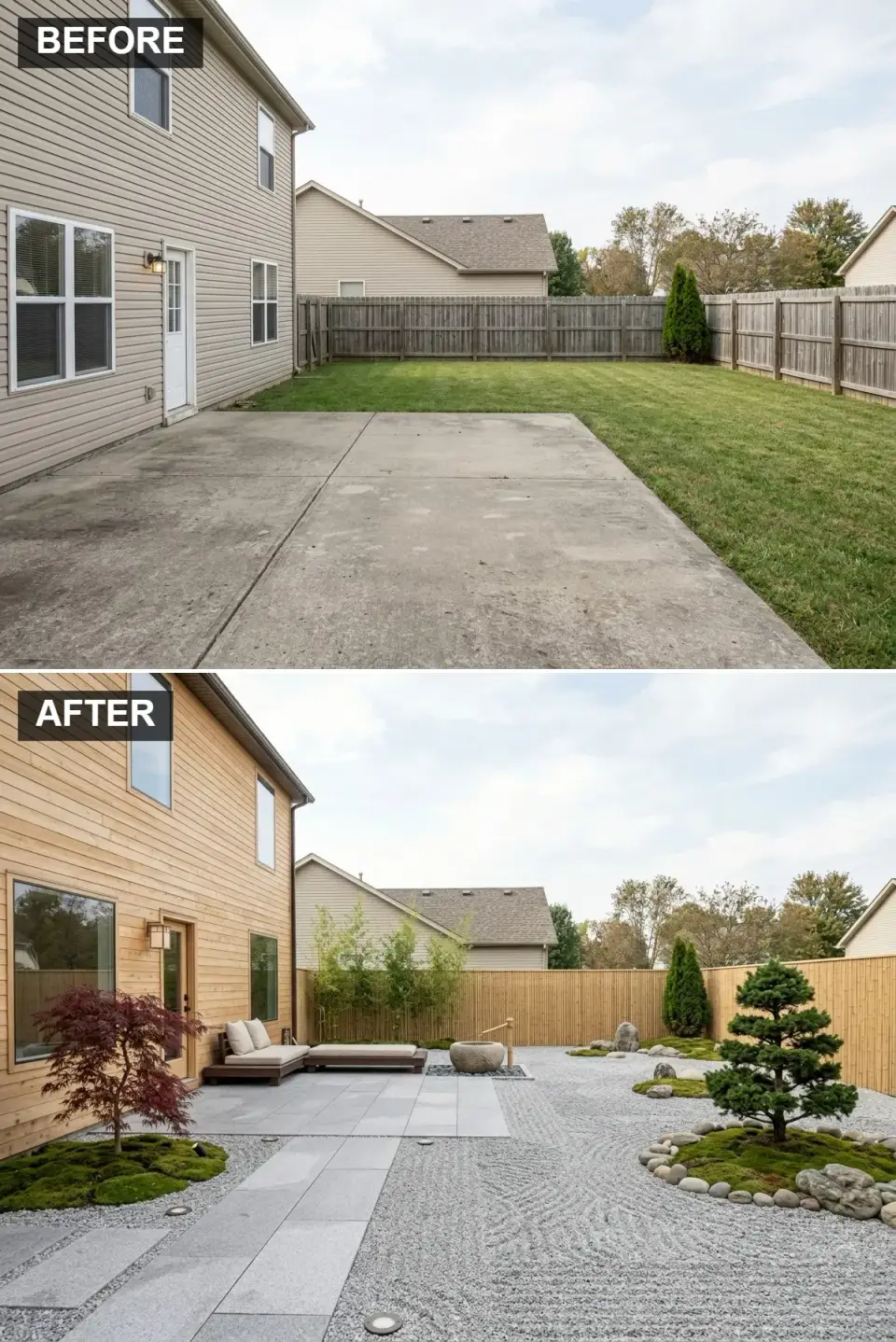
A Raleigh client I worked with last year wanted a backyard that would actively lower her blood pressure when she walked into it. We drew a Japanese Zen garden. Light cedar horizontal siding on the rear, a large rectangular bed of light granite gravel raked in concentric patterns around three placed basalt stones, moss islands at the garden's corners. A 10x12 honed granite patio with a single low teak daybed and a simple stone lantern. A bamboo privacy fence replaces the existing six-foot wood fence along one property line. A chozubachi — a stone water basin with a bamboo spout — gives the space its soundtrack. Specimen trees anchor the perimeter: a Japanese maple, a dwarf bonsai-style Mugo pine, and a young black pine.
Color Palette
Light Cedar Horizontal
#D9BFA5
Clear-finished, quarter-sawn for straight grain
Light Grey Granite Fines
#C0C0C0
1/4-inch size, holds raked patterns for weeks
Honed Granite
#9FA3A6
Large format, minimal grout lines
Natural Bamboo
#E0C9A6
Treated bamboo, steel-post structural backing
Styling Notes for This Look
- Raked gravel needs weekly maintenance to stay crisp. Pick granite fines over pea gravel — the fines hold their lines; pea gravel rolls out of pattern overnight.
- Moss in the Southeast needs shade and consistent moisture. A moss patch in direct afternoon Charleston sun will die in one season. Plan the garden around the sun arc.
- A Japanese maple is the single most important plant in the garden. Buy a specimen tree, not a 5-gallon nursery plant. Budget $400-$1,200 for a properly sized Acer palmatum.
- Bamboo fencing looks authentic and lasts 6-10 years outdoors. Steel-post structural framing behind the bamboo extends the whole system's life.
Family Fun: Playful and Practical
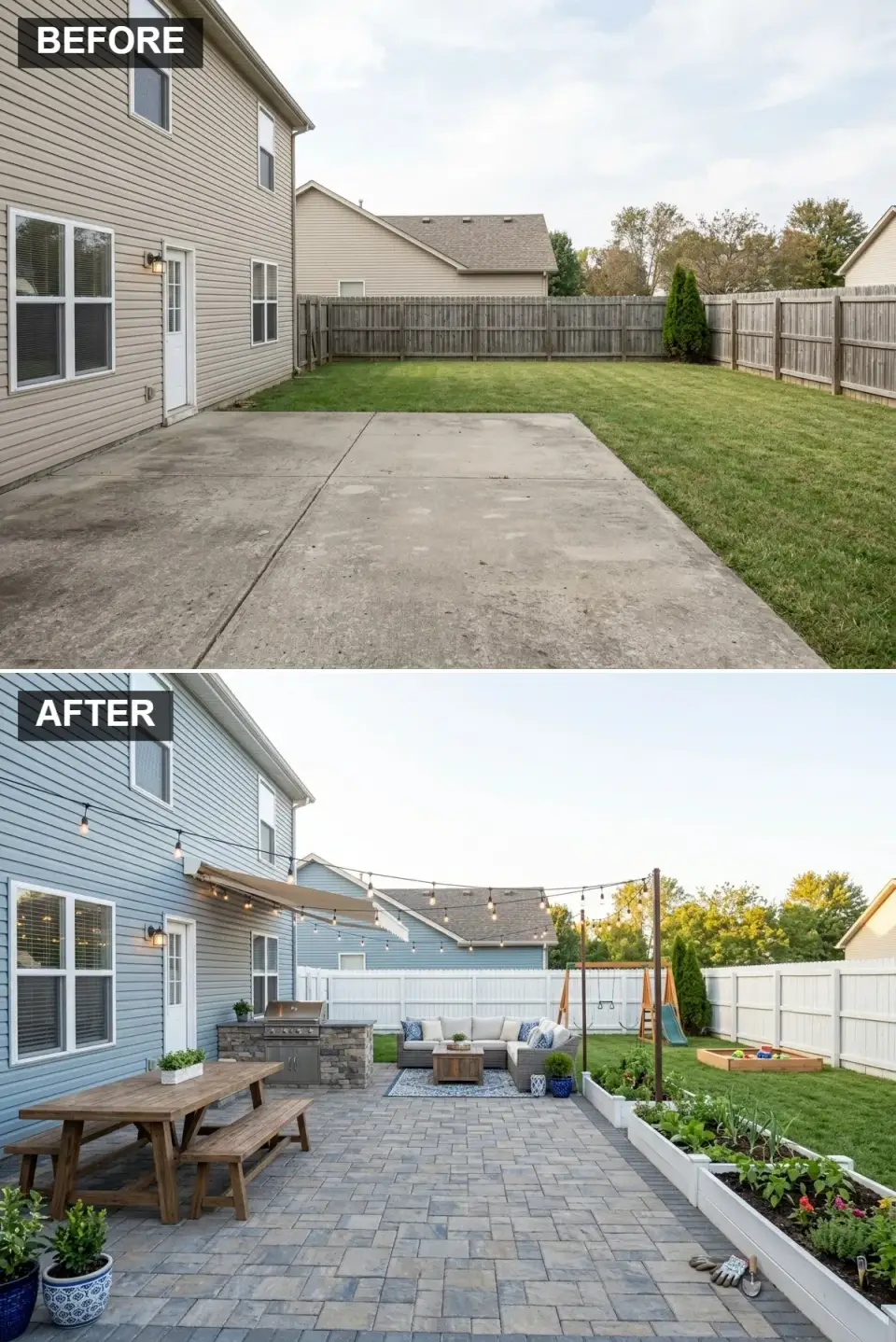
My pitch for Mount Pleasant young-family clients and Cary North Carolina homeowners with kids under ten. The design has to actually work for real life, not just photograph well. The rear siding goes in a soft sky blue (Benjamin Moore Yarmouth Blue or Sherwin-Williams Rainwashed at a lower saturation), and a new white vinyl fence replaces the existing chain-link. A generous paver patio zones itself into three rooms: a dining area with a farm table, a built-in stone grill station, and a sectional lounge under a retractable awning and string lights. The lawn stays but gets reduced by a third — enough for running room, with a cedar swing set and a lidded sandbox in the corner. Four white raised beds along the back fence give the kids a gardening project that actually grows vegetables.
Color Palette
Soft Sky Blue
#A6C0D6
Reads calm in morning, warm in afternoon
White Vinyl
#FFFFFF
Low-maintenance, 25-year fade warranty on quality grades
Mixed Tan and Grey Pavers
#B5AFA3
Hides dirt, ICPI-certified installer for longevity
White Painted Cedar
#FAFAFA
Exterior-grade paint, food-safe liner inside
Styling Notes for This Look
- Raised garden beds under a fence run into root issues from neighboring trees. Line the bottom and sides with a geotextile fabric, or line with a food-safe pond liner.
- Swing sets need a fall zone — minimum six feet of soft surface under and around. Mulch, rubber chip, or turf — not concrete pavers.
- Retractable awnings should be rated for at least 25 mph sustained wind. Anything lower, a tropical squall will rip out the brackets.
- Vinyl fence looks crisp and lasts. It also reads plastic in direct sun. Splurge on the "textured wood grain" grade from a premium manufacturer — the flat-surface version photographs poorly.
Pro Tips From My Project Files
- Drainage is the foundation everything else sits on. Before you design a single patio or bed, understand where water moves in your yard after a heavy rain. A $60,000 outdoor kitchen in a floodplain is a bad investment. Grade first, design second.
- Define three zones minimum. A successful backyard has a dining zone, a lounge zone, and a landscape zone with clear transitions. A single open slab rarely works — people don't know where to sit.
- Hardscape before landscape. Patios, walls, and walkways set the architecture. Plants fill in around them. Running the sequence in reverse leaves you ripping out mature plantings to install foundations.
- Layer your lighting on three circuits. Task (grill and dining), ambient (string lights, pergola downlights), and accent (uplit specimen trees, wall washers). One switch for all three is how backyards end up looking flat at night.
- Choose plants that survive your zone's worst week. A beautiful specimen that dies in a Charleston hard freeze or an Asheville late-spring frost is a $400 mistake. Ask a local nursery what's killed the last three summers before ordering.
- Budget 8-12% for landscape on a total outdoor project. On a $40,000 backyard build, $3,500-$4,800 for plants and soil is realistic. Anything less produces a patio in a bare yard; anything more, on a base project this size, is waste.
- Get the HOA approvals in writing before you break ground. Most HOA-managed Southeast neighborhoods require submittals for fences, pools, and outbuildings. A verbal okay from a neighbor is not a substitute.
Regional Fit Across the Southeast
Not every direction lands in every market. Here's how I match the look to the house, the climate, and the neighborhood:
- Charleston, Mount Pleasant, Summerville: Farmhouse Chic, Family Fun, and Classic English Garden all suit Lowcountry homes. Humidity rules out lavender and delphinium; specify hydrangea, Russian sage, Little Gem magnolia. Tropical Poolside works on Kiawah and Sullivan's Island.
- Savannah historic district: Classic English Garden, Tuscan Courtyard, and Rustic Cottage pair with the architectural bones. The walled-courtyard versions fit the tight urban lots.
- Naples, Sarasota, 30A: Tropical Poolside, Tuscan, and Desert Minimalist all thrive in Gulf light. Bougainvillea is permanent here; Meyer lemons and olives overwinter outdoors.
- Atlanta, Charlotte, Nashville: Modern Black-and-Green, Sleek Entertainer, High-Tech Modern, and Zen Sanctuary all work in newer suburbs. Boho Pergola reads well in Atlanta Virginia Highland and Nashville East.
- Asheville, Highlands, Brevard: Rustic Cottage and Boho Pergola suit the foothills. Cottage garden perennials (delphinium, foxglove, peony) actually thrive here. Cedar shake siding ages beautifully in mountain climate.
- Richmond, Raleigh: Classic English Garden in historic neighborhoods; Zen Sanctuary and Sleek Entertainer in newer suburbs. Family Fun for suburban Cary, Wake Forest, and Glen Allen.
What Each Direction Actually Costs
These are Charleston-market ranges for a full rear-yard transformation of roughly 1,200-1,800 sq ft in 2026. Labor runs 10-15% higher in Naples and Nashville, 5-10% lower in Asheville and Richmond. All numbers assume a reasonably flat site with no major drainage or grading work required.
| Direction | Budget Range | Main Cost Driver |
|---|---|---|
| Family Fun | $22,000 - $42,000 | Patio, vinyl fence, swing set, raised beds |
| Rustic Cottage | $28,000 - $52,000 | Flagstone patio, river stone fireplace, cottage garden |
| Classic English Garden | $32,000 - $58,000 | Herringbone brick, fountain, boxwood parterre, painted shed |
| Boho Pergola | $24,000 - $44,000 | Cedar pergola, flagstone, stucco wall, lanterns and textiles |
| Farmhouse Chic | $30,000 - $55,000 | Flagstone patio, stone fire pit, pergola, hydrangea planting |
| Zen Sanctuary | $34,000 - $62,000 | Granite patio, bamboo fencing, specimen trees, water basin |
| Modern Black-and-Green | $36,000 - $65,000 | Shou Sugi Ban, porcelain pavers, Corten planters, vertical garden |
| Tuscan Courtyard | $42,000 - $72,000 | Stucco walls, terracotta tile, fountain, heavy timber pergola |
| Desert Minimalist | $28,000 - $50,000 | Decomposed granite, concrete bench, gas fire pit, bocce court |
| Sleek Entertainer | $65,000 - $125,000 | Full outdoor kitchen, concrete patio, concrete fire table |
| High-Tech Modern | $95,000 - $185,000 | Louvered pergola, composite decking, outdoor TV, hot tub |
| Tropical Poolside | $150,000 - $320,000 | Custom pool with spa, travertine deck, cabana, mature palms |
Numbers exclude pool permits, structural drainage work, retaining walls over 4 feet, and mature specimen trees beyond the typical nursery inventory. HOA architectural fees add $250-$800 depending on the scope. Pool projects trigger additional insurance and fencing code requirements in every Southeast state.
Frequently Asked Questions
How long does a full backyard renovation like these take?
In the Charleston market, a mid-sized backyard transformation (1,200-1,800 sq ft) runs 6-10 weeks start to finish, assuming permits move on time and there's no major drainage or retaining-wall work. Pool projects stretch to 12-18 weeks. The Tropical Poolside and High-Tech Modern directions add weeks for custom fabrication and motorized equipment lead times. Weather delays during tropical storm season can push any timeline by 2-4 weeks.
Which of these directions is the most DIY-friendly?
Boho Pergola, Family Fun, and Rustic Cottage are the most forgiving for a confident DIY homeowner. Pergola kits, vinyl fencing, flagstone laying, and raised beds are all accessible skill levels. Classic English Garden is DIY-friendly if you're willing to learn formal planting. Tropical Poolside, High-Tech Modern, and Sleek Entertainer all require licensed trades — pool contractors, electricians, gas plumbers — and should not be attempted without them.
Do any of these looks date quickly?
Modern Black-and-Green and High-Tech Modern are the most trend-exposed. The black-siding look was peak in 2022-2024 and is already starting to read as dated in some markets. Classic English Garden, Farmhouse Chic, Rustic Cottage, and Tropical Poolside age the best because they reference traditions with decades of design history. If your timeline is 10+ years, lean toward those four.
How do I handle drainage in a Charleston or Savannah backyard?
Start with a site grading plan drawn by a civil engineer or a qualified landscape designer. Identify the sheet flow across your lot, confirm you're moving water away from the foundation at a minimum 2% slope, and plan for storm drainage before installing patios or raised features. French drains, dry wells, and permeable pavers all work in the Lowcountry, but the system has to be designed to handle the 2-inch-per-hour rains that drop during a tropical storm.
What's the most expensive backyard mistake clients make?
Paving over a drainage path. I've seen clients drop $30,000 on a concrete patio that sits in a natural water flow line and turns into a pond after every heavy rain. The fix usually requires removing the patio, regrading, installing proper drainage, and repouring. A $1,200 site analysis before construction would have prevented it.
Can I mix elements from different directions?
Usually yes for styles with compatible material palettes. Farmhouse Chic and Family Fun mix well. Rustic Cottage and Classic English Garden share a sensibility. Sleek Entertainer and High-Tech Modern are essentially on the same continuum. Mixing across major style families — a Tuscan fountain in a Zen garden, for example — almost never reads as intentional and usually reads as indecisive. Pick one direction and commit.
How much mature plant material should I buy vs. starter plants?
For specimen trees (Japanese maple, magnolia, olive), buy mature — the visual impact on day one matters and the growth rate doesn't catch up for years. For hedging and perennial plantings, buy 1-gallon or 3-gallon and let them establish. Spending $800 on a mature boxwood when a $45 1-gallon will match it in three seasons is waste. Split the budget: 70% on the 5-10 specimen plants that define the garden, 30% on the fill.
Sources and References
- American Society of Landscape Architects (ASLA), 2024 Residential Landscape Architecture Trends Survey — regional outdoor living trends and client priorities.
- Interlocking Concrete Pavement Institute (ICPI), Permeable Interlocking Concrete Pavement: Design, Specification, Construction and Maintenance, Fifth Edition — permeable paver installation standards applied to all paver work.
- International Residential Code (IRC) 2021, Chapters 32 and R327 — residential pool barrier, fencing, and setback requirements.
- National Association of Home Builders (NAHB), Remodeling Market Index 2024 — regional cost benchmarks for outdoor living projects.
- Remodeling Magazine, 2024 Cost vs. Value Report: South Atlantic Region — midrange and upscale deck, patio, and outdoor kitchen ROI data.
- U.S. Department of Agriculture Plant Hardiness Zone Map (2023 revision) — plant zone references for all species recommendations.
- North Carolina State University Cooperative Extension, Landscape Plants for the Piedmont and Coastal Plain — regional plant performance data.
- Clemson University Cooperative Extension, Home and Garden Information Center — South Carolina-specific plant and garden resources.
- Author's project notes and invoice records — Charleston, Mount Pleasant, Summerville, Savannah, Kiawah, Asheville, Naples, Atlanta, and Raleigh residential landscape projects, 2019-2026.
Final Thoughts
Twelve directions out of the same 1,400 sq ft of concrete-and-chain-link reality — and honestly, several of them could work on any given client's lot. The question isn't which direction is objectively best; it's which direction suits your house's architecture, your climate, and how you actually live in your backyard. A family with two kids under eight doesn't need a Zen rock garden. A couple who entertains weekly doesn't need a swing set. Pick the direction that supports your life, commit to the palette, and let the architecture follow from one clear decision.
If you're working through your options and want more palette-driven before-and-afters, our walkthrough of twelve ways to transform a neglected backyard covers adjacent territory with a different starting shell. For a similar exercise with eleven more yards, my notes on eleven neglected-yard transformations explore the mid-budget side of this work. The thirteen mud-pit-to-paradise transformations cover the most difficult starting conditions. And if your project is pool-centric, our study of the backyard pool modern refresh shows how the Tropical Poolside direction plays out at full commitment.
Start with drainage, commit to one palette, build the hardscape before the softscape, and plant for your zone's worst week — not its best one. The rest is styling.

Elise Marchetti
Transformations Editor · Charleston, South CarolinaBefore-and-after projects with the invoices attached. Elise runs the Transformations desk — interiors, exterior facades and outdoor spaces across the Lowcountry and the wider South — and writes up what actually changed, what it cost, and which three decisions moved the room.
More from Elise →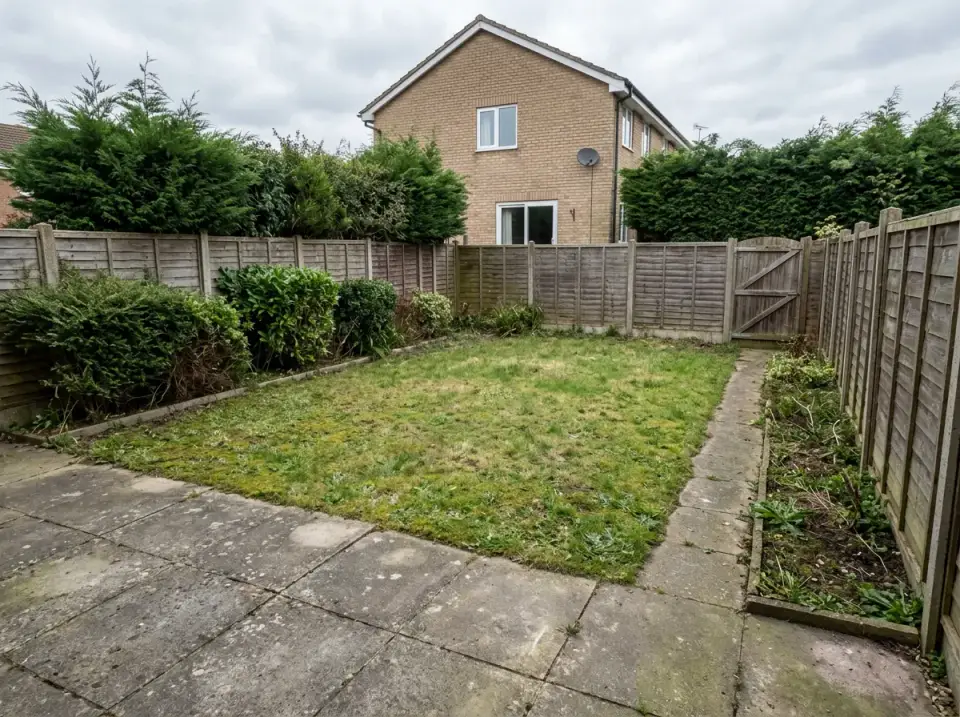
Reader notes