


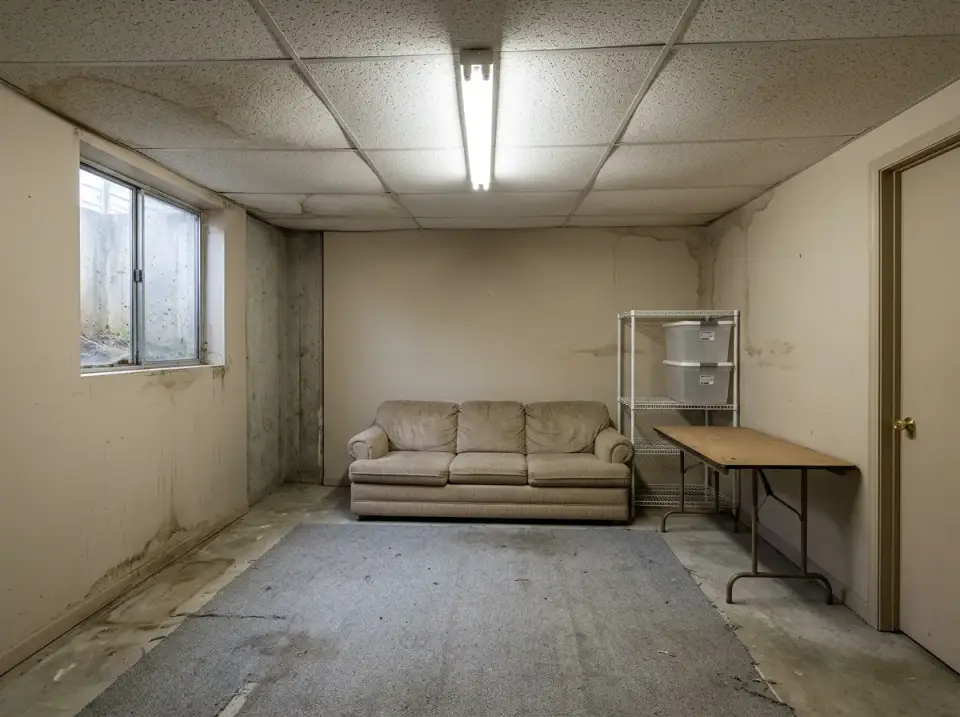
Almost every basement-bedroom consult I take starts in the same room: low ceiling, one small high window, fluorescent strip light, beige walls, painted concrete floor or builder-grade carpet, and the unmistakable smell of basement that nobody mentions out loud. Below-grade guest suites are the trickiest single brief I take because the constraints are real — limited natural light, IRC egress requirements, cooler ambient temperatures, and humidity loads that punish the wrong material choices. Below are eleven directions I've drawn up, specified, or installed for clients across Atlanta, Charlotte, Nashville, Asheville, DC metro, and the inland Southeast over the past four years (Charleston coastal lots rarely carry true basements — the water table makes them impractical). Each direction starts from the same plain below-grade rectangle and walks it forward into a different guest experience. The materials, the lighting specs, and the moisture-management notes are all from my actual project files.
What's Inside
- Coastal Calm: A Minty Fresh Retreat
- Rustic Charm: The Cozy Farmhouse Getaway
- Modern Sleek: The Minimalist Built-In
- Boho Dreams: A Vibrant Maximalist Escape
- Scandi Serenity: The Calm and Cozy Guest Room
- Organic Modern: A Breath of Fresh Air
- Moody Glam: The Luxe Boutique Hotel Vibe
- Industrial Chic: The Urban Loft Experience
- Warm Walnut Built-In Oasis
- Japandi Zen: The Meditative Minimalist Space
- Mid-Century Playful: The Retro Pattern Pop
- Pro Tips From the Field
- What Each Direction Actually Costs
- Frequently Asked Questions
- Sources & References
- Final Thoughts
Coastal Calm: A Minty Fresh Retreat
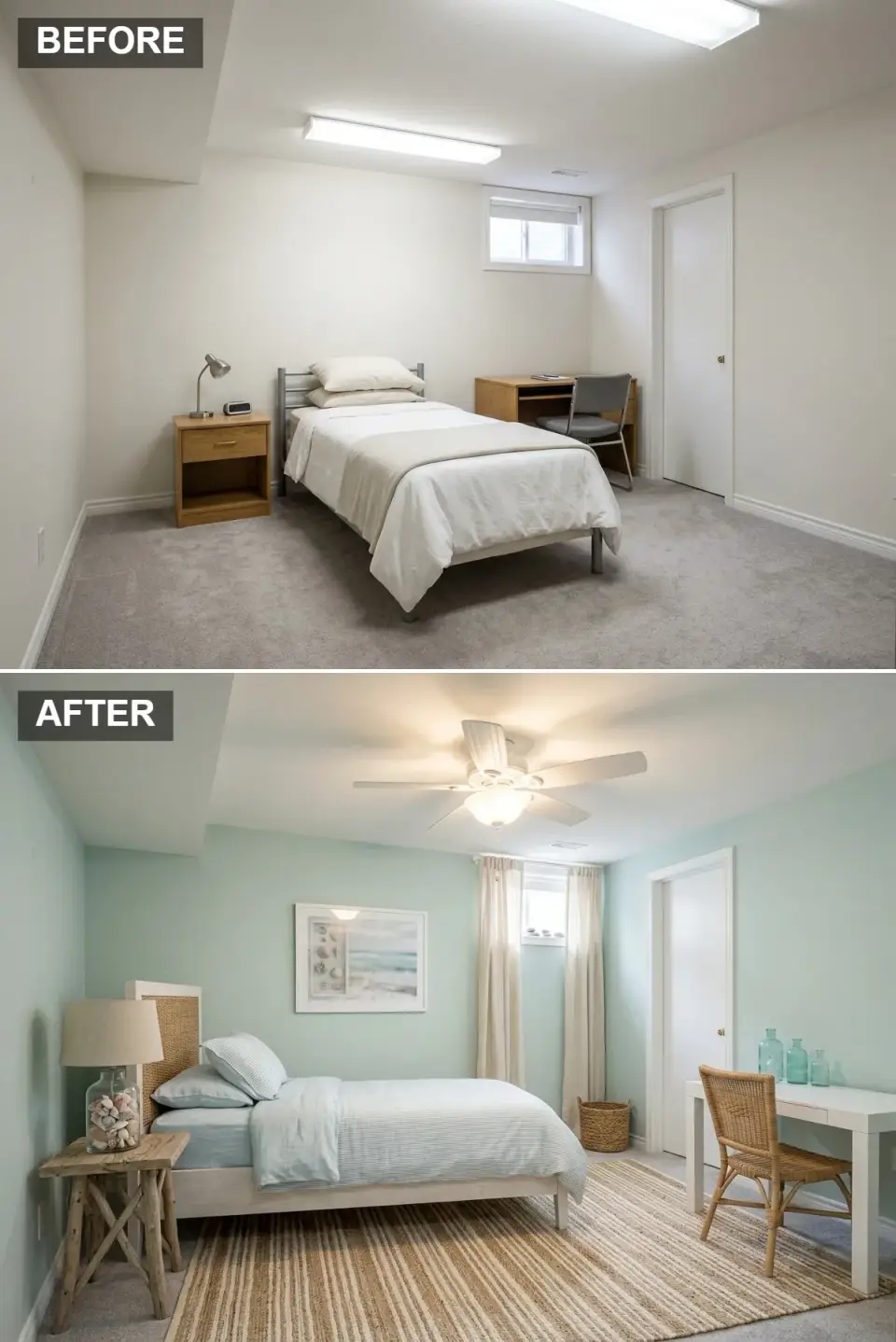
This direction is the one I most often pitch when the homeowner specifically wants the basement to read as a guest experience rather than as overflow space. The walls go in Benjamin Moore Wythe Blue HC-143 — that's the coastal mint that actually reads soft and adult rather than going hospital-pastel under basement light, and it's one of the few cool tones that works at low light levels. The fluorescent strip is replaced with a Hunter Cassius or Kichler Frey 52-inch white ceiling fan with integrated 2700K LED light kit, plus four 4-inch warm-white recessed cans on a separate dimmer circuit. The small window gets dressed in floor-to-ceiling Loomy Home or West Elm white linen curtains hung six inches above the window casing — that's the move that makes a 24-inch basement awning window read taller than it is. A Serena & Lily Riviera rattan headboard, a Pottery Barn driftwood side table, and a 9x12 Loloi jute rug carry the natural-texture story. The trick that makes this direction work in a basement: the linen curtains are blackout-lined behind to manage what little daylight enters and to provide privacy from window wells.
Color Palette
BM Wythe Blue
#B0E0E6
BM HC-143 Wythe Blue — the coastal mint that holds adult under low basement light.
& Desk Crisp White
#FFFFFF
SW Pure White SW 7005, eggshell finish — easy to wipe down in a high-humidity room.
& Chair Natural Rattan
#CBB193
Serena & Lily Riviera or Anthropologie Tulum — never plastic-rattan reproductions.
Sandy Jute
#D2B48C
Loloi Lily or Annie Selke jute — sealed underside backing for basement humidity.
Styling Notes for This Look
- Real rattan and jute hold up in basement humidity only if there's active dehumidification keeping the room below 55 percent relative humidity. Set up an Aprilaire E70 or Santa Fe Compact dehumidifier in the basement mechanical zone before installing natural-fiber furniture — both pieces will mildew within a season otherwise.
- Light blue mint-tone walls in a basement need the right Kelvin temperature on the bulbs. 2700K warm-white reads soft against the mint; 4000K daylight bulbs make the same paint look hospital-clinical. Replace every bulb in the room before judging the paint color.
- Linen curtains hung floor-to-ceiling, with a 6-inch rod-above-window margin, transform basement window proportions. Standard hardware-store window-width curtains hung at the casing are the dead giveaway of an unstyled space.
- Jute rugs in basements need a 1/4-inch thick PVC moisture barrier rug pad underneath — Mohawk Optimum or RugPadUSA Eco-Plush. Standard felt pads trap basement-floor moisture and stain the rug from below.
Rustic Charm: The Cozy Farmhouse Getaway
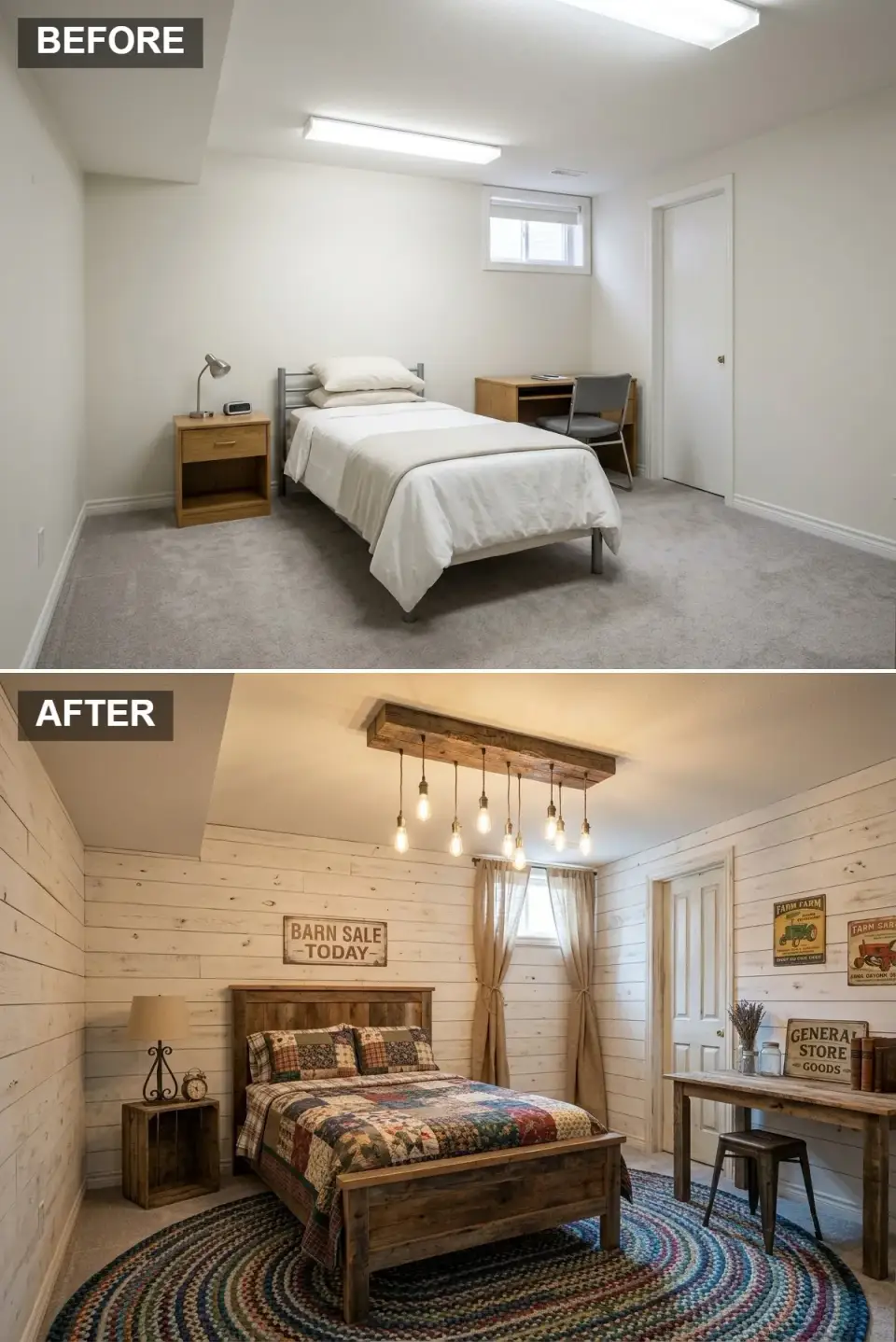
This direction works exceptionally well in Atlanta Decatur, Nashville East, and Asheville-area basements where the homeowner wants the below-grade guest space to feel like a separate cottage experience rather than an extension of the main house. The walls go in Hardie Artisan or real shiplap (1x6 cedar in v-groove) painted SW Pure White SW 7005. The reclaimed-look wood beam carrying the Edison pendants is a real reclaimed cypress timber from a regional salvage yard — Stone Mountain Access or Logan's Architectural Salvage in Atlanta both carry the right product. Three Edison filament pendants (Hudson Valley Heirloom or Restoration Hardware Steampunk) on a 36-inch span, all 2700K dimmable. The bed is a Lulu & Georgia Marsh or West Elm Stratton in stained cypress. A Annie Selke Dash & Albert braided wool round rug, Pottery Barn natural burlap or Tuesday Morning grain-sack-look curtains. The trick: in a basement the white shiplap reflects what little ambient light there is, multiplying the perceived brightness of the room without actually adding fixtures.
Color Palette
White Shiplap
#F0F0F0
Real cedar shiplap painted SW Pure White SW 7005 — never vinyl or MDF reproductions in basements.
& Desk Reclaimed Cypress
#8B5A2B
Real reclaimed cypress or pine — Lulu & Georgia Marsh or local salvage milled.
#5C4033
Stone Mountain Access (Atlanta) or Logan's Architectural Salvage source materials.
Natural Burlap
#C4A484
Real burlap or grain-sack — never polyester reproductions, which read plastic at close range.
Styling Notes for This Look
- Vinyl shiplap or MDF reproduction shiplap in a basement is the wrong move — basement humidity swells MDF at the joints within two seasons and the vinyl reads visibly cheap from any angle. Real wood shiplap (cedar v-groove or shiplap from a local mill), properly sealed and primed before paint, is the only spec that holds.
- Real reclaimed wood comes with its own moisture content and pest history. Specify kiln-dried reclaimed wood from a reputable salvage yard, not the wood your contractor pulls from a barn — you don't want a powder-post beetle infestation moving from the salvage timber into the rest of the basement structure.
- Edison filament bulbs run hot and consume more power than LED equivalents. Spec the LED filament style — Bulbrite Filaglass or Feit Electric LED Edison — at 2700K for the same look without the heat load in a tight basement room.
- Burlap curtains in basements pick up odors faster than linen or cotton. Hang them on a tension rod for easy removal, and budget for replacement at year three or so. Real burlap is the right authenticity move — but plan for the lifecycle.
Modern Sleek: The Minimalist Built-In
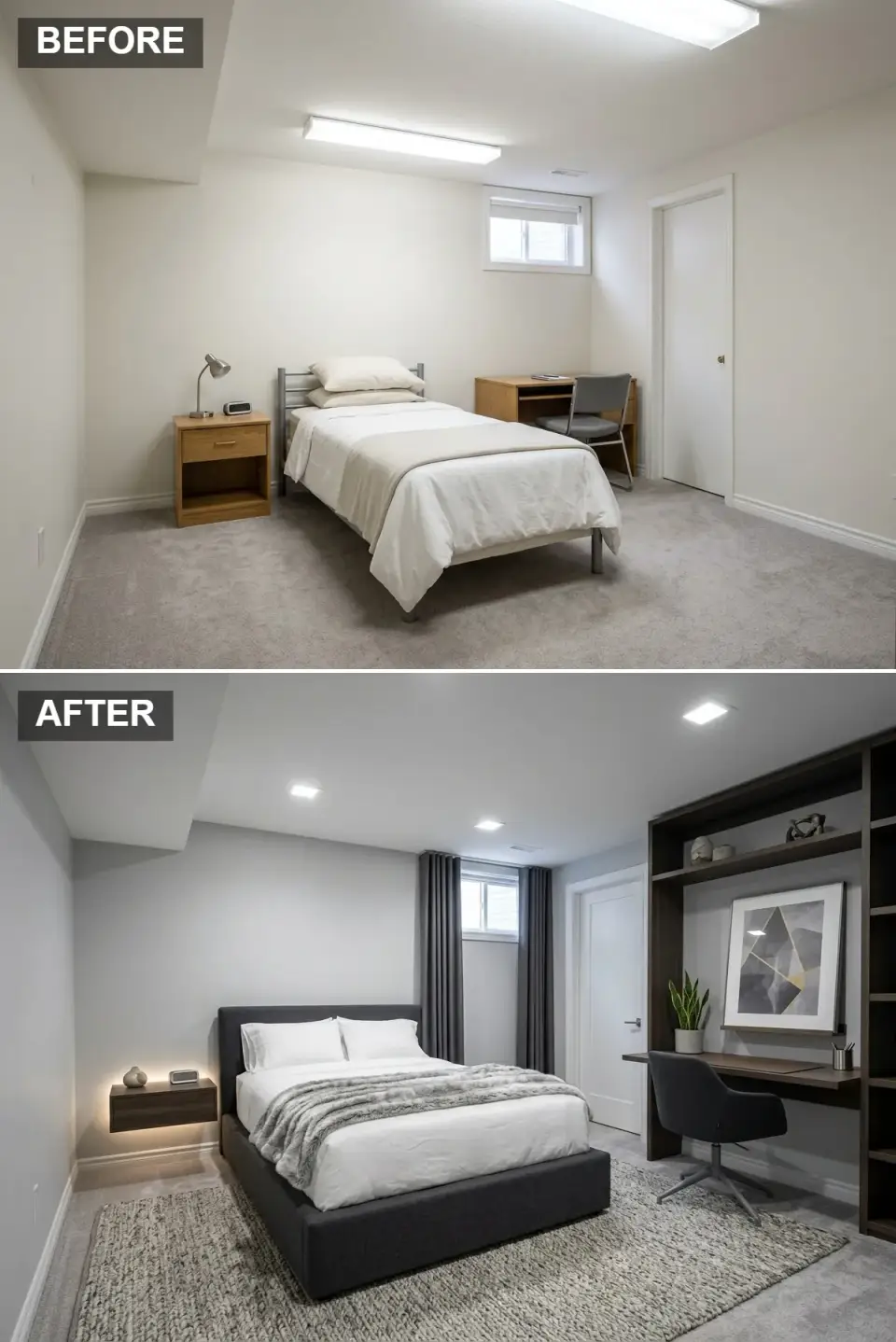
This direction reads as the most architectural on the list and works best in Atlanta Buckhead, Charlotte SouthPark, and DC-metro Bethesda finished basements where the homeowner is willing to pay for custom millwork. The walls go in BM Coventry Gray HC-169 — a soft warm grey that holds against custom walnut without going cold. The fluorescent strip is replaced entirely: four LED square recessed cans (DALS Lighting LEDS or Lithonia LBL4) on a 0-10V dimmer plus a 24-inch under-cabinet LED tape (Ketra or WAC Lighting LEDme) integrated into the floating built-ins. The custom millwork is the real spend: a wall-to-wall walnut combination unit in solid American walnut (rift-cut, finished with Rubio Monocoat Pure 0000) holding floating shelves, a desk surface, and concealed cable management. The bed is a Bludot or Article Sven channel-tufted upholstered platform. Floating nightstand from CB2 with the integrated underlighting that is the architectural move on this entire direction. The constraint that makes this direction expensive in a basement: the floating millwork has to be French-cleat-mounted to a structural backing wall, which means the original drywall comes off and goes back up over a ply backing.
Color Palette
BM Coventry Gray
#A9A9A9
BM HC-169 Coventry Gray — warm grey that doesn't read cold against walnut.
& Desk Solid American Walnut
#4A3B32
Rift-cut solid walnut, Rubio Monocoat Pure 0000 finish — never veneer in custom millwork.
Charcoal Performance Velvet
#36454F
Bludot Field or Article Sven in Crypton or Sunbrella performance velvet.
Textured Wool Grey
#B0B0B0
Hand-loomed wool from Loloi Lucia or Restoration Hardware — high pile reads warm against the millwork.
Styling Notes for This Look
- Custom walnut millwork in a basement requires the room humidity to hold below 55 percent year-round. Walnut moves seasonally with humidity swings, and basement humidity cycles destroy joinery within five years. The dehumidification spec is non-negotiable for this direction.
- Floating millwork has to be French-cleat-mounted to plywood backing inside the wall, not toggle-bolted to drywall. Toggle-bolt installs in basements tear out within three years; the load weight plus the moisture-cycling drywall strips the bolts.
- Integrated LED tape lighting under floating elements is the architectural move that carries this entire direction. Specify Ketra or WAC Lighting at 2700K, dimmable to 5 percent on a 0-10V or DMX driver. Cheaper LED tape (Amazon-branded reel kits) shifts color temperature as it dims and the architectural effect collapses.
- Real American walnut and walnut veneer read identically in catalog photography and visibly differently at close range. The grain register and the way the wood absorbs light separates them. For a custom millwork build at this price point, solid walnut on the visible faces is the right call; veneer on hidden internal panels is fine.
Boho Dreams: A Vibrant Maximalist Escape
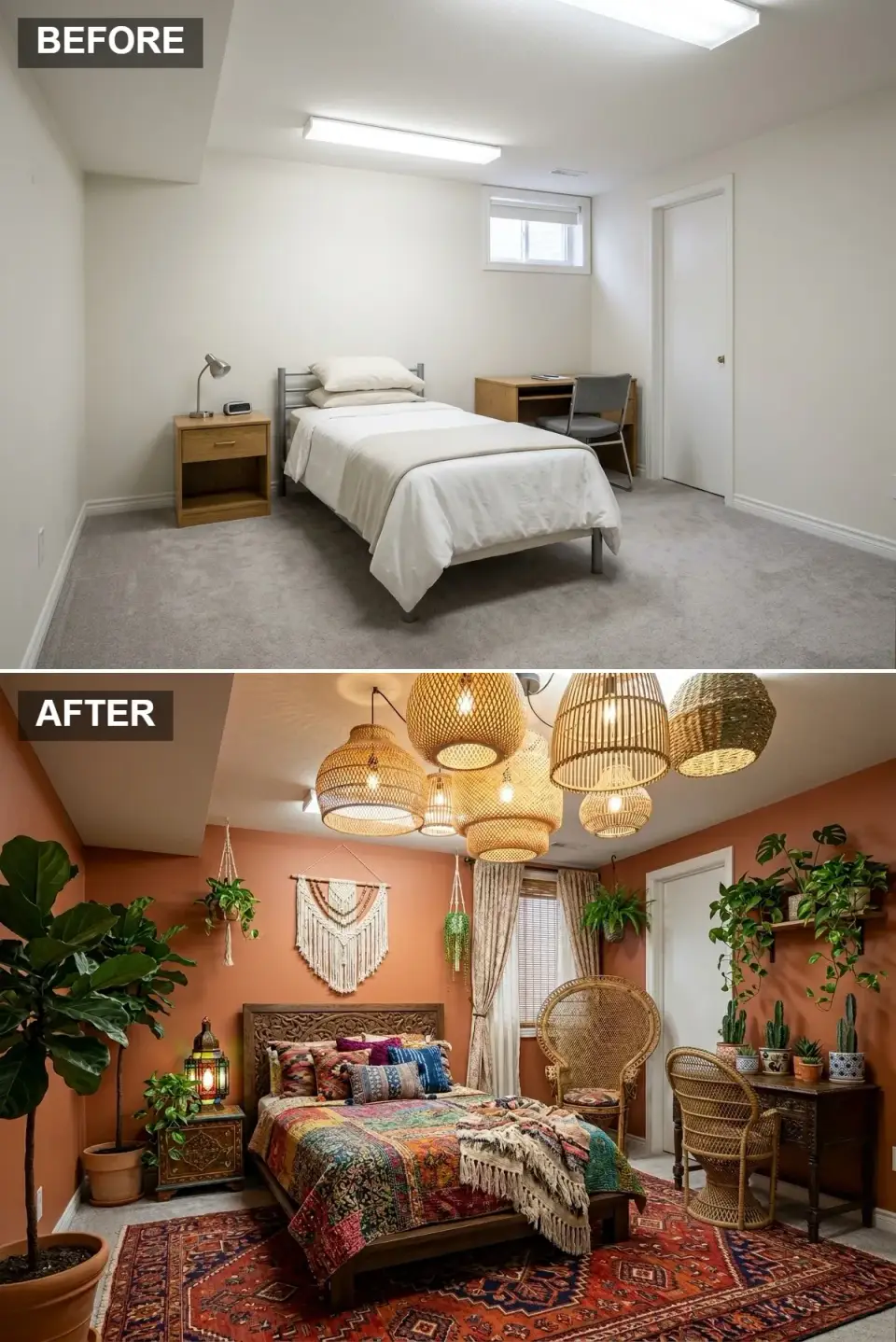
This direction works best in Atlanta Inman Park, Nashville 12 South, and Charlotte Plaza Midwood basements where the homeowner has a real interest in textile and global-design vocabulary and isn't trying to make the room read minimalist. The walls go in F&B Red Earth No.64 — that's the warm terracotta that holds against the saturated jewel tones rather than the orangey terracottas that fight them. The light fixture is the move: a cluster of three or four Anthropologie Pari or Lulu & Georgia Mireille woven pendants at staggered heights, all 2700K filament-style LED. The bed is a real carved Indian sheesham wood frame from Anthropologie's Lombok or Lulu & Georgia's Adira — the carving authenticity is the entire focal point and resin-cast reproductions read as wrong from any angle. A West Elm or House of Hackney macrame wall hanging at 36-inch width minimum (smaller reads decorative-only). Layered plants: trailing pothos, philodendron heartleaf, Boston fern (forgiving in basement humidity). The peacock chair is a real Mexican palmwood Acapulco or Lulu & Georgia Maja statement piece — never the Amazon resin reproductions.
Color Palette
F&B Red Earth
#E2725B
Farrow & Ball No.64 Red Earth — warm terracotta that holds against jewel tones.
& Desk Carved Sheesham Wood
#8B4513
Real carved Indian sheesham — Anthropologie Lombok or Lulu & Georgia Adira.
Cluster Woven Bamboo & Rattan
#DEB887
Anthropologie Pari or Lulu & Georgia Mireille at staggered heights — never single-pendant.
#CDAA7D
Real palmwood weave on iron frame — never resin Acapulco reproductions.
Styling Notes for This Look
- The basement humidity loves Boston ferns and pothos, but punishes fiddle-leaf figs, monsteras, and most calathea species. Stick to the easy-care basement plants for this direction — fern, pothos, snake plant, ZZ plant — and skip the catalog-trending finicky species.
- Real carved sheesham bed frames vary in finish darkness across batches because the wood is hand-stained. Specify the bed and side tables from the same shipment when possible to avoid mismatched tone.
- Macrame wall hangings need to be sized to the bed. The hanging width should match the bed width or slightly exceed it (centered above the headboard). Smaller hangings read as decorative afterthoughts; larger reads as deliberate.
- F&B Red Earth in a basement reads warmer than the same paint in an above-grade room because the lower light temperature shifts the color register. Test a 4-foot painted swatch with the actual room lighting on for 48 hours before committing to the full envelope.
Scandi Serenity: The Calm and Cozy Guest Room
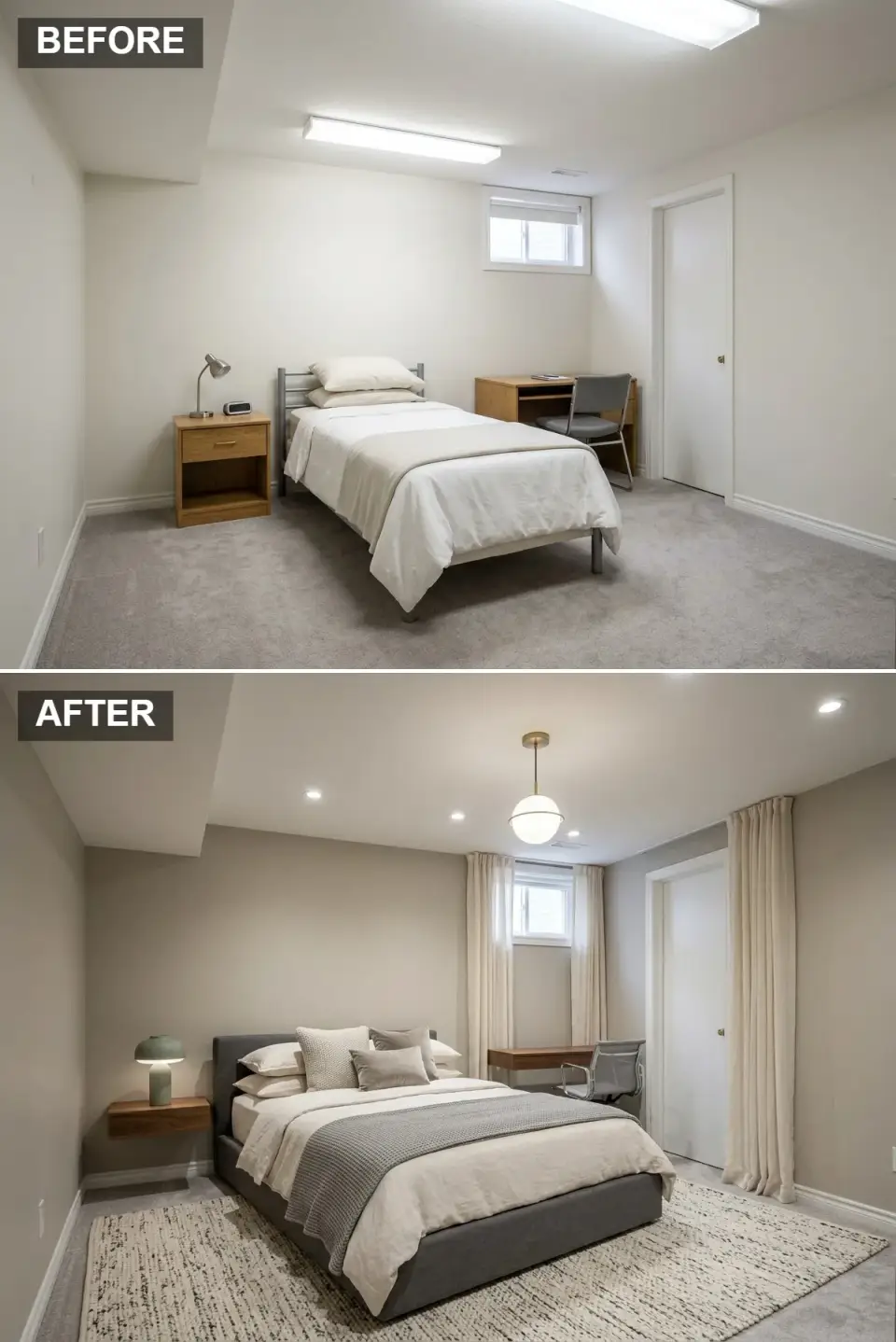
This direction reads as the most forgiving on basement constraints because Scandi is fundamentally about restraint and natural light handling — both of which work in the basement's favor when the design is honest. The walls go in BM Edgecomb Gray HC-173 — a true greige that reads warm but neutral, and one of the few warm tones that doesn't yellow under low-Kelvin basement light. The fluorescent is replaced with six recessed 4-inch warm-white cans on a dimmer plus a single statement pendant at the bedside (Muuto Beat or Hay Pao Pendant). The bed is an IKEA Hauga or Article Sven Slate Grey upholstered platform, layered with West Elm Belgian flax linen sheets, a wool throw from CB2 or Garnet Hill, and a cotton matelassé coverlet from Coyuchi. The floating desk is light-oak veneer (not solid — Scandi is honest about budget allocation) from IKEA Mikkel or Article Madera, paired with a Hay AAC or Carl Hansen CH88 chair. A 9x12 wool flatweave rug from Annie Selke Dash & Albert in Linen Stripe.
Color Palette
BM Edgecomb Gray
#BDB7AB
BM HC-173 Edgecomb Gray — true greige that holds warm under basement light.
Slate Grey Linen
#808080
Article Sven Slate Grey or IKEA Hauga in linen — natural-fiber upholstery, never polyester.
& Nightstand Light Oak Veneer
#A0522D
IKEA Mikkel or Article Madera — quartersawn oak veneer is the honest Scandi spec.
Off-White Belgian Flax Linen
#F5F5DC
West Elm Belgian flax or Loomy Home — real linen, blackout-lined for basement privacy.
Styling Notes for This Look
- Scandi-Minimalist Calm is the most forgiving direction in this article. It works in any basement because the discipline of the palette doesn't fight the room's constraints — limited natural light, low ceiling, small footprint all work fine when the visual weight is restrained.
- Layer three different textile weights on the bed: heavy linen, medium wool throw, light cotton matelassé. The texture variation is what carries Scandi rooms; without it, Scandi reads as bare rather than as restrained.
- Honest material specs are the Scandi move. Solid walnut and rift-cut oak are not the Scandi spec — quartersawn oak veneer at IKEA price points is. Don't apologize for the budget; design honestly within it.
- 2700K bulbs across every fixture in the room. Cool 4000K daylight bulbs sold as Scandi-friendly are the wrong call — Scandinavian interiors run warm-light despite the latitude because their cultural eye is calibrated to candle-light and 2700K incandescent.
Organic Modern: A Breath of Fresh Air
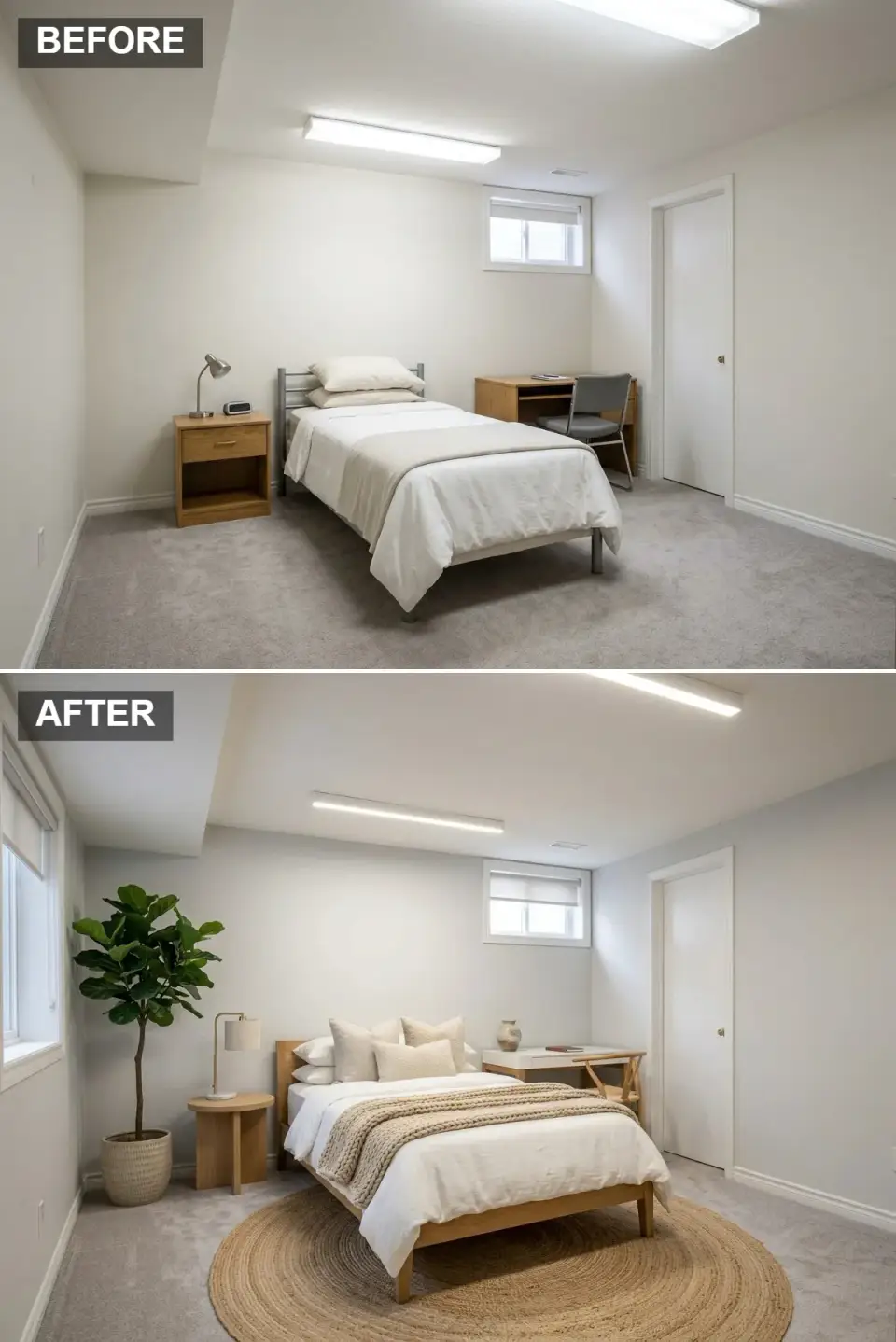
This direction reads as the closest cousin to Scandi but leans more sculptural and organic — it's the right pitch for a Charlotte Eastover or Atlanta Buckhead client whose primary residence is already organic-modern and who wants the basement to extend the vocabulary. The walls go in BM Pale Oak OC-20 — a soft warm white-grey that reads brighter than Coventry Gray under basement light. The fixture is a single Cedar & Moss Cer or Visual Comfort Halifax linear LED at 2700K, mounted across the long axis of the room. The bed is a CB2 Andes or Article Madera light-oak platform with no headboard — the discipline of the missing headboard is the move. Matching side table, no nightstand. A 9-foot round Loloi or Annie Selke jute rug breaks the rectangular geometry. The fiddle leaf fig is the entire focal point — but in a basement, only specify a real Ficus lyrata if the room gets at least 3 hours of supplementary grow-light each day. Otherwise substitute a Olive tree (Olea europaea), Rubber tree (Ficus elastica), or Dracaena, all of which tolerate low light better than fiddle-leaf.
Color Palette
BM Pale Oak
#DCDCDC
BM OC-20 Pale Oak — warm white-grey, brighter under basement light than Coventry Gray.
& Side Table Light Oak Platform
#C4A484
CB2 Andes or Article Madera — solid white oak, oil finish, no headboard.
#D2B48C
Loloi Lily or Annie Selke 9-foot round — the round shape is the architectural move.
#FFFFFF
Cedar & Moss Cer or Visual Comfort Halifax — long-axis mount, 2700K dimmable.
Styling Notes for This Look
- Fiddle-leaf figs need 6-8 hours of bright indirect light to thrive, which a basement bedroom rarely provides. Specify a Soltech Aspect Pro or GE BR30 grow-light bulb in a recessed can on a 12-hour timer — or substitute the real plant with a more forgiving species. Fake fiddle-leaf reads as fake under any daylight.
- Round rugs at 9-foot diameter break the visual rectangle of the room and read as architectural, not decorative. Anything smaller (6 or 7-foot) reads as a prop. Specify the 9-foot or larger.
- The discipline of no headboard is what separates Organic Modern from Scandi. The wall behind the bed becomes the architectural element — not a fabric panel hung from the bed frame.
- Linear LED fixtures need a long-axis mount. Cross-axis mounts read as wrong. The 36-48 inch fixture runs parallel to the longest wall, centered over the bed or the negative space depending on room geometry.
Moody Glam: The Luxe Boutique Hotel Vibe
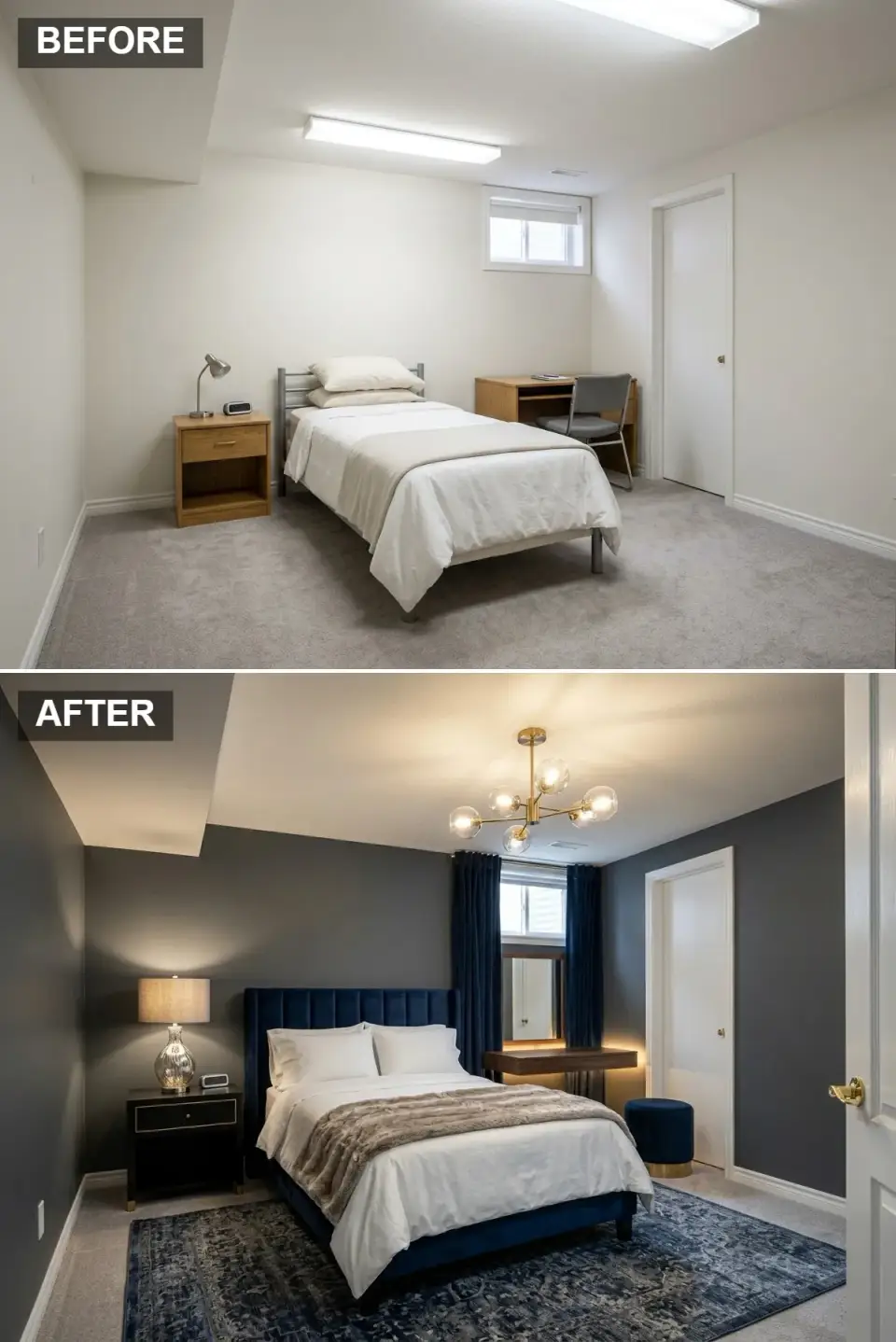
This is the highest-budget direction on the list and the one I most often steer clients away from unless they're committed to the spec list. Done well, Moody Glam is gorgeous; done at half-budget, it collapses faster than any other direction here because every cheaper material reads as cheaper at close range. The walls go in BM Black Beauty 2128-10 — a saturated charcoal that reads warm rather than blue under 2700K bulbs. The chandelier is a Visual Comfort Hicks Pendant or RH 19th C. French-style brushed brass; never the polished-brass reproductions that read costume. The bed is a real channel-tufted performance velvet (Sunbrella Renaissance or Crypton — never polyester velour) in a deep sapphire blue, custom-built or sourced from Interior Define or Joybird. The dark wood floating vanity is custom millwork in solid ebony oak or stained walnut, French-cleat-mounted. A patterned blue rug from Lulu & Georgia Hawthorne or West Elm Andalusia, hand-knotted wool. The 2700K bulb temperature is doing the work that makes the dark walls read as enveloping rather than as oppressive.
Color Palette
BM Black Beauty
#36454F
BM 2128-10 Black Beauty — saturated charcoal that reads warm under 2700K bulbs.
& Ottoman Sapphire Performance Velvet
#0F52BA
Sunbrella Renaissance or Crypton velvet — never polyester velour at this price tier.
& Hardware Brushed Brass
#B5A642
Visual Comfort Hicks or RH 19th C. — brushed brass, never polished or gold-tone painted.
& Nightstand Solid Ebony Oak
#222222
Custom millwork in solid ebony oak or stained walnut — never veneer at this price.
Styling Notes for This Look
- Performance velvet on every upholstered piece — Crypton or Sunbrella Renaissance only. Polyester velour pills under guest-room wear within four months and the room reads tired by year one.
- Brushed brass, never polished brass. Polished brass reads costume in a basement guest room because the high reflectivity emphasizes the lower light levels rather than warming them. Brushed brass holds warm.
- The dark walls demand 2700K bulbs across every fixture. A single 4000K daylight bulb in any fixture in the room flips the entire scheme to morgue. Replace bulbs before the paint goes on the walls.
- Real chandelier weight on a basement ceiling needs structural blocking — the standard residential ceiling box is rated for 35 lbs and Visual Comfort Hicks runs 28 lbs without bulbs. Spec the structural blocking during framing or accept the limitation that the chandelier cannot exceed 25 lbs.
Industrial Chic: The Urban Loft Experience
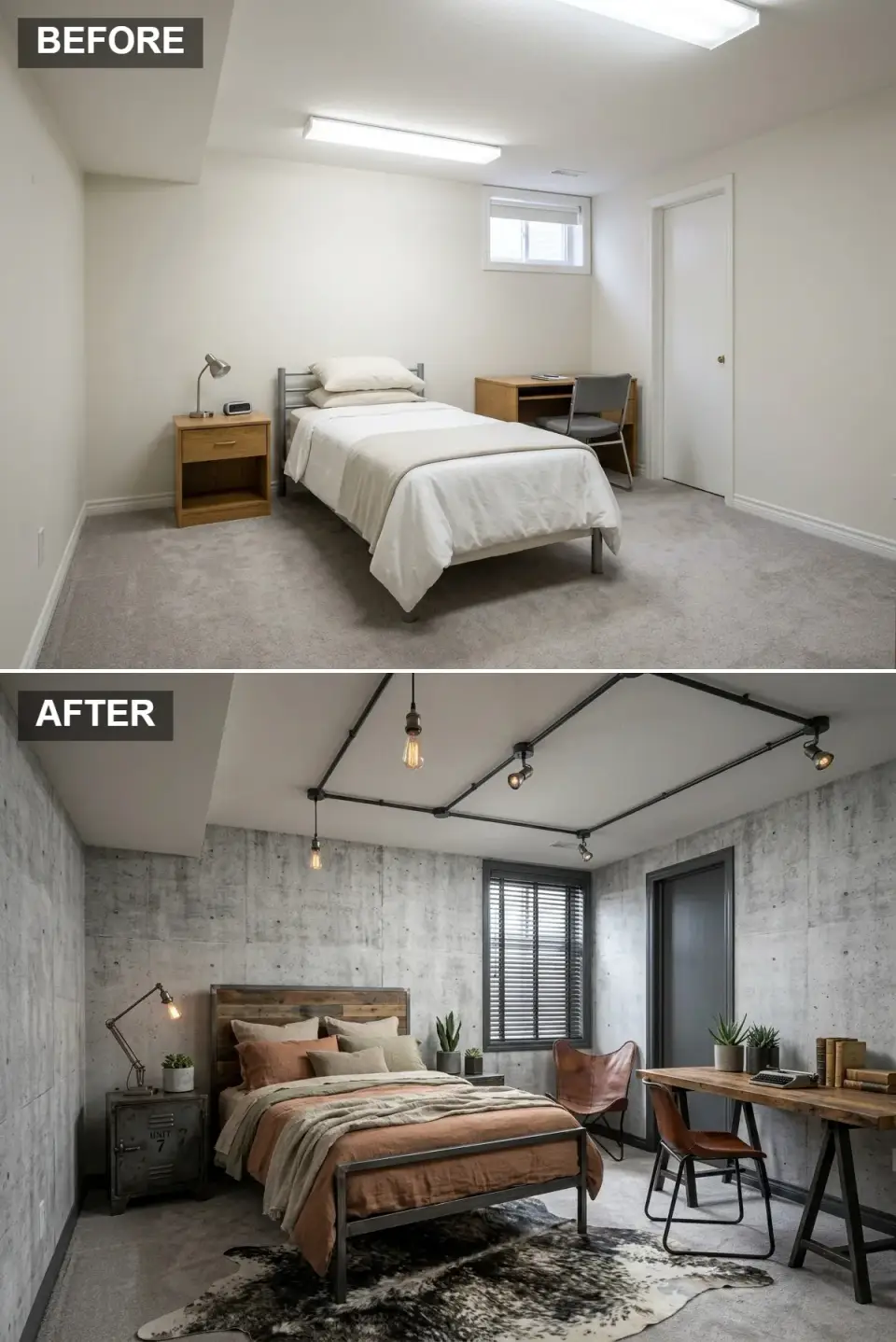
This direction works exceptionally well in basements because the basement's actual structural language (concrete, exposed structural elements, low ceiling) is already pointing toward industrial — the design just leans into it rather than fighting it. Best for Atlanta Beltline, Charlotte NoDa, Nashville Wedgewood-Houston basements. The walls go in Modern Masters Concrete-Effect plaster (real plaster, not paint) in Stone Grey, hand-troweled to a varied texture. The fluorescent strip is replaced with a Restoration Hardware or Hudson Valley industrial track-lighting system in matte black on real EMT conduit — visible conduit is the move. The bed is a CB2 Locker or Restoration Hardware Industrial Iron metal frame. The desk is a real reclaimed wood top on Simpson Strong-Tie sawhorse legs. A locker-style metal nightstand from CB2 Cargo or West Elm Industrial. The leather butterfly chair (BKF or Wahsington-Style) needs to be real leather, not vinyl — one of the few directions where the leather is non-negotiable. A real Brazilian cowhide rug from West Elm or Pottery Barn — never the printed reproductions.
Color Palette
Concrete Plaster
#808080
Modern Masters Concrete-Effect in Stone Grey — real plaster, not painted texture.
& Lighting Matte Black Steel
#000000
CB2 Locker bed and visible EMT conduit track — real industrial materials, not painted reproductions.
& Chair Reclaimed Wood & Leather
#8B4513
Real reclaimed wood on Simpson Strong-Tie sawhorse legs; real leather butterfly chair.
Real Brazilian Cowhide
#F5F5DC
Real cowhide from West Elm or Pottery Barn — never printed reproductions.
Styling Notes for This Look
- Industrial Chic accumulates dust on every exposed conduit, pipe, and rough finish. By year three the room reads as un-cleaned rather than aesthetically raw if the household isn't deep-cleaning quarterly. Specify a Dyson V15 or comparable HEPA stick vacuum and accept the cleaning lifecycle.
- Real concrete plaster has to be sealed with a penetrating sealer (Miracle Sealants 511 Impregnator) or it absorbs basement humidity and develops a chalky bloom. The seal is invisible and necessary.
- Real cowhide rugs in a basement need a 1/4-inch PVC moisture barrier rug pad below them and have to be rotated quarterly to avoid moisture trap on one side. Cheap printed cowhide reproductions read fake at 8 feet of viewing distance.
- Visible EMT conduit on the ceiling needs to be properly bonded, grounded, and inspected. The architectural-industrial conduit lighting installs that cut electrical corners are both a code violation and a fire hazard. Spec a licensed electrician for the conduit run.
Warm Walnut Built-In Oasis
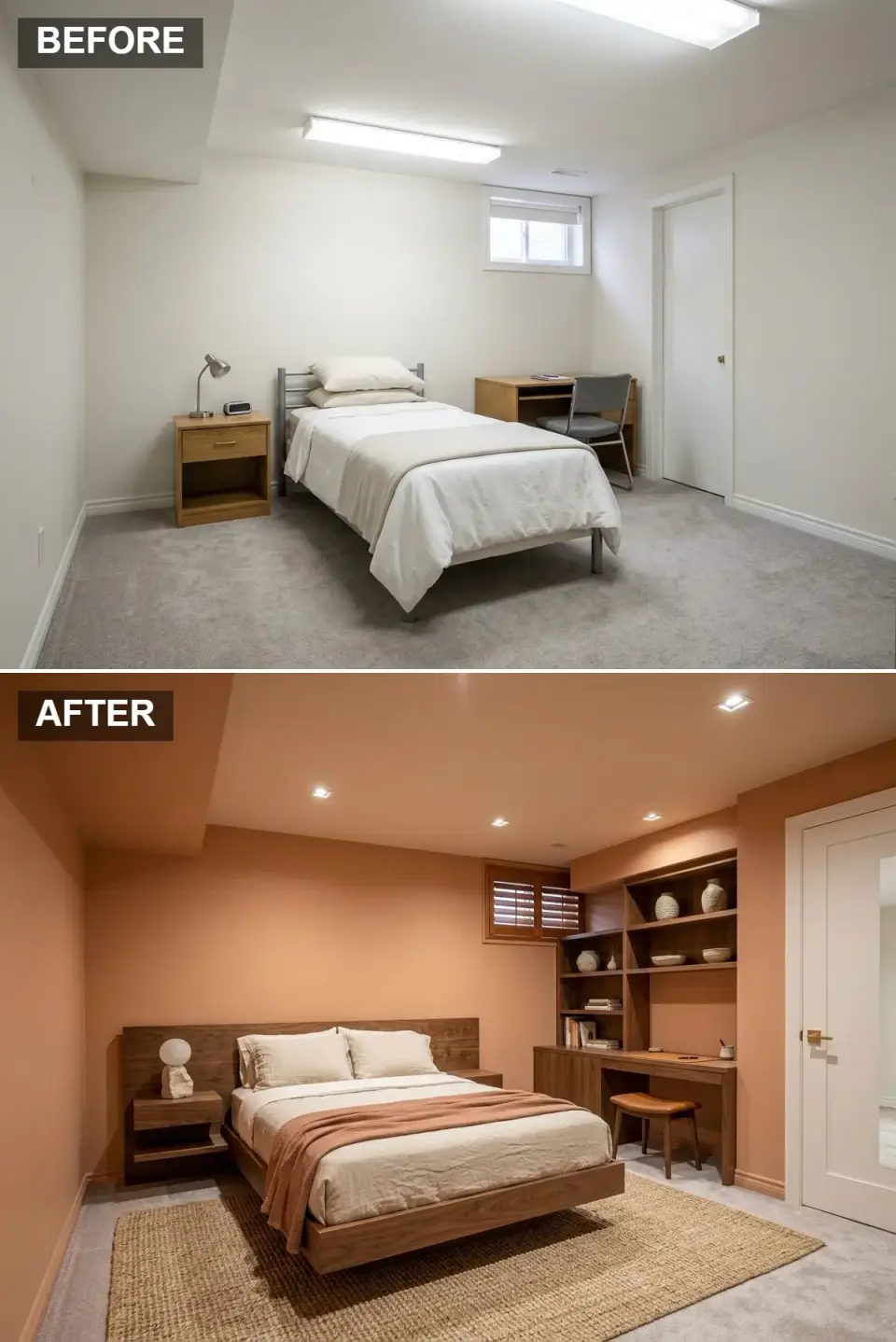
This direction is the most ambitious built-in approach on the list and works best for Charlotte Myers Park, Atlanta Buckhead, and Nashville Belle Meade basements where the homeowner is willing to pay for full-room custom millwork. Every horizontal surface in the room is American walnut. The walls go in BM Audubon Russet HC-51 — a muted terracotta that holds warm against the walnut without competing with it. The platform bed is custom-built with integrated nightstands cantilevered from the bed structure, all in solid rift-cut American walnut, finished Rubio Monocoat Pure 0000. The wall-to-wall built-in opposite the bed combines a desk surface, open shelving, and concealed storage — same material, same finish. Recessed 4-inch warm-white cans on a 0-10V dimmer plus integrated LED tape under every shelf and at the bed-frame perimeter. The trick that makes this direction work in a basement: the millwork has to be installed after the room hits its target humidity range and the wood has to acclimate for a minimum of 14 days on-site before final finishing. Skipping acclimation is what destroys custom walnut basement installs within five years.
Color Palette
BM Audubon Russet
#CC8866
BM HC-51 Audubon Russet — muted terracotta that holds against walnut.
Furniture Solid Rift-Cut American Walnut
#664228
Solid walnut, not veneer — Rubio Monocoat Pure 0000 finish.
Textured Wool Jute
#C4A484
Loloi Lucia or Annie Selke wool-and-jute blend — natural fibers complement the walnut grain.
& Trim Creamy Off-White
#FDF5E6
BM White Dove OC-17 in semi-gloss — brightens the trim against the warm wall.
Styling Notes for This Look
- Custom walnut millwork in a basement requires a fully-conditioned space. The room has to hold below 55 percent relative humidity year-round before installation begins, and the dehumidification system has to be sized for the basement load (Aprilaire E70 or Santa Fe Compact at minimum).
- Wood acclimation is non-negotiable. The walnut needs 14 days minimum on-site at the room's target humidity before final fitting and finishing. Cabinetmakers who skip this step are the ones whose work cracks at year three.
- Cantilevered nightstands integrated into the bed structure look architectural and require structural engineering. Specify the nightstand cantilever in writing with the millwork shop, including the maximum point load — guest suitcases routinely test the limit.
- Integrated LED tape lighting at every shelf edge and at the bed perimeter is the architectural move that justifies the custom-millwork spend. Specify Ketra or WAC Lighting at 2700K, dimmable to 5 percent, on a single zone controller.
Japandi Zen: The Meditative Minimalist Space
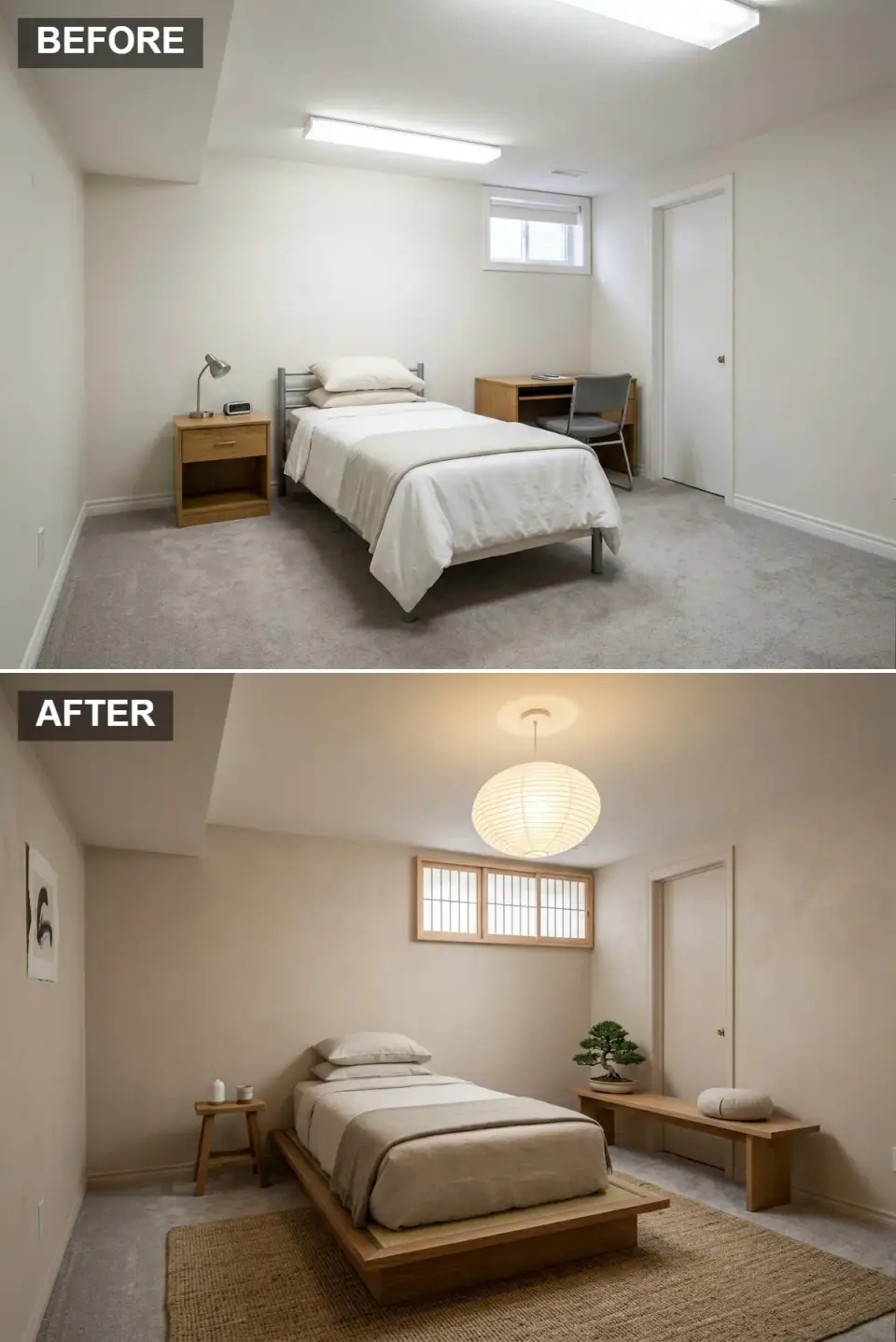
This direction reads as the most disciplined in the article and demands the most restraint to execute well. Works best in Asheville modern-leaning lots, Atlanta Inman Park, and DC-metro infill basements where the homeowner has a real aesthetic interest and can commit to the minimalist discipline. The walls go in Romabio Calce Vecchia limewash in Sand Pit — real lime plaster, hand-troweled to a varied texture, never paint reproduction. The fluorescent is replaced with a single Akari 30D paper lantern (real Isamu Noguchi Akari, never the reproductions sold at HomeGoods) over the bed. The window gets a real wood-frame shoji-style screen — custom milled or sourced from Cherry Tree Design — that diffuses what little light the basement window provides. The platform bed is a real low-profile Japanese style (8-12 inches off the floor) over a real tatami mat from Kakefuda or A.B. Industries. A simple Hinoki cypress bench, a single mature bonsai (Juniperus chinensis 'Itoigawa' or Ulmus parvifolia), nothing else. The discipline of the empty space is the move; adding a fourth object visibly breaks the concept.
Color Palette
Romabio Sand Pit Limewash
#EDDCC8
Real lime plaster in Sand Pit, hand-troweled — never paint reproduction.
& Bench Hinoki Cypress
#D2B48C
Real Hinoki cypress, oil finish only — no stain or topcoat.
#F5F5DC
Cherry Tree Design or custom-milled — real Japanese shoji, not American reproduction.
#C0B283
Real woven igusa rush tatami from Kakefuda or A.B. Industries.
Styling Notes for This Look
- Real shoji screens read as Japandi; American reproductions read as costume. The difference is the wood frame proportions (real shoji uses thin lattice spacing) and the paper weight (real washi is heavier than the rice paper sold at craft stores). Order from Cherry Tree Design or have one custom-milled.
- Tatami mats need to be lifted and aired every two weeks to prevent moisture trap underneath, and replaced every 8-10 years. Real tatami in a basement requires the dehumidification spec at 50 percent RH or below to last that long.
- One bonsai, properly placed, is the entire architectural move. Two bonsai reads as collection; one bonsai reads as singular and considered. Pick the bonsai that thrives in low light (Ulmus parvifolia, Ficus retusa, or Juniperus chinensis 'Itoigawa') for basement conditions.
- Asymmetric balance throughout. Center nothing. A centered piece of art on the wall above the bed, a centered light fixture, or symmetrically-balanced objects flip the entire concept Western within a single move.
Mid-Century Playful: The Retro Pattern Pop
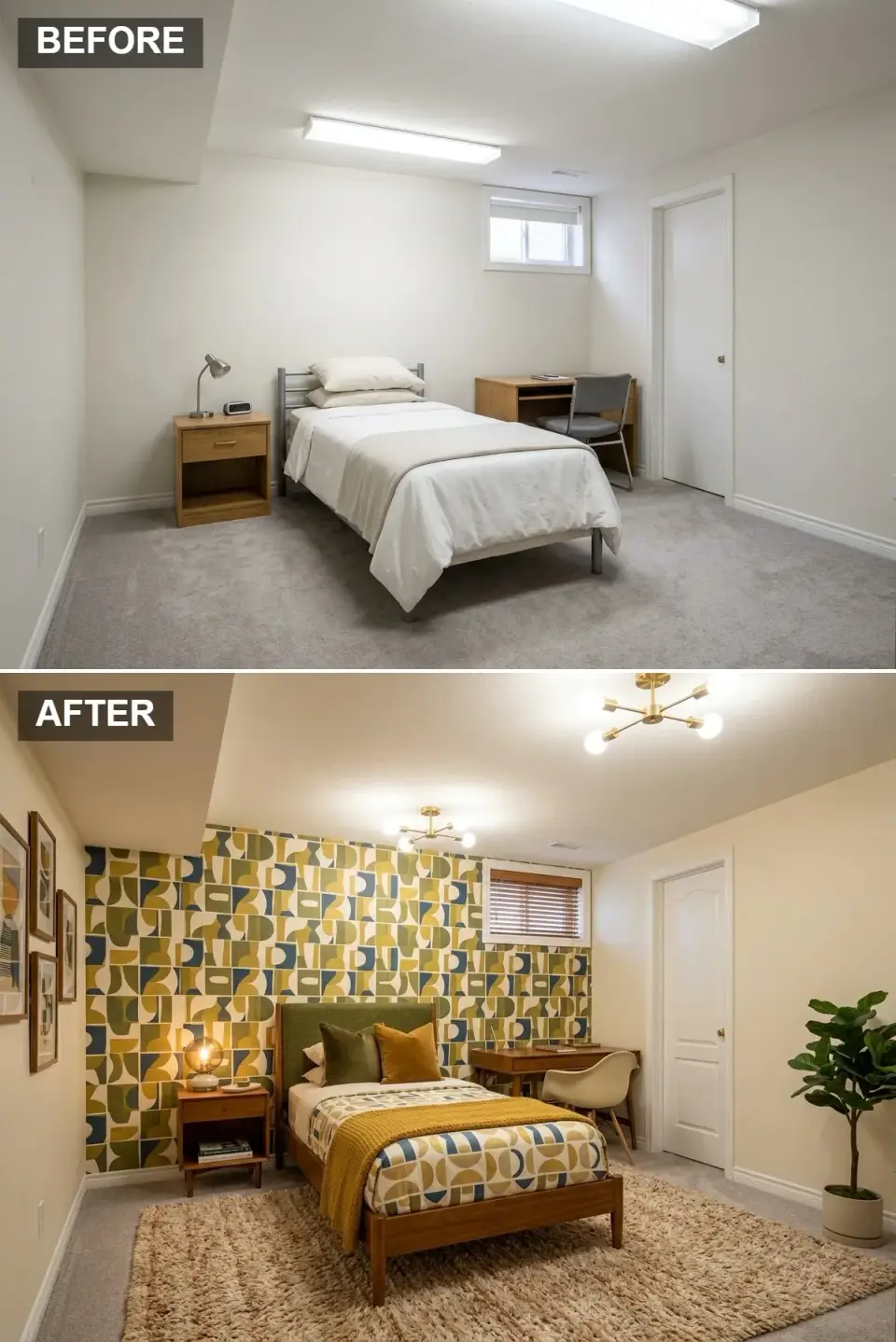
This direction is the most fun to execute and the one I most often pitch when the homeowner wants the basement guest space to feel different from the rest of the house — a deliberate departure from the upstairs language. Works best in Charleston Park Circle (the rare basement-having Charleston neighborhood), Charlotte Plaza Midwood, and Nashville East. The accent wall behind the bed gets a real mid-century geometric wallpaper — Cole & Son Geometric II or Hygge & West Petal Pusher are the right scale and saturation. The remaining walls go in BM Decorator's White CC-20. The bed is a real mid-century walnut frame with tapered legs (Article Sven, Joybird Hopson, or a vintage Heywood-Wakefield Encore from a Charleston dealer like Charleston Auction). Two Sputnik-style chandeliers (Hudson Valley Heirloom or Mitzi Astrid) at staggered heights. The desk is a vintage Heywood-Wakefield piece or a Joybird Becker reproduction. The chair is a real Eames molded plastic shell on a metal base. A 5x7 cream shag rug from West Elm or Lulu & Georgia.
Color Palette
Mid-Century Geometric
#A8A254
Cole & Son Geometric II or Hygge & West Petal Pusher — real wallpaper, not peel-and-stick.
& Desk Mid-Century Walnut
#915F31
Article Sven or vintage Heywood-Wakefield — tapered legs are the period-correct silhouette.
#E6C200
Hudson Valley Heirloom or Mitzi Astrid — staggered-height pair, never single.
#F5F5DC
West Elm or Lulu & Georgia 5x7 — real wool shag, not polyester.
Styling Notes for This Look
- Real wallpaper reads better than peel-and-stick at any price tier. Cole & Son and Hygge & West run $180-$280 per double roll; Spoonflower's same-pattern peel-and-stick runs $80. The cheaper version reads as cheaper from across the room. Spend on the real wallpaper for the accent wall only.
- One real mid-century vintage piece elevates the entire room above what new reproductions can achieve. Source one anchor piece — a vintage credenza, a real Heywood-Wakefield desk, or an authentic Eames chair — from a Charleston, Atlanta, or Charlotte mid-century dealer. The rest of the room can be reproduction-quality.
- Sputnik chandeliers come in proportions that need to match the room scale. A 24-inch Sputnik in a 10x12 basement reads correct; a 36-inch Sputnik reads aggressive. Measure the ceiling height before specifying.
- Real wool shag in basements needs the moisture-barrier rug pad and quarterly rotation. Polyester shag is the common cost-cut and reads visibly cheaper at close range — the pile flattens permanently within six months and the texture goes wrong.
Pro Tips From the Field
- Solve the moisture problem before you spend a dollar on style. Every direction in this article assumes the basement holds below 55 percent relative humidity year-round. If the basement currently reads above that, install dehumidification (Aprilaire E70, Santa Fe Compact, or comparable whole-house unit) before any furniture or finishes go in. The cost is roughly $1,800-$3,200 installed and it protects every dollar that follows.
- Layer your lighting in three levels — without exception. Recessed ambient on a dimmer, task lighting at the desk and bedside, and accent lighting under shelves or behind the bed. The single overhead fluorescent that came with the basement is the worst lighting scheme on earth and the room will fail at night until you fix it.
- 2700K bulbs across every fixture in the room. Cool 4000K and 5000K LEDs (sold as "daylight") are the wrong call in any basement bedroom regardless of the design direction. Replace bulbs before you repaint.
- Confirm IRC R310 egress before you finish the room. Every basement bedroom legally requires an egress window or door (5.7 sq ft clear opening, 24-inch minimum height, 20-inch minimum width, sill not more than 44 inches above the finished floor). If the existing window doesn't meet code, the room cannot legally be a bedroom regardless of how well it's styled. Cutting an egress window into a poured-concrete basement wall runs $4,500-$8,500 and is essentially non-negotiable.
- Long curtains hung high create the illusion of ceiling height. The single most-effective trick for low-ceiling basements: hang floor-to-ceiling curtains from a rod 6-8 inches above the window casing, with the curtains running to the floor regardless of window size. The eye reads the room as taller than it is.
- Real area rugs over basement floors are non-negotiable. Cold concrete or builder-grade carpet is the basement-bedroom dealbreaker. Specify a 9x12 minimum wool, jute, or cotton rug — sized for the bed and seating area both — over a 1/4-inch PVC moisture barrier rug pad.
- Real plants beat fake ones, and basement plants must be species-matched to low light. Pothos, snake plant, ZZ plant, philodendron heartleaf, Boston fern, and rubber tree all tolerate basement light. Fiddle-leaf fig, monstera, and most calathea species fail without supplementary grow-lighting.
- Confirm sound transmission spec from the floor above. Basement bedrooms catch every footstep from the kitchen above. Per IBC 1207, specify resilient channel and 5/8" Type X gypsum on the basement ceiling, or QuietRock at the same locations, before you finish the room. Retrofitting acoustic isolation after the room is finished is dramatically more expensive.
What Each Direction Actually Costs
Atlanta-and-Charlotte Market Ranges, 2026
These are real ranges from my project files for a full transformation of a roughly 12x15 below-grade bedroom in 2026. Numbers assume the basement is already finished to a livable spec (drywall, flooring, code-compliant egress, conditioned air) and the work is a stylist-led design refresh — not a full basement build-out. If your basement is currently unfinished, add roughly $35,000-$60,000 for the framing, drywall, electrical, and HVAC work that has to happen before any of these directions can be installed. Labor runs 6-12 percent higher in DC metro and Asheville, 4-8 percent lower in Nashville and Knoxville. Material costs cross-checked against my own bid comparisons across 2024 and 2025.
| Direction | Budget Range | Main Cost Driver |
|---|---|---|
| Coastal Calm: Minty Fresh | $8,500 - $16,000 | Paint, rattan headboard, linen curtains, jute rug, ceiling fan |
| Rustic Charm: Farmhouse Getaway | $12,000 - $22,000 | Real shiplap install, reclaimed beam, Edison pendants, vintage furniture |
| Modern Sleek: Minimalist Built-In | $32,000 - $58,000 | Custom walnut floating millwork, integrated LED, upholstered platform bed |
| Boho Dreams: Maximalist Escape | $10,000 - $18,000 | F&B paint, carved sheesham bed, woven pendant cluster, real Acapulco chair |
| Scandi Serenity: Calm & Cozy | $6,500 - $13,000 | Greige paint, IKEA/Article furniture, layered linen-wool-cotton bedding |
| Organic Modern: Breath of Fresh Air | $11,000 - $19,000 | Light oak platform, round jute rug, linear LED, real specimen plant |
| Moody Glam: Boutique Hotel | $28,000 - $52,000 | Performance velvet bed, Visual Comfort chandelier, custom millwork vanity |
| Industrial Chic: Urban Loft | $14,000 - $24,000 | Concrete plaster install, EMT track lighting, real leather and cowhide |
| Warm Walnut Built-In Oasis | $42,000 - $72,000 | Wall-to-wall custom walnut, integrated nightstands, full LED tape lighting |
| Japandi Zen: Meditative Minimalist | $16,000 - $28,000 | Limewash plaster, real shoji screen, authentic tatami mat, Akari pendant |
| Mid-Century Playful: Retro Pattern | $11,000 - $20,000 | Real wallpaper, vintage Heywood-Wakefield piece, Sputnik chandelier pair |
Numbers exclude moisture-management work (dehumidification install at $1,800-$3,200, basement waterproofing at $4,000-$12,000), egress window installation if not already present ($4,500-$8,500 to cut and frame in poured concrete), structural sound-isolation work to the floor above ($2,800-$5,400 for resilient channel and double-layer drywall on the ceiling), and any HVAC work to add a dedicated zone for the basement bedroom. Most basement guest-suite projects need at least one of these line items in addition to the design work itself. All ranges assume the work is bid out to a licensed general contractor with a stylist or designer specifying materials.
Frequently Asked Questions
Which of these directions is the most forgiving on a tight budget?
Scandi Serenity, with no real competition. The IKEA Hauga or Article Sven deliver the right silhouette at the lowest price tier, layered linen-wool-cotton bedding works at the $200-$400 level, and the discipline of the palette means you're buying fewer things, not cheaper things. I've delivered a complete Scandi basement guest suite in Atlanta for $6,800 turnkey. Coastal Calm and Boho Dreams are the next two most forgiving — both lean on paint and easy-to-source furniture rather than custom millwork.
Can a basement bedroom legally be a bedroom in the Southeast?
Yes — provided the room meets IRC R310 egress requirements (5.7 sq ft clear openable area, 24-inch minimum height, 20-inch minimum width on the egress window, sill no more than 44 inches above finished floor) and IRC R303 ventilation and lighting requirements. The egress requirement is the most-commonly-failed code provision on basement-bedroom projects in Atlanta, Charlotte, and Nashville — the existing basement window is undersized, and cutting a code-compliant window into the foundation runs $4,500-$8,500. The investment is non-negotiable: a basement room without code-compliant egress cannot legally be sold or marketed as a bedroom regardless of style.
Which direction reads best in a basement with the lowest ceiling — under 7 feet?
Coastal Calm, Scandi Serenity, and Organic Modern all handle low ceilings best because the visual weight is distributed low and the palettes brighten the room without requiring vertical drama. Specifically avoid Moody Glam (the chandelier wants ceiling height), Mid-Century Playful (the staggered Sputniks need vertical room to breathe), Warm Walnut Built-In Oasis (the wall-to-wall millwork compresses low ceilings further), and Industrial Chic (the conduit lighting reads cluttered against a low ceiling). At 7 feet of clearance, lean into directions that distribute visual interest horizontally rather than vertically.
What's the single most common basement-bedroom mistake?
Skipping the dehumidification step before installing finishes. Every direction in this article assumes the basement holds below 55 percent relative humidity year-round, and most unconditioned Southern basements run 65-75 percent humidity in summer. Real wood furniture, natural-fiber rugs, performance velvet upholstery, and custom millwork all fail in high-humidity basements within 18-36 months. Spend the $1,800-$3,200 on whole-basement dehumidification before you spend the design budget. The second-most-common mistake is keeping the existing fluorescent strip light because the homeowner doesn't think the lighting matters; it matters more in a basement than in any other room of the house.
Can I mix two of these directions in one basement guest suite?
Several pairs work cleanly. Scandi Serenity plus Organic Modern share the warm-wood-and-restraint vocabulary and read as one continuous concept. Modern Sleek plus Warm Walnut Built-In Oasis are the same custom-millwork conversation at different intensities. Industrial Chic plus Modern Sleek share the dark-and-architectural language. The pairs that fight: Boho Dreams with anything restrained, Moody Glam with anything rustic, Japandi with anything ornate, and Mid-Century Playful with Industrial Chic — those are stylistic opposites that produce visual noise rather than depth.
Does a basement guest suite add resale value?
Yes — provided the room legally counts as a bedroom (egress, ventilation, ceiling height, conditioned air all confirmed) and the work is done to a livable rather than budget-builder standard. Per Remodeling Magazine's 2025 Cost vs. Value Report, a basement-bedroom finish in the Southeast averages 65-75 percent recouped on resale, with the upper range driven by full bathroom inclusion (ensuite or adjacent) and proper acoustic isolation from the floor above. Below-code basement bedrooms (no egress, low ceiling, undersized HVAC) actively reduce resale value because they signal future required work to a discerning buyer.
Which direction holds up best in real basement humidity over five years?
Modern Sleek: Minimalist Built-In, Industrial Chic, and Scandi Serenity hold up best — provided the dehumidification spec is in place. Modern Sleek and Industrial Chic use materials (steel, concrete, performance fabrics) that are inherently humidity-tolerant; Scandi uses honest budget-tier materials that are easy to refresh at year three or four if needed. Real walnut and oak millwork hold up if the humidity is controlled and the wood is properly acclimated; if either condition fails, the millwork fails first. Real cowhide, real burlap, real shoji paper, and real tatami all need active humidity management.
How do I help a guest actually want to stay down there?
Three small details disproportionately determine whether the basement guest suite gets used for repeat visits. First: a real bedside reading lamp on a separate switch from the overhead light, with a 2700K bulb. Second: a basket or shelf with fresh towels, water, and a phone charger already in the room — the same hospitality cues a hotel provides. Third: a small dehumidifier or HEPA air purifier running quietly in the corner, which both controls humidity and signals to the guest that the air is being managed. The styling is the reason the guest agrees to come; the small details are the reason they ask to come back.
Sources & References
- International Residential Code (IRC) Section R310 (Emergency Escape and Rescue Openings) — egress window requirements for basement bedrooms.
- IRC Section R303 (Ventilation and Lighting) — ventilation and natural-light requirements for habitable basement rooms.
- IRC Section R408 (Crawlspaces and Basements) — moisture management and below-grade conditioning requirements.
- International Building Code (IBC) Section 1207 (Sound Transmission) — acoustic isolation requirements for floor assemblies between basement and main floor.
- ASHRAE 62.2 (Ventilation for Acceptable Indoor Air Quality) — whole-house ventilation requirements for conditioned basement bedrooms.
- EPA Indoor airPLUS Construction Specifications — basement humidity control standards (50-55 percent RH target referenced throughout).
- Remodeling Magazine, Cost vs. Value Report — 2025 edition, Southeast region data on basement bedroom finish ROI.
- NAHB What Home Buyers Really Want (2025) — feature-preference data on guest-suite and basement-bedroom buyer priorities.
- RSMeans Residential Cost Data, 2025 edition — Atlanta, Charlotte, Nashville, Asheville, and DC-metro labor and material multipliers.
- NKBA Bedroom Planning Guidelines — bedroom circulation and clearance standards.
- U.S. Department of Energy, Building Technologies Office — Residential Lighting Guidance, on bulb color temperature and circadian considerations for low-natural-light bedrooms.
- Lighting Research Center, Rensselaer Polytechnic Institute — Figueiro M.G. and Rea M.S. publications on circadian-supportive home lighting in low-daylight rooms.
- Aprilaire and Santa Fe Compact technical specifications — whole-basement dehumidifier sizing referenced in the moisture-management notes.
- Manufacturer technical references: Romabio Calce Vecchia limewash datasheets, Modern Masters Concrete-Effect plaster application guide, Sunbrella Renaissance and Crypton Performance Velvet care specifications, Cole & Son and Hygge & West wallpaper installation guides, real shoji and tatami sourcing from Cherry Tree Design and Kakefuda — all cited in styling notes.
- Author's consultation notes, Atlanta / Charlotte / Nashville / Asheville / DC-metro / Charlotte Plaza Midwood / Knoxville basement guest-suite projects, 2022-2026.
Final Thoughts
Eleven directions, one below-grade rectangle, one stylist's working notebook. The honest takeaway after seven years of styling basement guest suites across the freeze-line Southeast is the one I gave a Charlotte SouthPark client last fall when she asked me to choose for her family: solve the moisture and the lighting first, then pick the direction that matches the language of the upstairs you've already built. The basement guest suite that ages best is the one that respects its constraints — limited light, lower ceiling, humidity load — rather than fighting them. Build for the long version of the household, not the catalog photograph.
If any of these directions pulled at you, the companion pieces on this site develop the argument further. The full-basement transformation case study sits in eleven cluttered-basement-to-stylish-sanctuary transformations, which spends more time on the framing and prep work. The eleven-direction adult-bedroom version of the same exercise runs in eleven incredible bedroom transformations from a single before. The room-as-recovery-space framing surfaces in the spare-room sanctuary piece. The Scandi-and-Organic-Modern intersection develops further in the Nordic glow-up Scandi sanctuary walkthrough. And the one-room-many-directions format itself runs in the one-room ten-transformation guide.
Stand at the bottom of the basement stairs. Look at the room. Notice which of the eleven you'd want to walk a tired guest into at 11 pm on a Friday night. Start there.
— Johan Martez, Interior Stylist, Charleston, SC

Elise Marchetti
Transformations Editor · Charleston, South CarolinaBefore-and-after projects with the invoices attached. Elise runs the Transformations desk — interiors, exterior facades and outdoor spaces across the Lowcountry and the wider South — and writes up what actually changed, what it cost, and which three decisions moved the room.
More from Elise →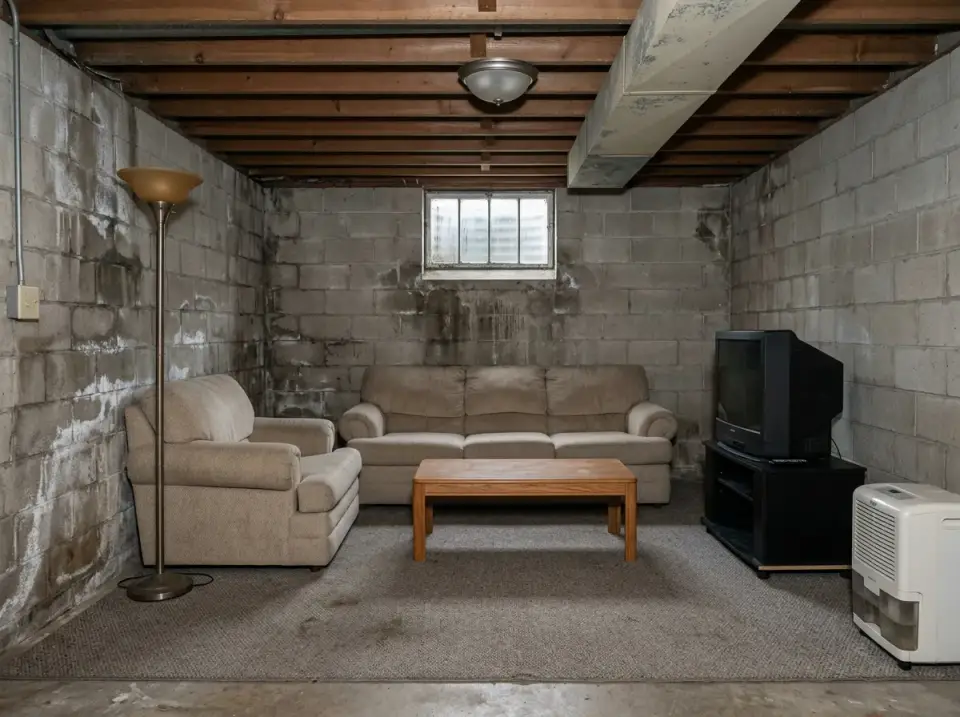
Reader notes