


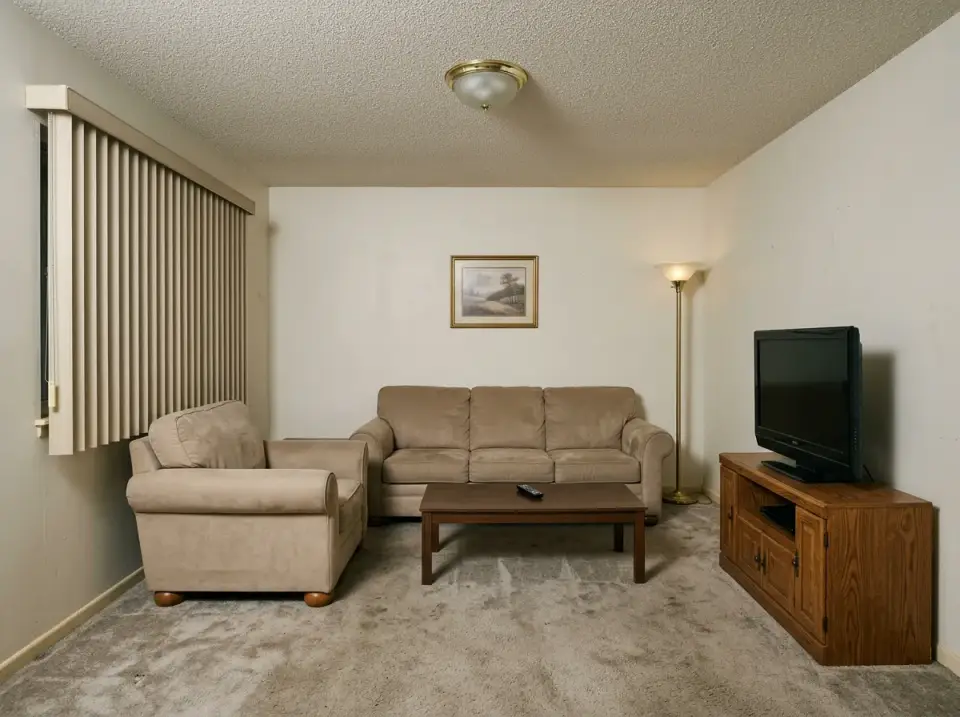
Every house I have worked in has one of these rooms — the spare box that collects printer cables, half-empty bins, and a folding table somebody swears they will deal with later. When I finally cleared mine out here in Charleston, I did not want to commit to a single look before I had seen the alternatives, so I styled the same footprint twelve different ways. Each direction keeps the bones identical and changes only the layers: palette, flooring, lighting, and the pieces that actually shape how a room feels to work in. Use them as a blueprint for the corner office hiding inside your own house.
Gatsby Goes Corporate: An Art Deco Power Play
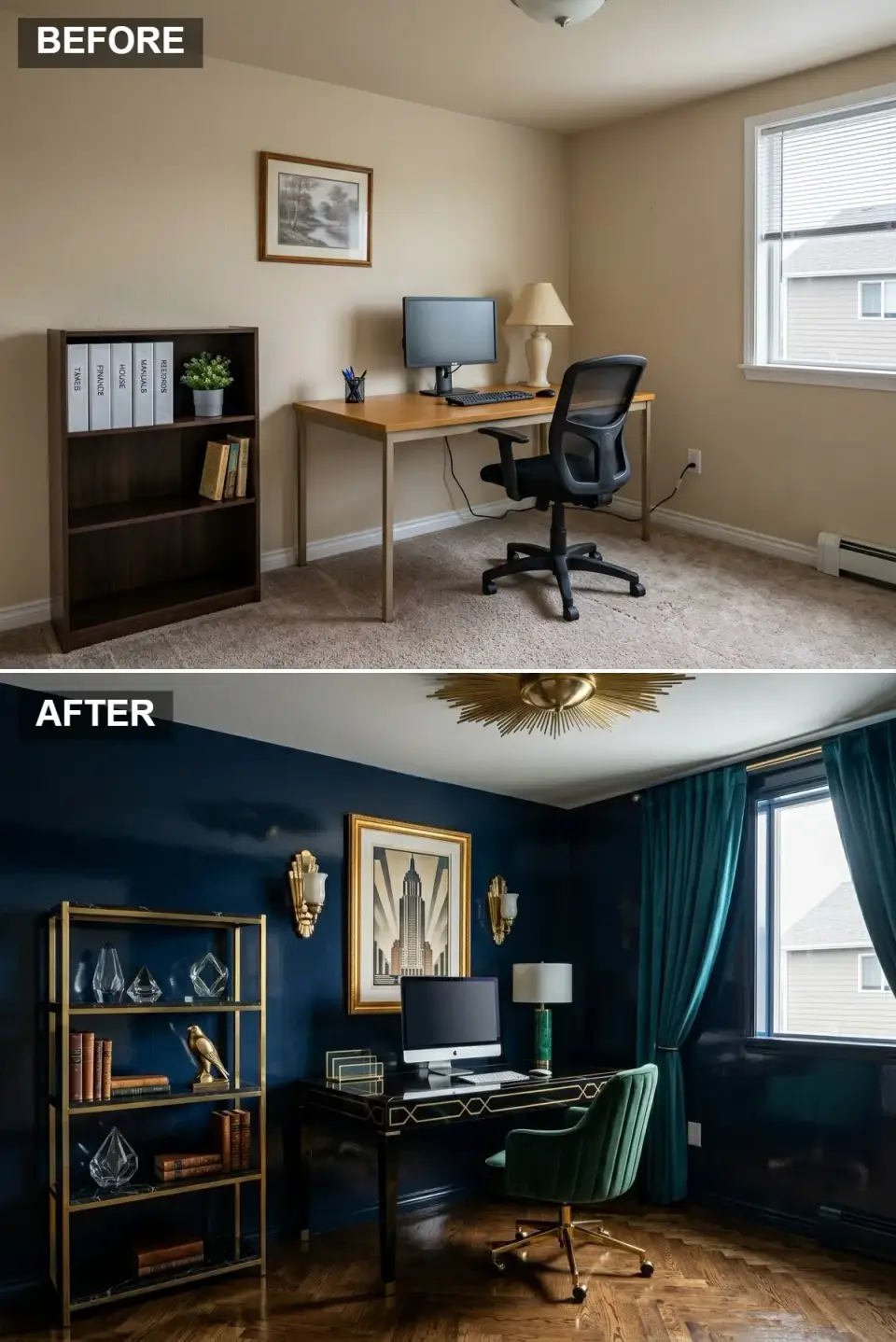
The first thing I did was erase the bland beige box with high-gloss navy that catches light like a jewel box, then pulled the builder-grade carpet in favor of herringbone walnut. A gold sunburst flush mount and matching sconces replaced the single overhead light, and I anchored the room with a glossy black desk laid with geometric gold inlay. An emerald velvet task chair on a brass base and a glass-and-gold étagère stacked with leather-bound books finish the 1920s-boardroom mood. It is the most theatrical of the twelve, and the one that reads most like a private club.
Color Palette
Deep Navy Blue
#0A1A3A
High-gloss midnight blue enveloping the walls for dramatic depth.
Antique Gold
#C5A059
Brushed brass and gold-leaf accents on lighting and furniture.
Rich Emerald
#1B4D3E
Sumptuous green upholstery adding jewel-tone opulence.
Dark Walnut
#5C3A21
Warm hardwood flooring in a herringbone pattern.
Styling Notes
- High-gloss paint on the walls bounces light and reads as luxury in a darker room.
- Pair deep jewel tones with metallic accents for that signature Art Deco glamour.
- Trade carpet for herringbone hardwood to anchor a more sophisticated aesthetic.
- Let one statement ceiling fixture pull the eye upward and define the space.
Organic Oasis: Japandi Serenity Meets Corner Office
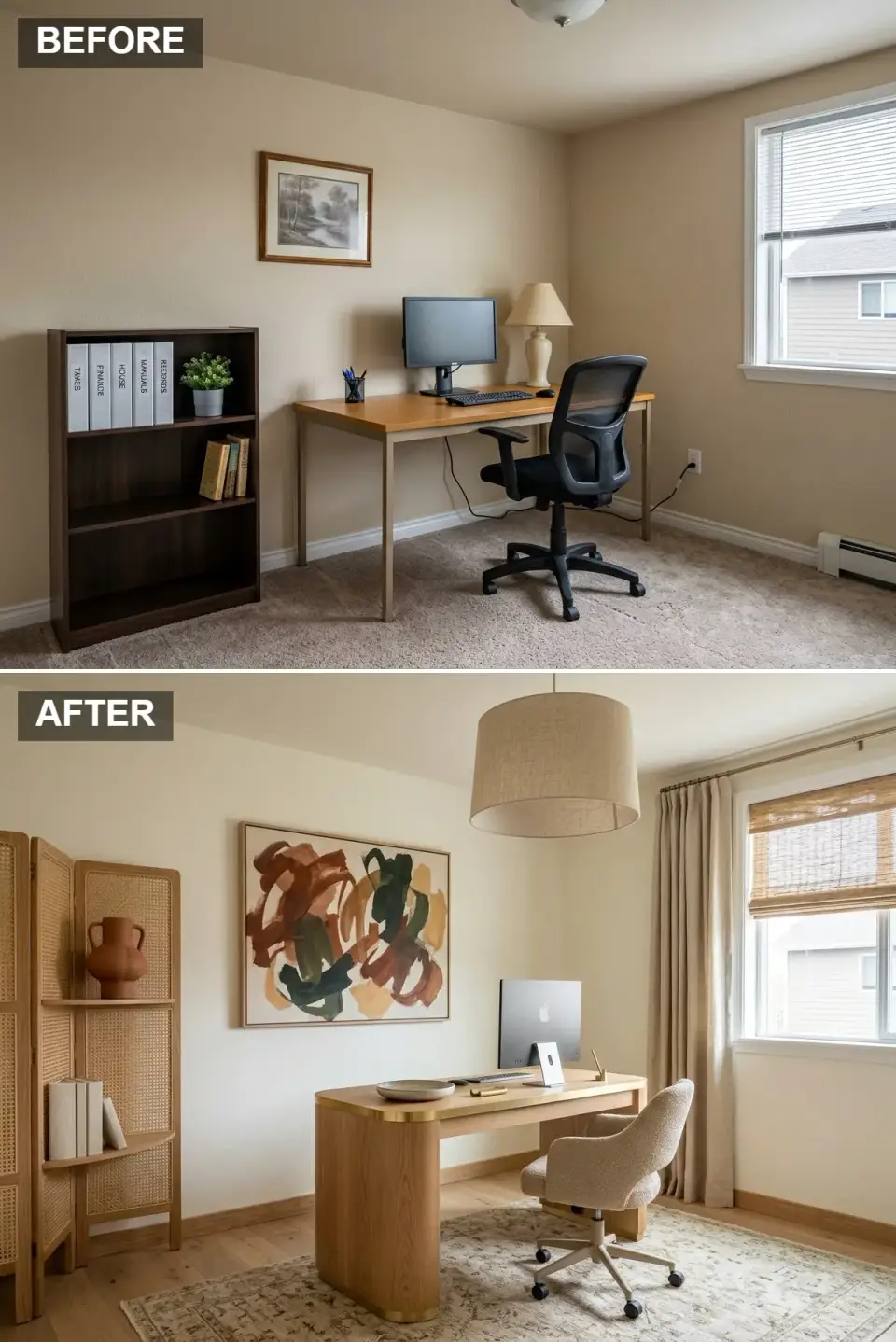
For the second direction I went the opposite way — creamy white walls and pale oak flooring to flood the room with light. A cane room divider adds texture without bulk, while a curved oak desk with brass trim and a bouclé chair soften every corporate edge. A large abstract canvas in ochre and umber holds the wall, and I layered linen drapery over a woven wood shade so the daylight comes in warm rather than harsh. It is the kind of calm I keep recommending to clients who say they cannot think in a busy room.
Color Palette
Cream White
#F2EFE9
Soft, warm white walls creating an airy, open canvas.
Pale Oak
#D4B996
Light wood tones in the desk, flooring, and shelving.
Burnt Sienna
#A0522D
Earthy ochre and rust tones from the artwork and ceramics.
Natural Linen
#E3DCCF
Textural neutral for the pendant shade and drapery.
Styling Notes
- Layer natural materials — cane, oak, linen — for warmth without clutter.
- Choose a desk with soft curves and mixed metals to take the edge off a work zone.
- One large abstract piece injects personality and color into an otherwise neutral scheme.
- Pair a woven shade with flowing linen drapes to build texture at the window.
Forged in Focus: The Industrial Writer's Retreat
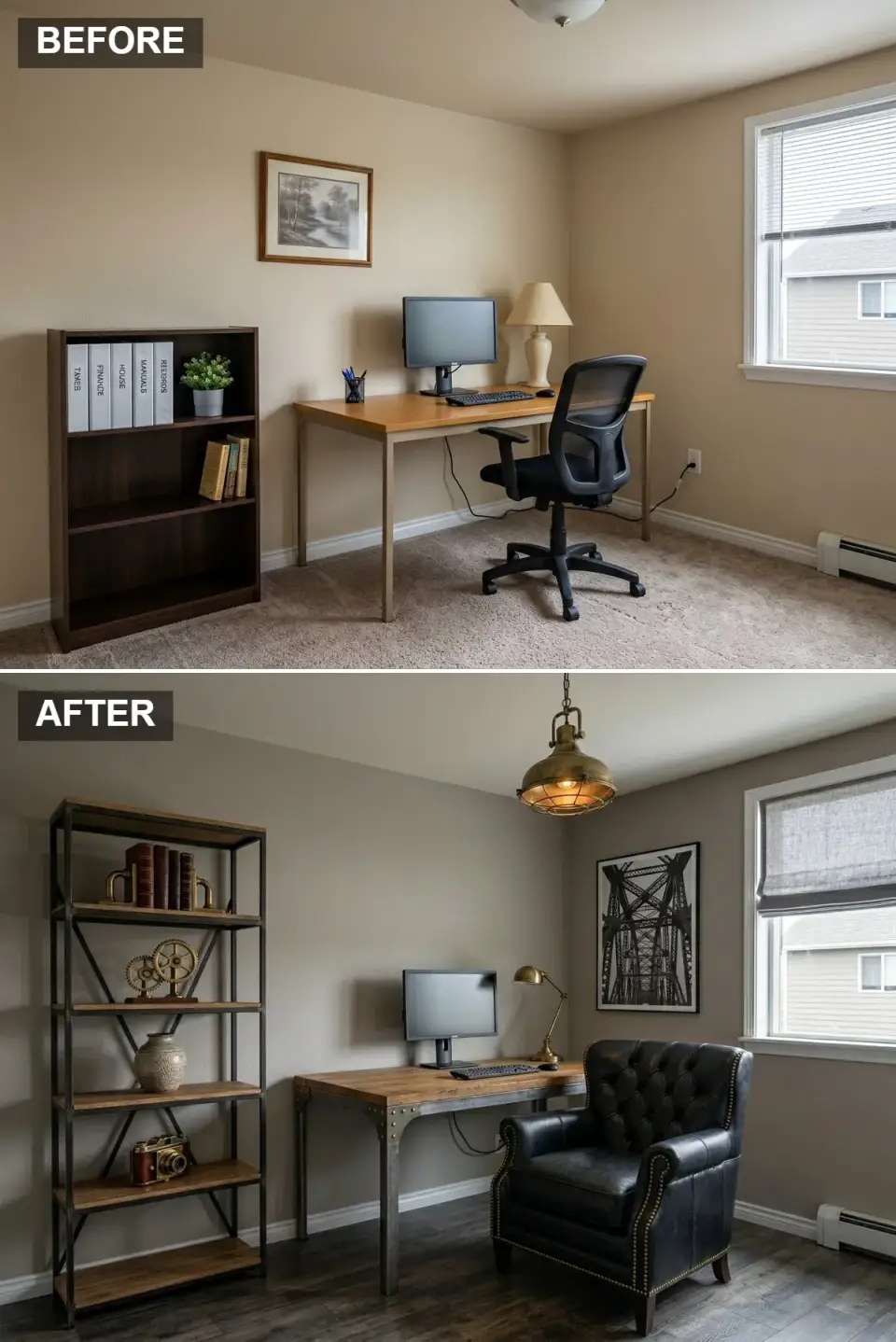
This version trades beige for a matte greige that mimics poured concrete, with dark weathered wood underfoot. An open X-frame bookcase in raw wood and black metal holds curated vintage curiosities, and a riveted wood-and-metal desk brings genuine factory-floor character. I swapped the mesh task chair for a substantial black tufted leather wingback, and hung an aged brass pendant with an Edison bulb overhead like a reclaimed relic. It is moody in the best way — the room a novelist would disappear into for hours.
Color Palette
Warm Grey
#9E968D
A moody, neutral wall color bridging grey and beige.
Antique Brass
#8B6F47
Warm, tarnished metallic finishes on lighting and accents.
Dark Espresso
#2C2C2C
Deep black-brown leather upholstery and wood stains.
Charred Oak
#3D3632
Dark, distressed wood flooring grounding the space.
Styling Notes
- Combine raw wood with blackened metal frames to capture authentic industrial character.
- Swap a standard task chair for a substantial leather armchair to add gravitas and comfort.
- Style the shelves with vintage finds — old cameras, mechanical gears — as quiet conversation pieces.
- Keep wall colors matte and moody to flatter aged brass and reclaimed wood.
Understated Elegance: The Quiet Luxury Edit
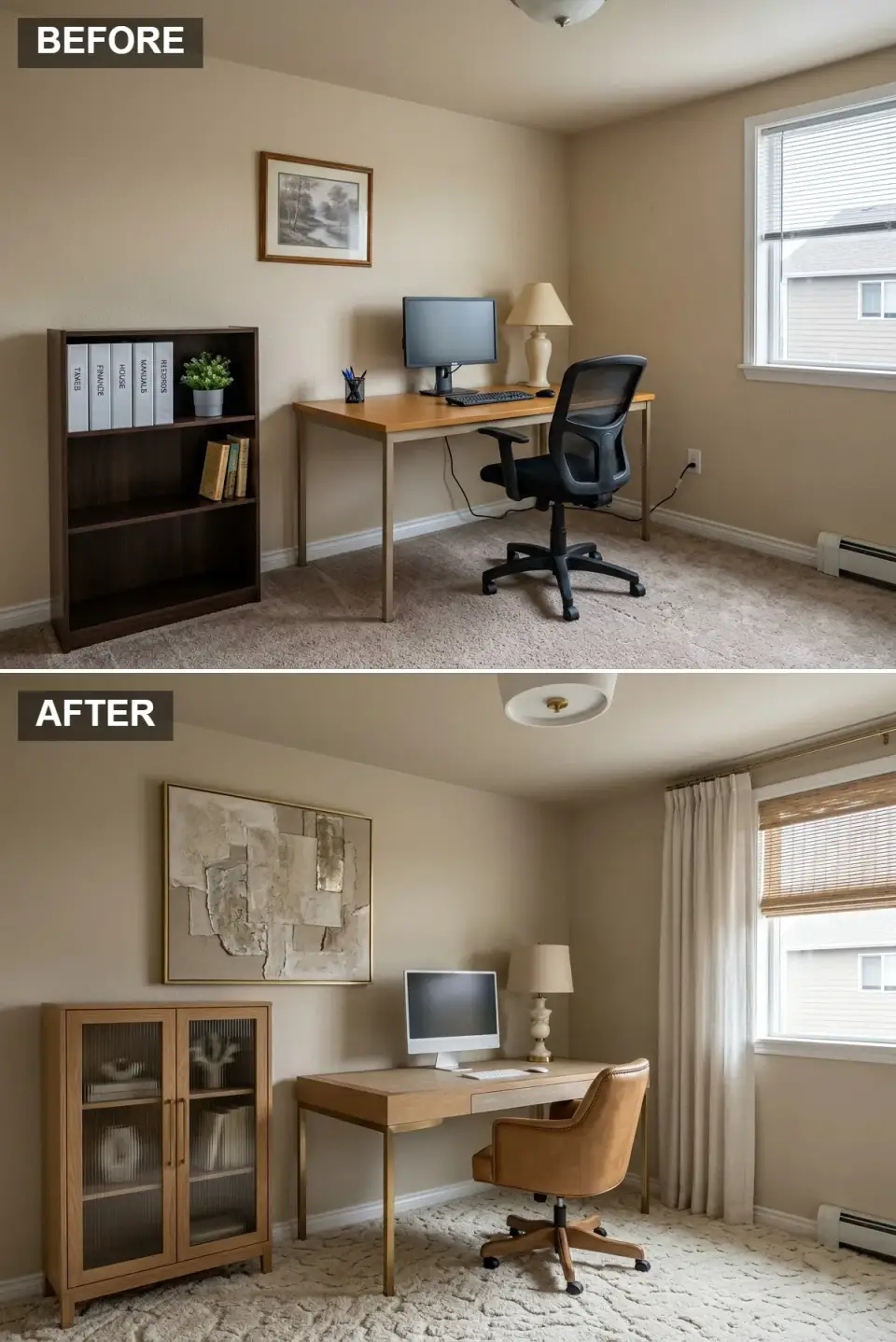
Rather than fight the room's neutral bones, here I refined them. The carpet disappears under a plush ivory shag, and the furniture steps up to a refined oak desk with brass legs and a matching cabinet with reeded glass doors that hide clutter while adding tactility. A camel leather chair on casters, a tonal abstract in a slim gold frame, and softly layered woven wood and linen treatments give the room that curated, magazine-worthy calm I associate with quiet luxury. Nothing shouts; everything reads expensive.
Color Palette
Taupe Greige
#BFB5A8
Subtle, warm wall color letting textures take center stage.
Tan Leather
#C19A6B
Rich caramel upholstery adding quiet sophistication.
Soft Gold
#D4AF37
Muted metallic accents on furniture and frames.
Cream Shag
#F5F5DC
Thick, textural off-white rug softening the floor.
Styling Notes
- Use fluted or reeded glass in storage pieces to conceal clutter while adding tactile interest.
- Layer tonal textures — high-pile rug, leather, oak — to build depth in a monochromatic room.
- Carry brass through furniture legs and picture frames for a single cohesive metallic thread.
- Keep walls a warm, neutral greige so the materials stay the focal point.
Clutter-Free Command: Minimalism for Maximum Output
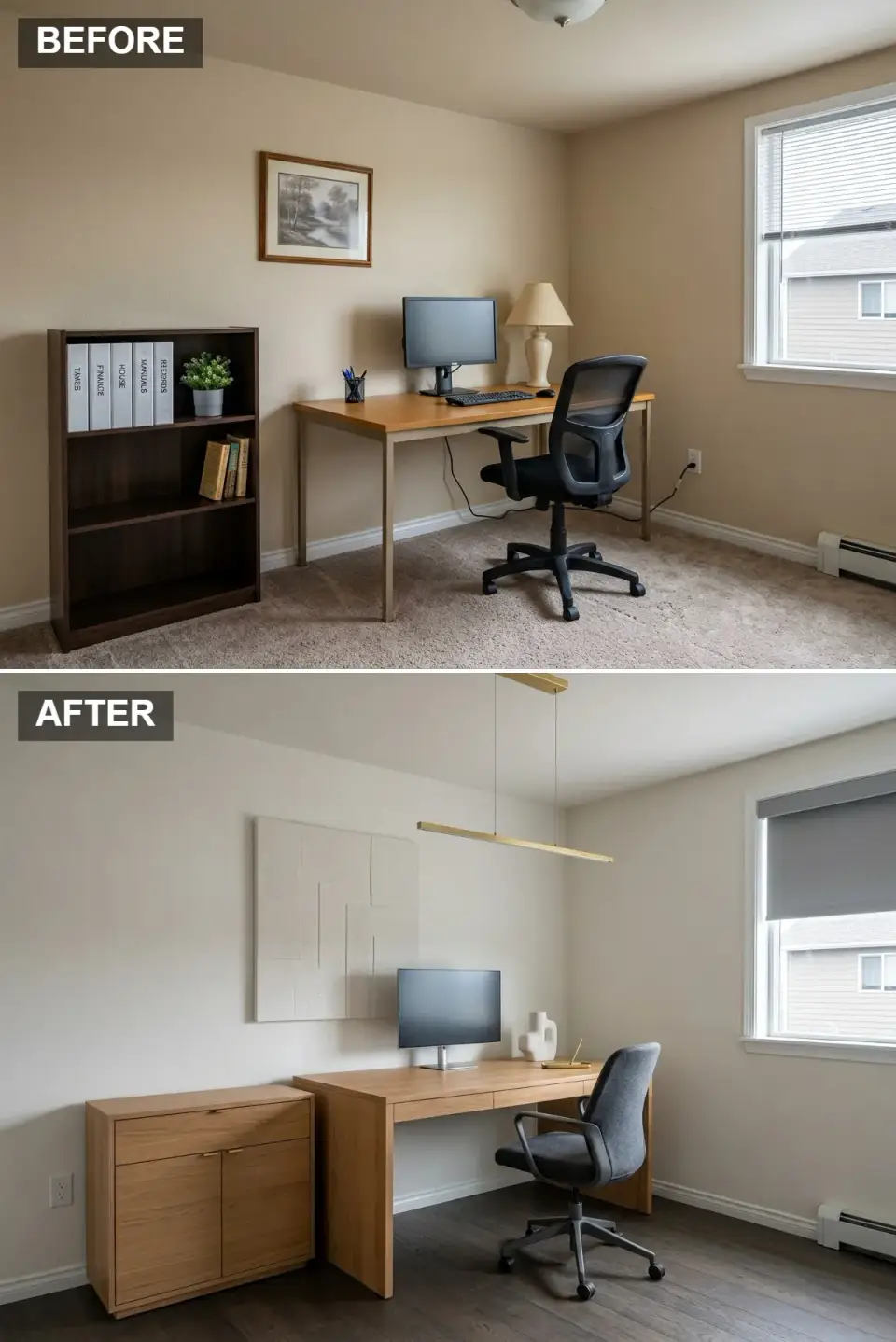
Stripped to its essential function, the room becomes a study in restraint. Walls go clean bright white over smooth dark wood floors. A pale oak desk with integrated drawers sits beside a matching low credenza, so the storage reads as one continuous run rather than a collection of pieces. A single grey task chair, a linear brass LED pendant, and a sculptural plaster wall piece give just enough form and comfort without distraction, while a simple roller shade keeps the window crisp. This is the layout I would hand someone who genuinely cannot focus with anything in their sightline.
Color Palette
Crisp White
#FAFAFA
Bright, clean white walls expanding visual space.
White Oak
#E0D6C8
Pale wood furniture with hidden joinery for a floating effect.
Cool Grey
#708090
Subdued grey upholstery and window shade.
Dark Grey Oak
#4A4A4A
Deeply stained wood flooring providing quiet contrast.
Styling Notes
- Pair a matching desk and storage cabinet so the two read as one continuous, built-in run.
- Limit decor to one or two sculptural pieces to keep visual breathing room.
- Choose a linear pendant for ambient light without visual bulk.
- Stick to a neutral, low-contrast palette of white walls and pale wood to make the most of natural light.
Mad Men Revival: Sage Walls and Brass Accents
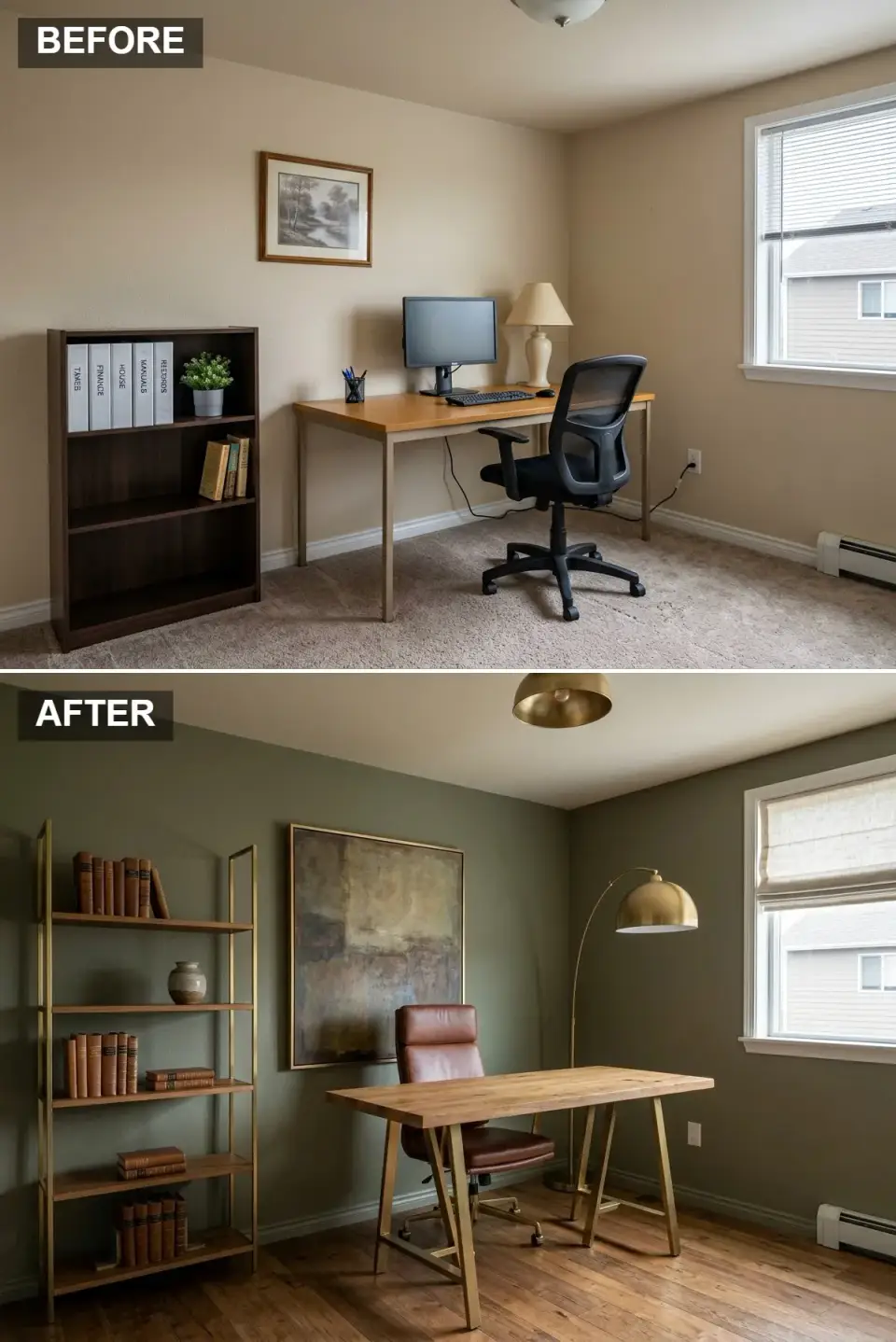
Here the beige gives way to an enveloping muted sage that hands the room instant 1960s composure. Warm oak flooring and a live-edge desk with brass A-frame legs set the mid-century tone. An open shelf in brass and walnut holds leather-bound volumes, while a cognac leather executive chair and a sculptural brass arc lamp keep the mood period-correct and the task lighting generous. Sage is having a long moment in the Southern homes I style, and this is exactly why — it flatters wood and brass like nothing else.
Color Palette
Sage Green
#7A8B6E
Soft, earthy green creating a calming, vintage atmosphere.
Natural Oak
#C19A6B
Warm, live-edge wood desktop and flooring.
Cognac Leather
#8B4513
Rich brown leather upholstery for classic executive style.
Aged Brass
#B5A642
Warm metallic finishes on the shelving, legs, and lighting.
Styling Notes
- Paint the walls a muted, earthy green for a calm yet distinguished atmosphere.
- Pair a live-edge desk with brass legs for mid-century warmth and executive presence.
- Use an arc floor lamp to add functional light and a sculptural curve to the corner.
- Style open shelving with uniform book collections and single statement ceramics for balance.
The Dean's Study: Dark Academia Done Right
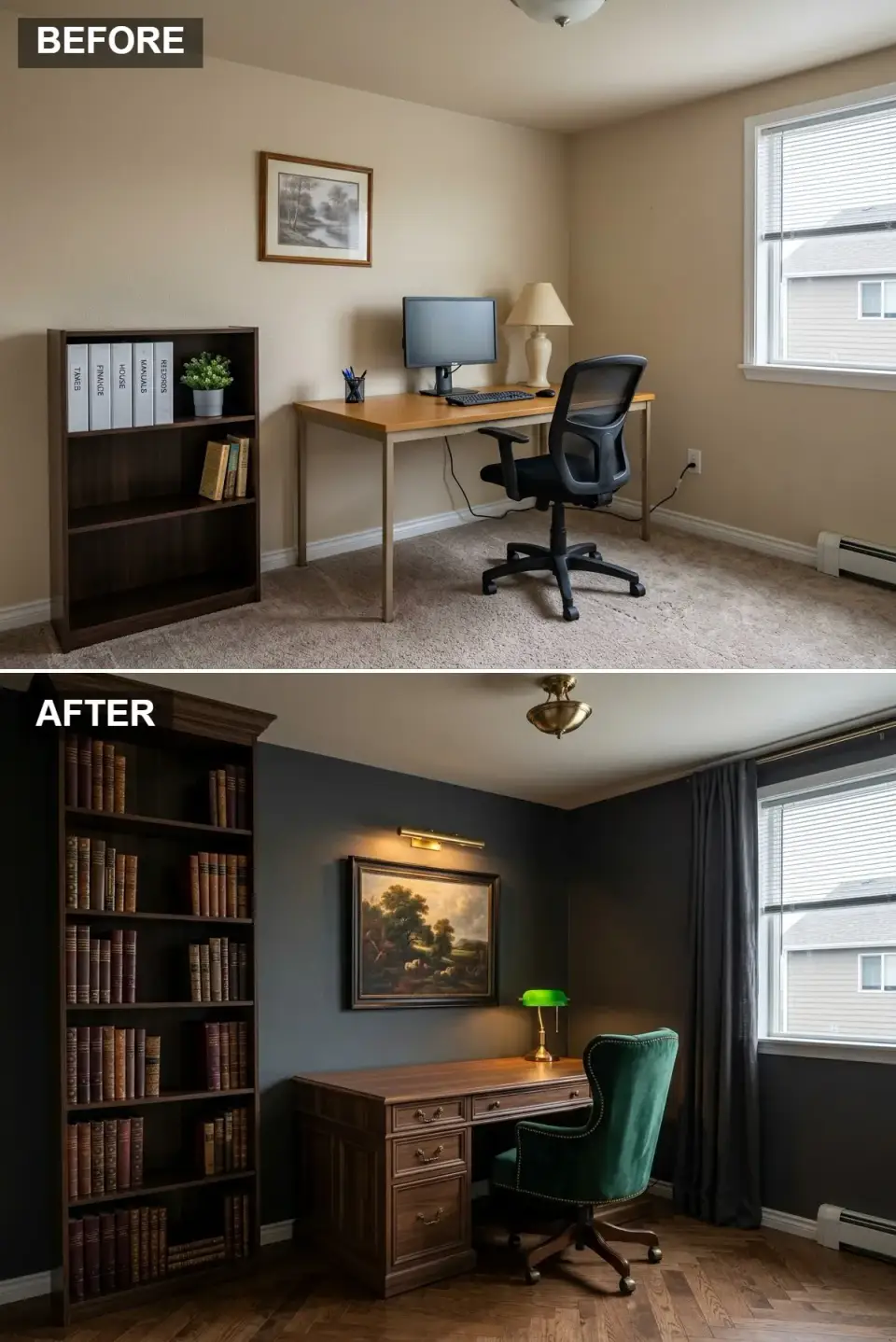
Turned into a scholarly sanctuary, the room now wears charcoal walls and herringbone walnut floors. A towering dark wood bookcase, styled like a built-in library, owns one wall. A traditional mahogany executive desk with brass hardware pairs with an emerald green velvet wingback. A brass picture light washes a classic pastoral painting, and a green banker's lamp throws a warm, focused glow across the work surface. This is the most timeless of the twelve — the look I reach for in Charleston's older homes, where deep color and real wood already feel at home.
Color Palette
Deep Charcoal
#36454F
Dark, moody wall color reminiscent of old library paneling.
Dark Mahogany
#4A2C2A
Rich, traditional wood tones in the desk and bookcase.
Forest Green
#0B6623
Deep green upholstery with nailhead trim for scholarly luxury.
Old Brass
#8C7853
Warm, heritage metallic finishes on lighting and hardware.
Styling Notes
- Install a tall, crown-molded bookcase to fake the feel of a private library.
- Layer classic light sources — picture light, banker's lamp, ceiling fixture — for a rich, ambient glow.
- Choose a deep, moody wall color to make wood tones and leather books read richer.
- Add a green banker's lamp and velvet upholstery for timeless, scholarly character.
Wabi-Sabi Workspace: Finding Calm in Curves
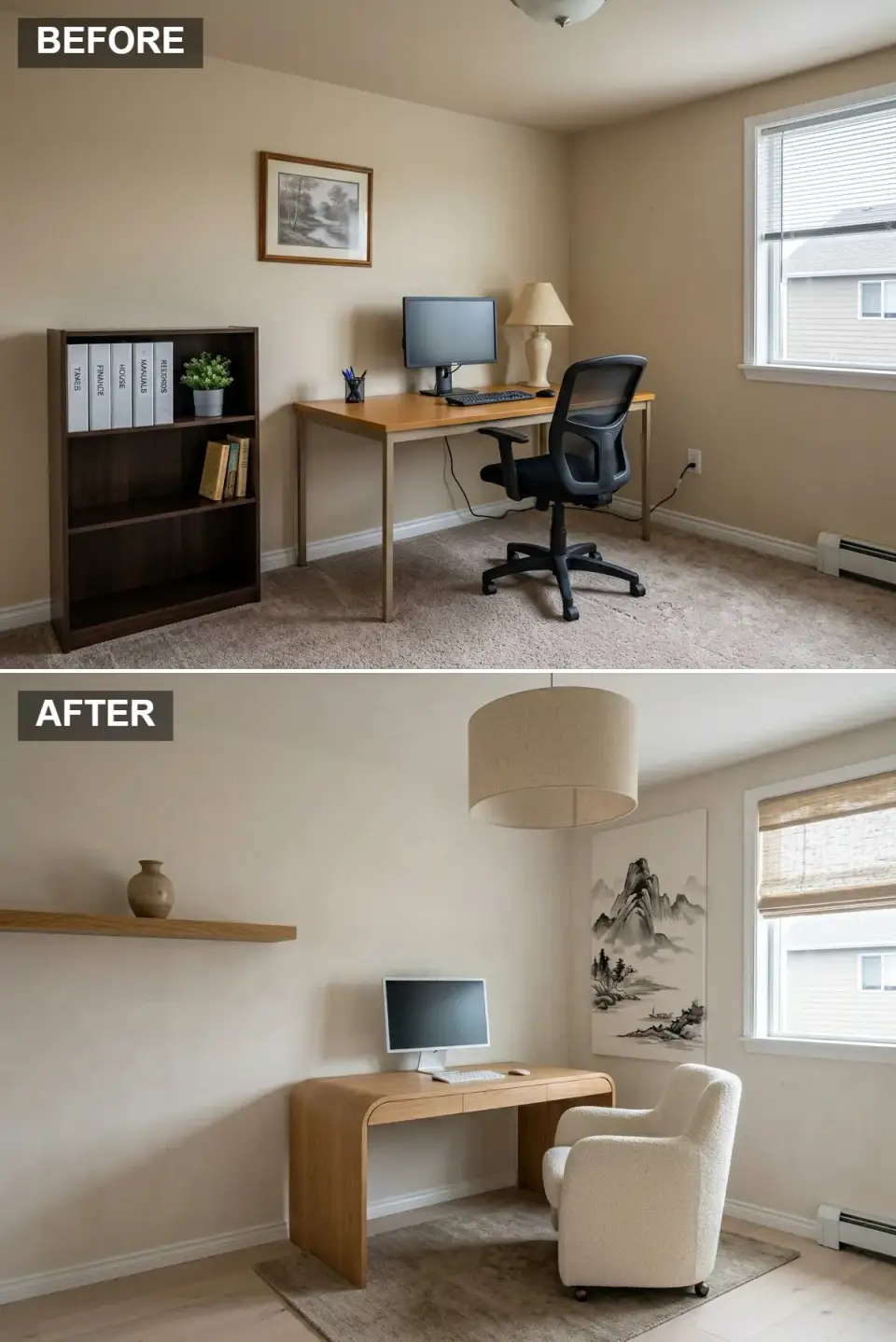
For this one I pared the room back to a serene, sculptural state. Warm plaster-white walls and pale oak flooring replace the beige and carpet. A single floating oak shelf holds one ceramic vessel, while a curved waterfall-edge oak desk and a chunky bouclé armchair soften the geometry. A vertical ink-wash landscape scroll brings a moment of Eastern stillness, and a neutral rug grounds the space without visual weight. Wabi-sabi is about honoring the imperfect, and that philosophy makes for a remarkably forgiving room to actually live in.
Color Palette
Warm Plaster
#EAE5D9
Soft, imperfect white walls evoking handmade texture.
Natural Oak
#DEB887
Pale, curved wood furniture with a smooth finish.
Warm Stone
#D7CFC1
Neutral, earthy tone for the rug and textiles.
Ink Black
#2F2F2F
Deep black-grey accents from the landscape artwork.
Styling Notes
- Select furniture with rounded, organic silhouettes to encourage flow and reduce visual harshness.
- Use a single floating shelf instead of a bookcase to keep the floor plan open and airy.
- Let one piece of traditional Asian art serve as a contemplative focal point.
- Keep flooring and walls in similar light tones to blur the boundaries and expand the room.
Heirloom Glamour: A Marble-and-Gold Office
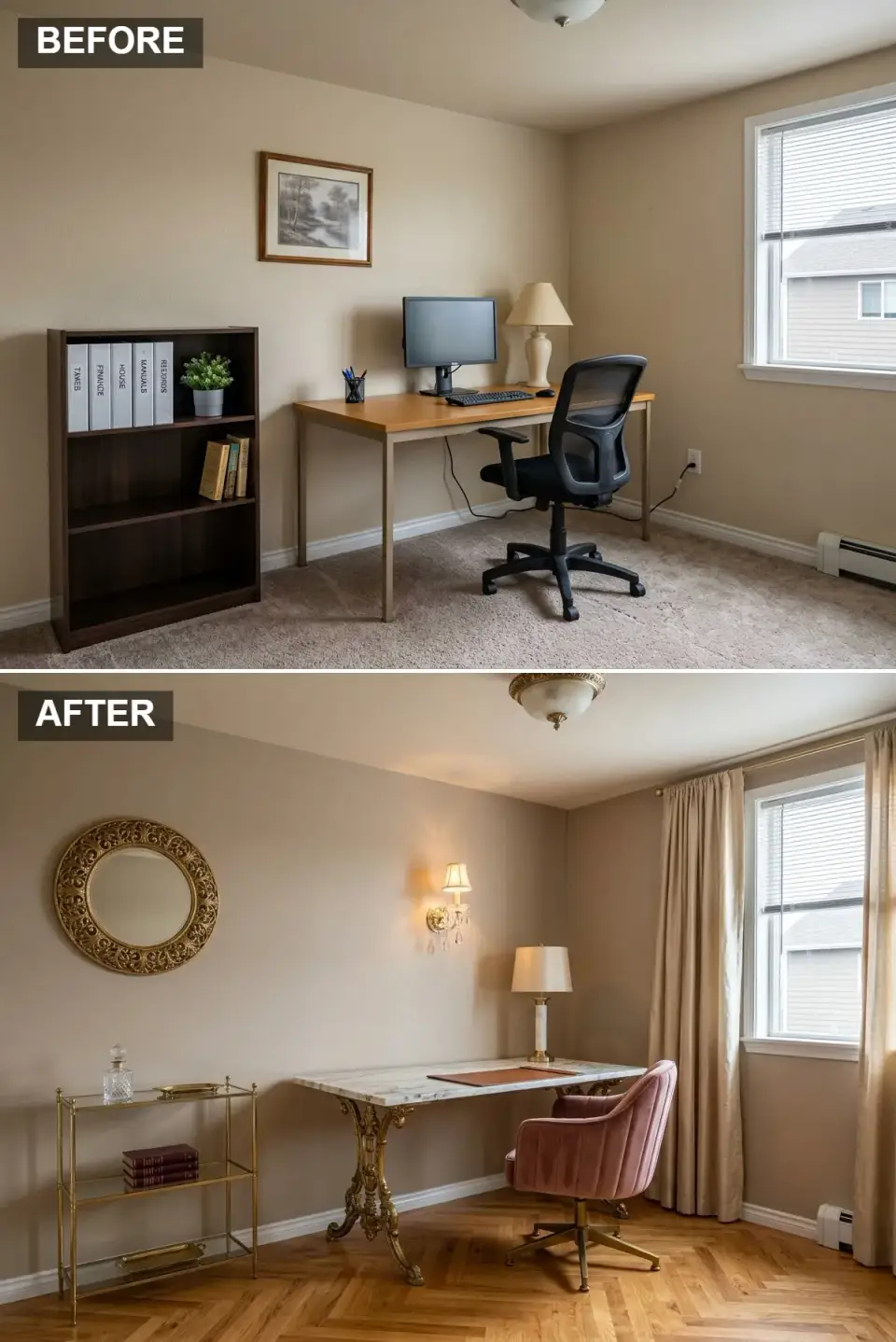
This direction turns the utilitarian box into a jewel-box office. Walls are washed in a sophisticated warm taupe over herringbone oak. The centerpiece is a dramatic marble-top desk on an ornate gold cast base — the kind of piece that sets a formal tone the moment you walk in. A mauve-pink velvet chair, a gilded round mirror, and a glass-and-brass étagère add vintage, feminine flair, while crystal sconces and an alabaster ceiling fixture layer in warm, flattering light. It is unapologetically glamorous, and a favorite of mine for a primary bedroom corner.
Color Palette
Greige Taupe
#B0A290
Sophisticated neutral walls complementing gold and marble.
Ornate Gold
#C9A961
Rich metallic finishes on furniture, mirror, and lighting.
Dusty Rose
#C8A4A4
Soft pink velvet upholstery adding feminine elegance.
White Marble
#F5F5F5
Veined marble desktop introducing luxury and pattern.
Styling Notes
- A marble-top desk on an ornate base sets a formal tone the moment you walk in.
- Add a large, decorative gilded mirror to reflect window light and open up the room.
- Introduce soft pink or mauve upholstery to warm up the metallic and stone elements.
- Layer crystal and glass accessories on a brass bar cart for vintage Hollywood polish.
The Biophilic Boardroom: Nature-Inspired Productivity
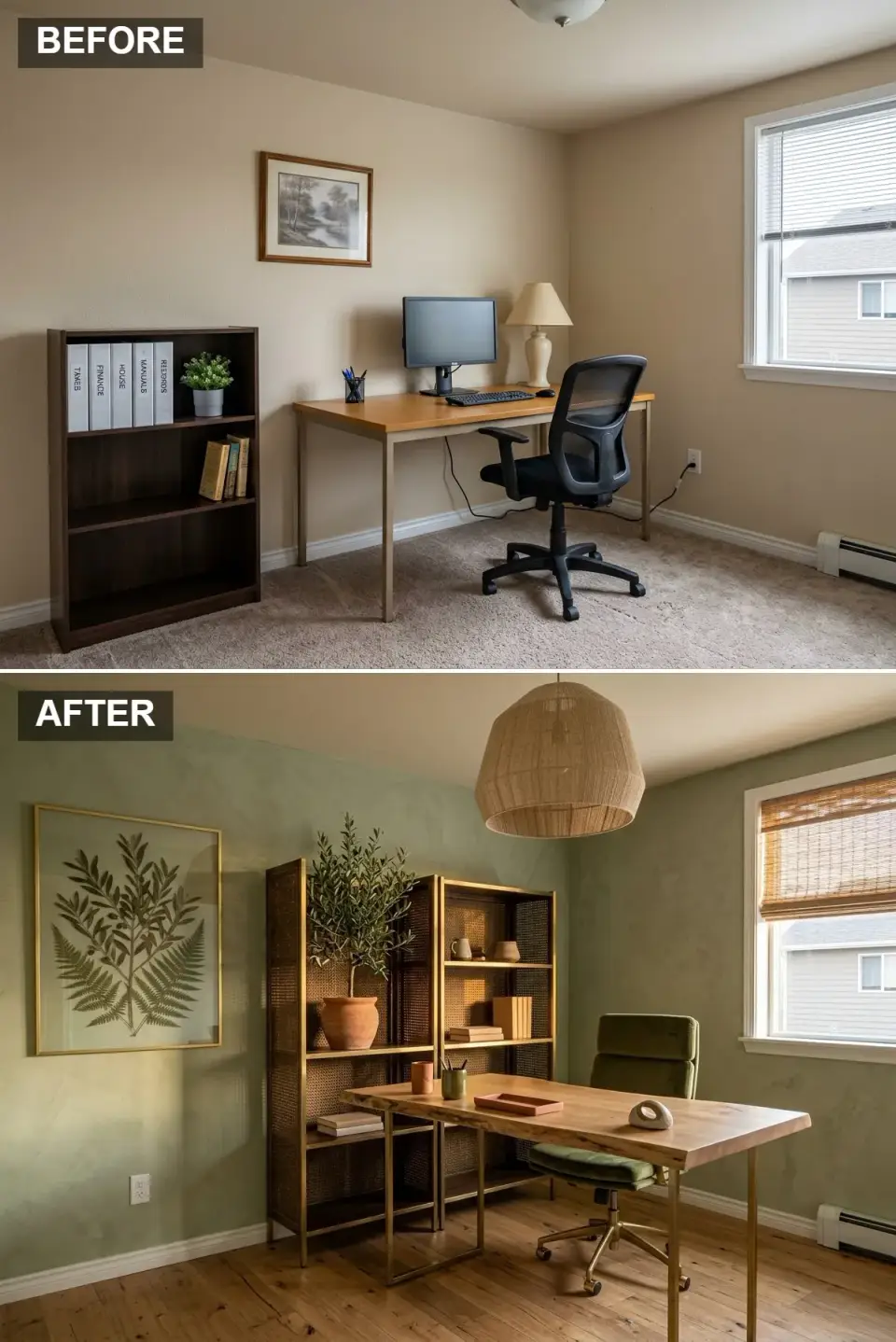
To breathe life into the stale box, this version wears soft sage-plaster walls over pale oak floors. A pair of brass-and-cane bookshelves flank a large potted olive tree, merging storage with greenery. A live-edge desk with brass legs and a moss-green velvet chair carry the organic palette through, and a woven rope pendant plus a large botanical fern print reinforce the indoor-outdoor connection. Bringing real plants into a workspace is the cheapest upgrade I know that measurably changes how a room feels.
Color Palette
Soft Sage
#9CAF88
Muted green walls evoking moss and leaves.
Light Oak
#D2B48C
Warm wood tones in the desk, floor, and shelving.
Raw Terracotta
#C17A5F
Earthy clay tones from pots and organic accessories.
Natural Jute
#D3C6B0
Textural, organic neutral for the statement pendant.
Styling Notes
- Tuck a large potted tree beside a rattan bookshelf to literally bring life into the workspace.
- Choose a woven pendant and natural cane storage to reinforce the biophilic theme.
- Match wall color to upholstery in varying shades of green for a harmonious, nature-led palette.
- Use botanical art prints to echo the live plants and ground the room in natural motifs.
Noir Executive: The Power of a Monochrome Palette
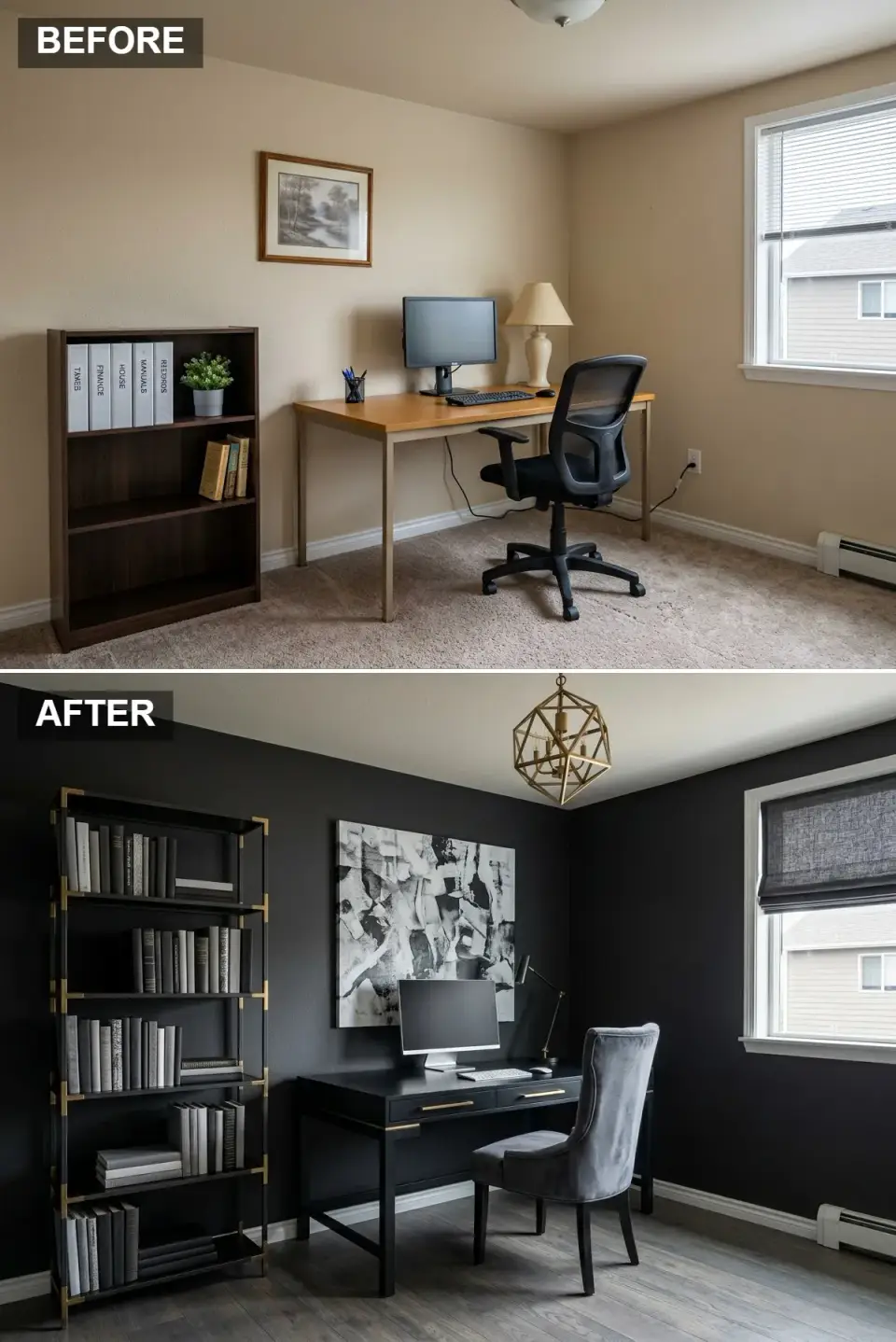
The most dramatic departure of the bunch, this office is drenched in matte black from the walls to the furniture. The carpet is gone, replaced by cool grey wood. A black bookshelf with brass corner brackets and a matte black desk with brass drawer pulls cut sharp, tailored lines. A grey velvet chair and a large black-and-white abstract canvas supply the tonal variation, while a geometric brass pendant lands as the single warm accent. Going this dark takes nerve, but in the right room it is the most confident look you can choose.
Color Palette
True Black
#1C1C1C
Deep, matte black walls and furniture for immersive drama.
Charcoal Grey
#4A4A4A
Cool grey tones in flooring and upholstery.
Dark Brass
#B5A642
Warm metallic accents cutting through the darkness.
Soft Silver
#E5E4E2
Pale highlights in the artwork and book styling.
Styling Notes
- Paint walls and select furniture in the same dark tone for an immersive, cinematic effect.
- Use brass hardware and lighting as the primary contrast so the room never reads flat.
- Curate bookshelf contents by color to hold the monochrome aesthetic.
- Add a single large-scale black-and-white artwork to break up dark walls without introducing color.
Coastal Chairman: Breezy Blues and Natural Woods
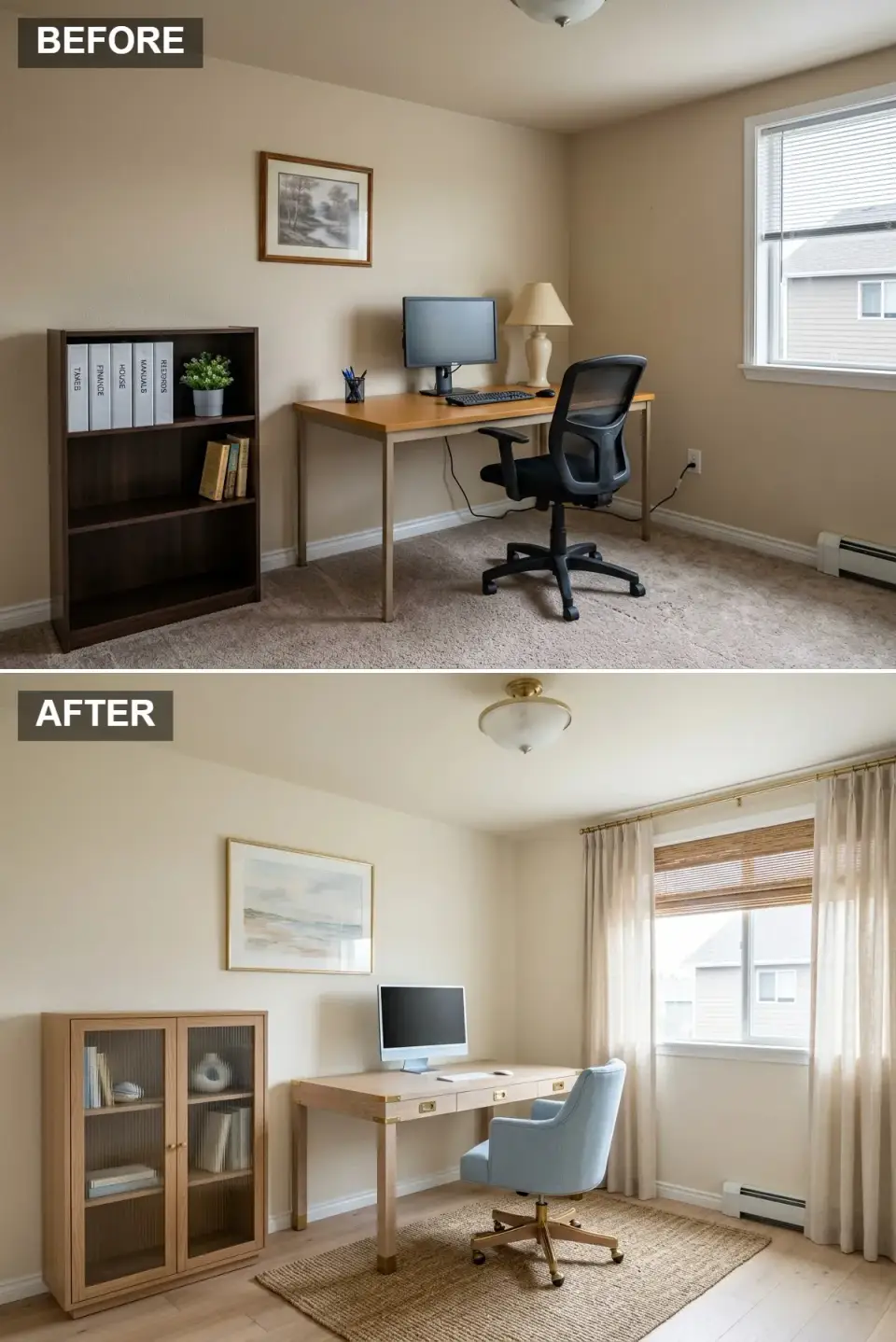
The final direction evokes sun-bleached shores — fitting, since this is the look I gravitate toward in my own coastal corner of South Carolina. Walls are washed in creamy white over light oak. A campaign-style oak desk with brass corners pairs with a soft blue upholstered chair for a quiet nautical nod. A fluted-glass oak cabinet, a seascape watercolor, and a natural jute rug layered underfoot keep things relaxed, while woven wood shades and sheer linen drapes filter the daylight beautifully. It is breezy without ever tipping into theme-park beach.
Color Palette
Warm White
#F5F5DC
Soft, sun-washed white walls creating a bright, airy base.
Bleached Oak
#E3D6C5
Light, natural wood tones for flooring and furniture.
Dusty Blue
#A4B8C4
Soft sky-blue upholstery adding a serene, beachy accent.
Sisal Brown
#C2B280
Earthy, woven fiber rug grounding the light palette.
Styling Notes
- Introduce a soft blue desk chair as a subtle nod to the coast without resorting to themed decor.
- Layer sheer linen curtains over woven wood shades for relaxed, filtered light.
- Use a natural-fiber rug underfoot to add casual, beach-house texture to a clean-lined office.
- Choose furniture with brass campaign corners to blend traditional craftsmanship with a light, modern finish.
Pro Tips & Advice
- Start with flooring and wall color. After seven years of styling rooms, I can tell you these two elements alone account for most of what people read as a dramatic before and after.
- Buy the best task chair your budget allows, but make sure its silhouette matches your chosen aesthetic — a mismatched chair undoes the whole look.
- Layer your lighting in three parts — ambient, task, and accent — to give even a small office dimension and comfort throughout the day.
- Decide early whether your window treatments should disappear into the walls or act as a contrasting frame; that single choice dictates your entire textile palette.
- Hide cables at the source with a desk that has a built-in tray or grommets, so all that styling work does not collapse under a tangle of cords.
Frequently Asked Questions
What single change makes the biggest difference in a home office makeover?
Wall color, every time. Of the twelve directions above, the ones that read as the most complete transformations all started with a confident paint choice — the Art Deco navy, the dark academia charcoal, the Mad Men sage. Paint is also the cheapest way to commit to a mood, so if you only do one thing before buying furniture, choose your color and let everything else follow it.
Do dark walls make a small office feel smaller?
Not the way most people fear. A small room painted matte black or deep charcoal actually loses its corners and feels more enveloping than cramped, which is exactly the point in the Noir Executive and Dean's Study versions. The trick is light: layer in a warm task lamp and a brass accent or two so the darkness reads as intentional and cozy rather than dim.
What is the best paint color for focus and productivity?
There is no universal answer, but muted greens like sage consistently strike the balance between calming and alert, which is why I lean on them so often in the Southern homes I style. If green is not your taste, a warm greige keeps the room neutral enough to disappear while you work, and a deep navy or charcoal suits anyone who concentrates better in a darker, library-like space.
How do I keep a styled office from collapsing back into clutter?
Build the storage into the look instead of bolting it on later. A matching credenza, a cabinet with reeded or fluted glass doors, or a cane-fronted bookshelf all hide the mess while adding texture. Pair that with a desk that manages cables at the source, and the room stays photogenic on an ordinary Tuesday, not just on the day you styled it.
Can I mix two of these styles in one room?
Absolutely — the best real rooms usually borrow from two directions. Pull the moody walls from Dark Academia and the curved, organic furniture from Wabi-Sabi, or marry the biophilic greenery with the quiet luxury textures. The layered approach I build every room around is exactly this: take the bones from one look and the softness from another, then keep your metals and woods consistent so the blend reads as intentional.
Sources & References
- Environmental Protection Agency — research on indoor air quality and the role of houseplants and natural materials in interior environments.
- American Lighting Association — guidance on layering ambient, task, and accent lighting in residential work spaces.
- Pantone Color Institute — reference for nature-led and muted color trends shaping current interior palettes.
- Sherwin-Williams & Benjamin Moore color libraries — paint references for the navy, sage, charcoal, and greige tones used across these twelve directions.
Final Thoughts
Whether you are drawn to the high-gloss drama of an Art Deco den or the sun-washed calm of the coastal version, these twelve directions prove that square footage is never the limiting factor — intention is. Commit to a clear palette, upgrade your anchors like flooring and lighting, and choose furniture that supports both your posture and your aesthetic, and even the dreariest spare room becomes a corner office worth showing up to. If this kind of single-room reinvention is your project right now, you might also enjoy my workspace transformations and the calmer, light-driven Scandi sanctuary makeover. For more before-and-after inspiration, my bedroom transformations from a single before use the same one-room, many-directions approach, and if you are curious why certain looks pull at you, decoding the hidden language of your decor is a good place to start. The only question left is which corner office you will claim as your own.

Elise Marchetti
Transformations Editor · Charleston, South CarolinaBefore-and-after projects with the invoices attached. Elise runs the Transformations desk — interiors, exterior facades and outdoor spaces across the Lowcountry and the wider South — and writes up what actually changed, what it cost, and which three decisions moved the room.
More from Elise →
Reader notes