


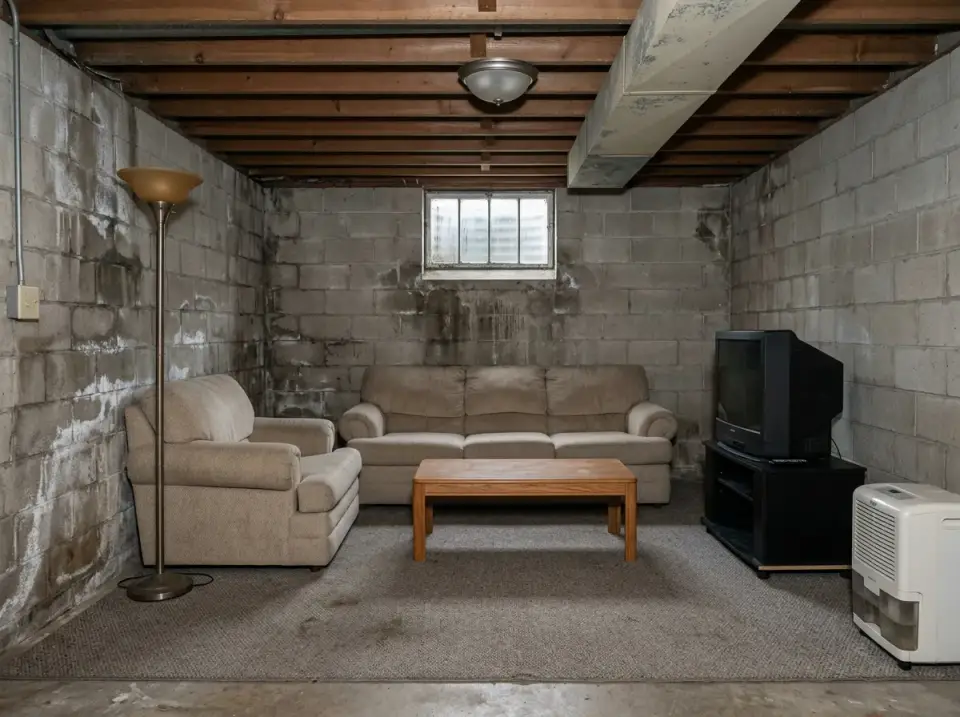
A client in downtown Charleston called me last spring with a problem I've heard a dozen versions of over the last seven years — she had inherited a 1920s single-house with a neglected basement room that had been used as a cluttered storage space for two decades. Water-stained walls, one low-hanging bulb, a window that didn't close properly. She was working from home full-time by then and described the space she'd been using as "a nightmare I dread every Monday morning." Over the next three months we worked through eleven distinct design directions before she committed. This article walks through all eleven — each one a direction I've actually built out or signed off on for Lowcountry clients. The cost ranges are honest, the climate caveats are real, and the styling notes come from what has worked (and what has not) in Charleston, Summerville, Asheville, and the broader Southeast.
What's in This Guide
- Zen and the Art of Workspace Maintenance
- The Sophisticated Scholar's Study
- The Bright and Airy Artist's Studio
- Modern Minimalism with a Touch of Texture
- Luxury Redefined: Marble, Wood, and Brass
- The Moody and Magnificent Library
- Scandi-Style Craft Room for Creativity
- Industrial Loft: Raw Materials and Rugged Charm
- Serene and Textured Home Office Retreat
- Mid-Century Modern Revival Den
- The Ultimate Professional Editing Suite
- Pro Tips for Any Workspace Transformation
- Frequently Asked Questions
- Sources and References
- Final Thoughts
1. Zen and the Art of Workspace Maintenance
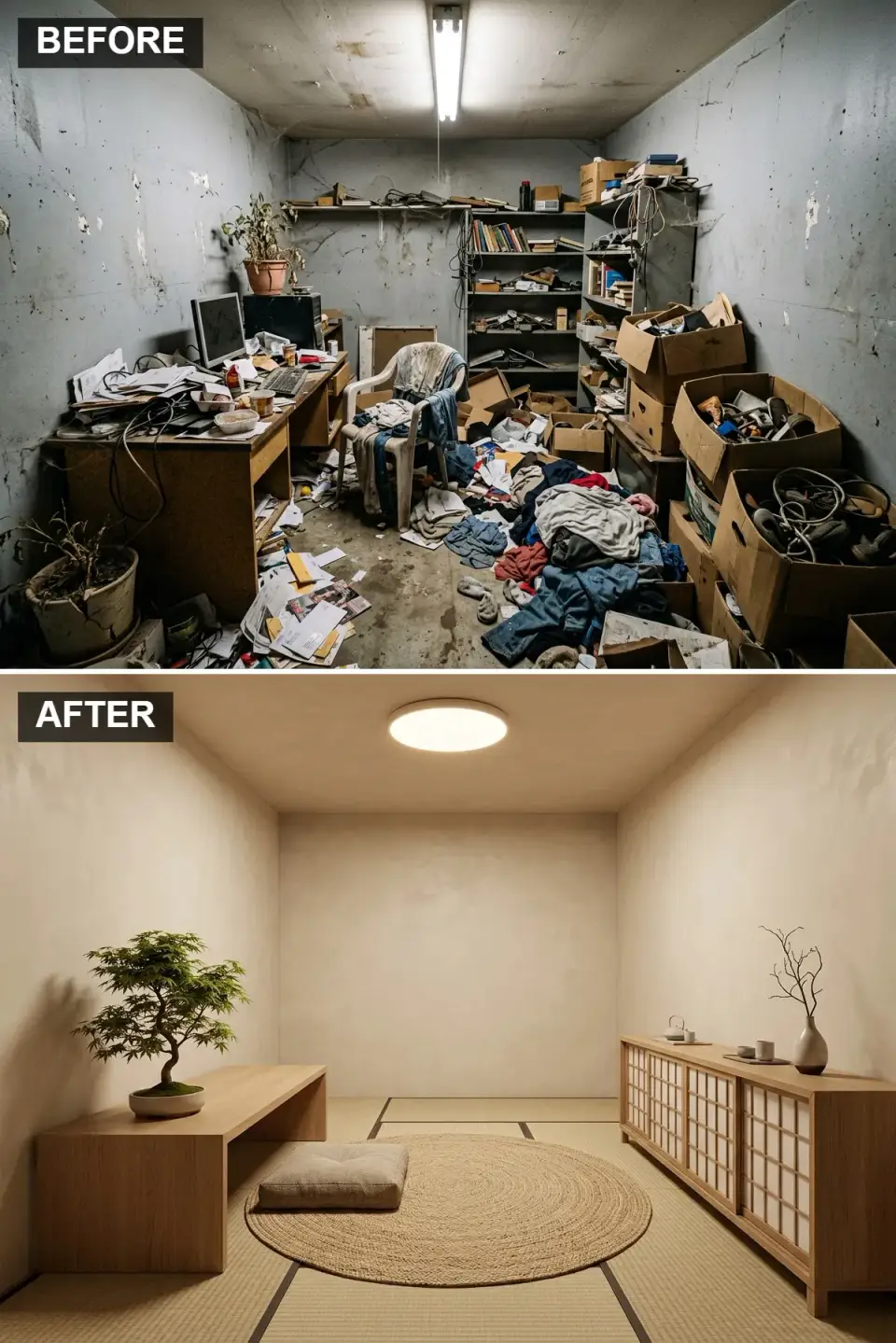
The minimalist Japanese direction is the most visually striking of the eleven — and the most mismatched for Lowcountry humidity if you don't plan around it. Real igusa-grass tatami needs 45–60% relative humidity and will mildew in Charleston's summer-long 75%+ readings unless the room has solid HVAC and a dehumidifier running May through September. Synthetic tatami (Tatami Select, Japanese Tatami Shop) looks nearly identical and handles our climate. The bonsai is another honesty point — most bonsai sold in big-box stores are tropical ficus, not temperate juniper. A Charleston-climate bonsai survives outside year-round; a tropical ficus in a dark basement office dies by month three. Pick the variety that matches the room, not the Pinterest image.
Color Palette
Sand Beige
#CDBFA6
A warm, textured neutral that works as a calming backdrop and doesn't fight the natural materials.
Tatami Straw
#BDB08B
Natural or synthetic woven mats that add warmth and an organic foundation underfoot.
Light Oak
#A38F78
A clean natural wood tone for the low bench and cabinet — white oak or ash reads close enough.
Jute / Linen
#9C8C71
Earthy, woven textures for the floor cushion and accents.
Styling Notes for This Look
- Synthetic tatami: $8–$14 per sq ft installed. Real igusa-grass tatami: $18–$28 per sq ft and fragile in our humidity.
- Shoji-style screens: paper inserts fade in UV within 12–18 months. Switch to washi-pattern acrylic panels; identical look, indefinite lifespan.
- A dehumidifier is non-negotiable in a zen room south of the Virginia state line.
2. The Sophisticated Scholar's Study
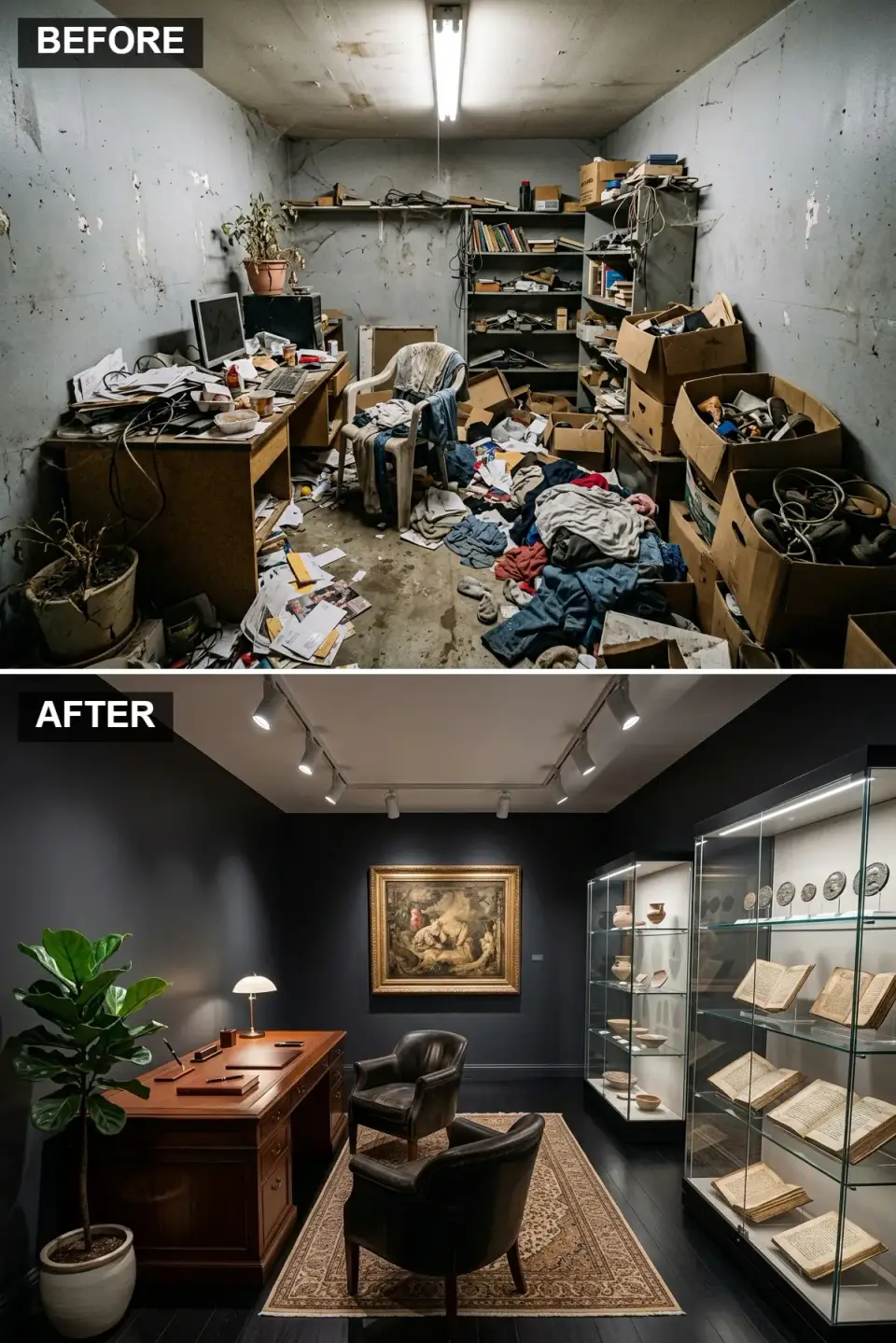
Dark walls plus track lighting equals a handsome photograph and a genuinely functional study — but only if you understand where the dark paint works and where it doesn't. Charcoal walls (Benjamin Moore Wrought Iron or Farrow & Ball Railings) absorb roughly 90% of light that falls on them, which means you need 2–3× the lumens of a light-walled room to hit a workable ~500 lux at desk height. Track lighting handles that well. Avoid painting the ceiling dark if the room is already under 9 feet — it compresses the space visibly. The pedestal desk and leather chairs are classic; budget-wise, a real antique desk runs $1,800–$8,000+, while a solid hardwood reproduction (Stickley, Baker, or a local Charleston cabinetmaker) lands $2,500–$6,000 and lasts as long.
Color Palette
Charcoal Black
#2A2A2A
A deep, dramatic shade that carries the room — pair with well-planned layered lighting.
Mahogany
#5C3A21
Rich dark wood for the statement desk — genuine mahogany or a high-grade stained cherry.
Black Leather
#191919
Full-grain or top-grain leather — the armchairs are where the room gets its hand-feel.
Antique Gold
#BFA371
Brass and aged gold picture frames, hardware, and picture lights.
Styling Notes for This Look
- Low-voltage track lighting on a dimmer is the correct choice — standard line-voltage track runs hot and is harder to aim.
- Glass-front cabinet lighting: use LED strip lights rated for enclosed fixtures (not all LED strip is), and keep color temperature at 2700–3000K.
- Leather chairs need conditioning twice a year in Lowcountry humidity — budget $18–$25 per can of Leather Honey or equivalent.
3. The Bright and Airy Artist's Studio
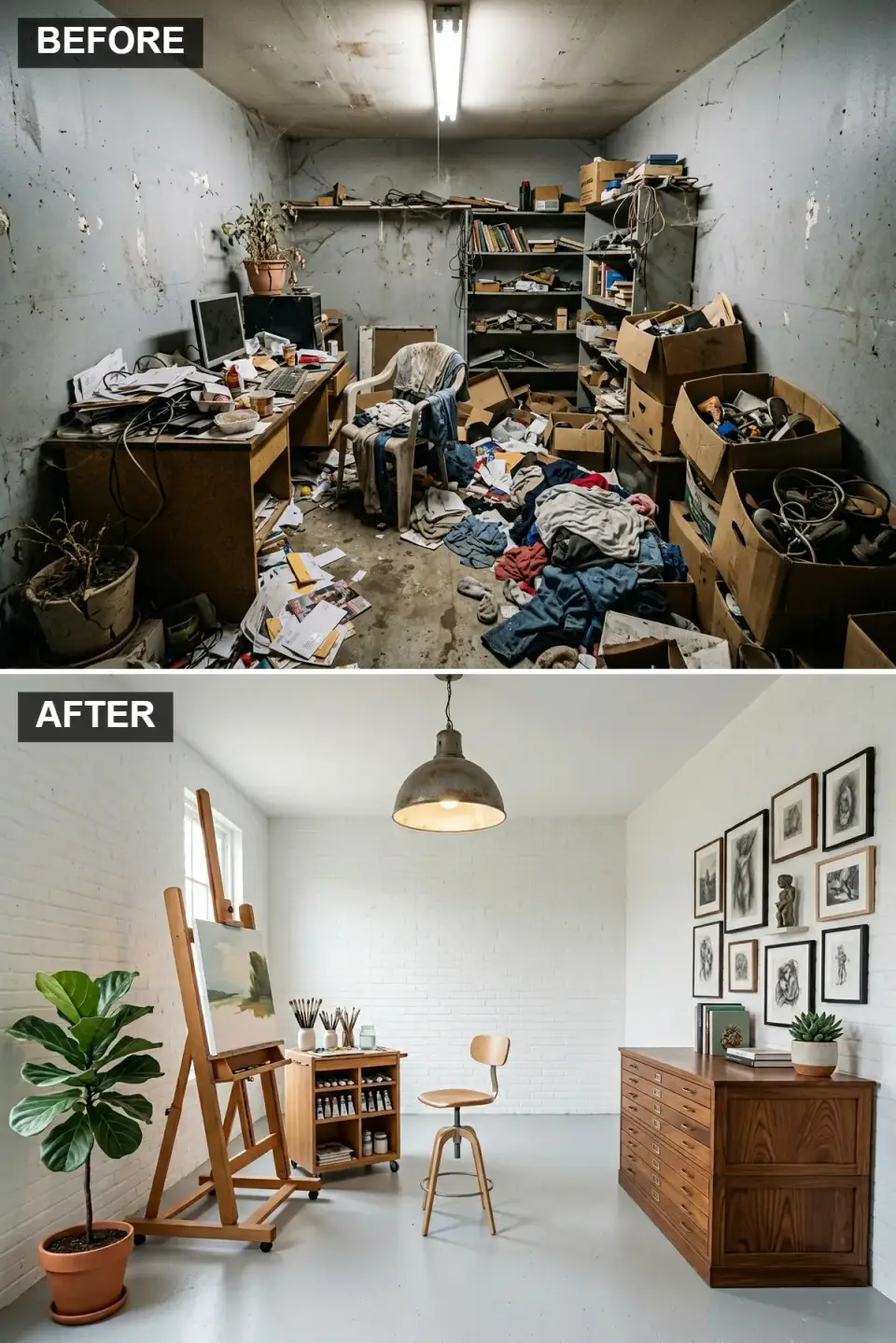
Painted-brick artist studios are the direction I recommend most often to Charleston clients who already have old brick in a converted garage or basement. Two real notes before you prime the wall. First, brick needs to be cleaned and cured for at least 30 days after any masonry repair before paint. Use a masonry-specific primer (Sherwin-Williams Loxon or Benjamin Moore Ultra Spec Masonry) — standard drywall primer will flake within a season. Second, north-facing windows are what real painters want; the light is steady, diffused, and color-accurate throughout the day. If the room only has south or west exposure, install a 6500K daylight-balanced LED panel overhead to simulate — it makes a real difference for color work.
Color Palette
White Brick
#F0F0F0
Painted brick keeps the texture and reflects usable painting light.
Light Concrete
#B8B8B8
Durable, paint-spill-tolerant, and easy to re-seal every few years.
Medium Walnut
#7A5C42
Warm walnut flat-file or storage cabinet grounds the cool white-and-grey scheme.
Aged Metal
#6E6E6E
A raw-steel or blackened-brass fixture for task lighting over the work surface.
Styling Notes for This Look
- Flat-file cabinets: a real Hamilton or Steelcase flat-file runs $400–$1,200 used (check Charleston estate sales and Architectural Salvage Warehouse); new is $1,500–$3,200.
- Concrete floor sealing: a penetrating densifier (Ashford Formula or similar) plus a matte topcoat lasts 5–7 years under studio use.
- A $40 clip-on neutral-daylight LED is enough for small pieces; for large canvas work, overhead 6500K panel lighting is the cheap upgrade that saves your color fidelity.
4. Modern Minimalism with a Touch of Texture
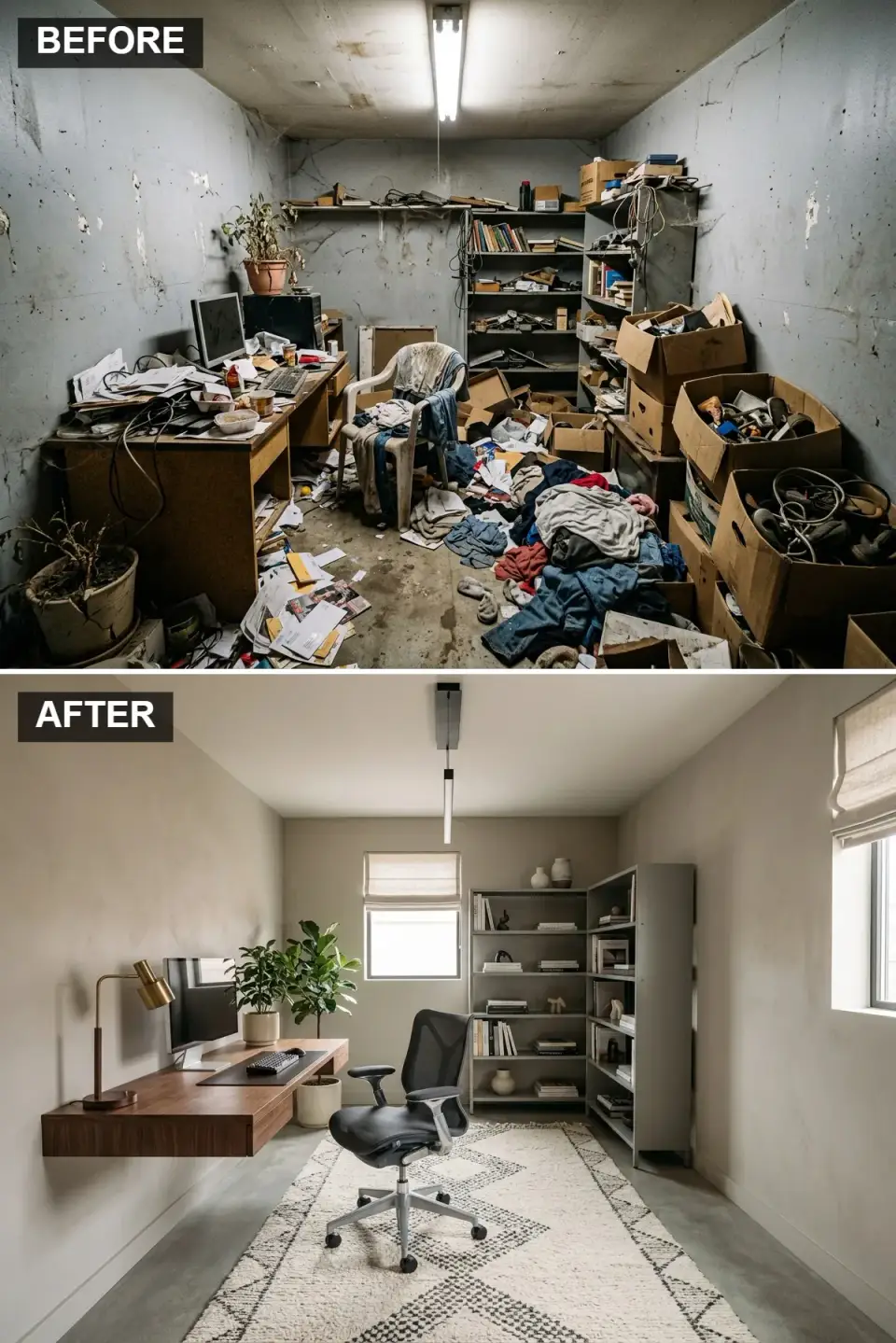
The floating desk is the element everyone wants and the element most often installed wrong. A desk without legs has to carry its own weight plus yours when you lean on it plus a monitor and laptop — that's 80–140 lbs applied at an 18–24 inch lever arm. The wall bracket system matters more than the desk itself. On drywall, you need to hit at least two 2x4 studs with lag bolts; on plaster (common in Charleston's pre-1940 single-houses), you need toggle bolts rated for 100 lbs+ plus a backer board. I've seen two floating desks pull out of drywall in the first year from clients who mounted into anchors alone. The ergonomic mesh chair is the single most valuable investment in this scheme — Herman Miller Aeron or Steelcase Gesture, used on Craigslist, is $400–$800 and saves your back.
Color Palette
Textured Greige
#C2BDB3
Benjamin Moore Edgecomb Gray or Sherwin-Williams Accessible Beige both read close.
Polished Concrete
#A6A6A6
Polished or microtopped concrete stays cool, durable, and reads contemporary.
Walnut Wood
#6B4E38
Solid walnut or engineered walnut veneer on a heavy plywood core for floating applications.
Matte Grey
#808080
Powder-coated metal shelving that disappears against the wall.
Styling Notes for This Look
- Wall-mount hardware: use rated steel brackets (Rakks, Häfele) — not decorative shelf brackets repurposed for desks.
- A large area rug under the desk zone warms concrete and reduces chair-roller wear on the floor surface.
- Leave ~30% of open shelves empty. Curated restraint reads intentional; fully-loaded shelves read cluttered no matter how nice the objects are.
5. Luxury Redefined: Marble, Wood, and Brass
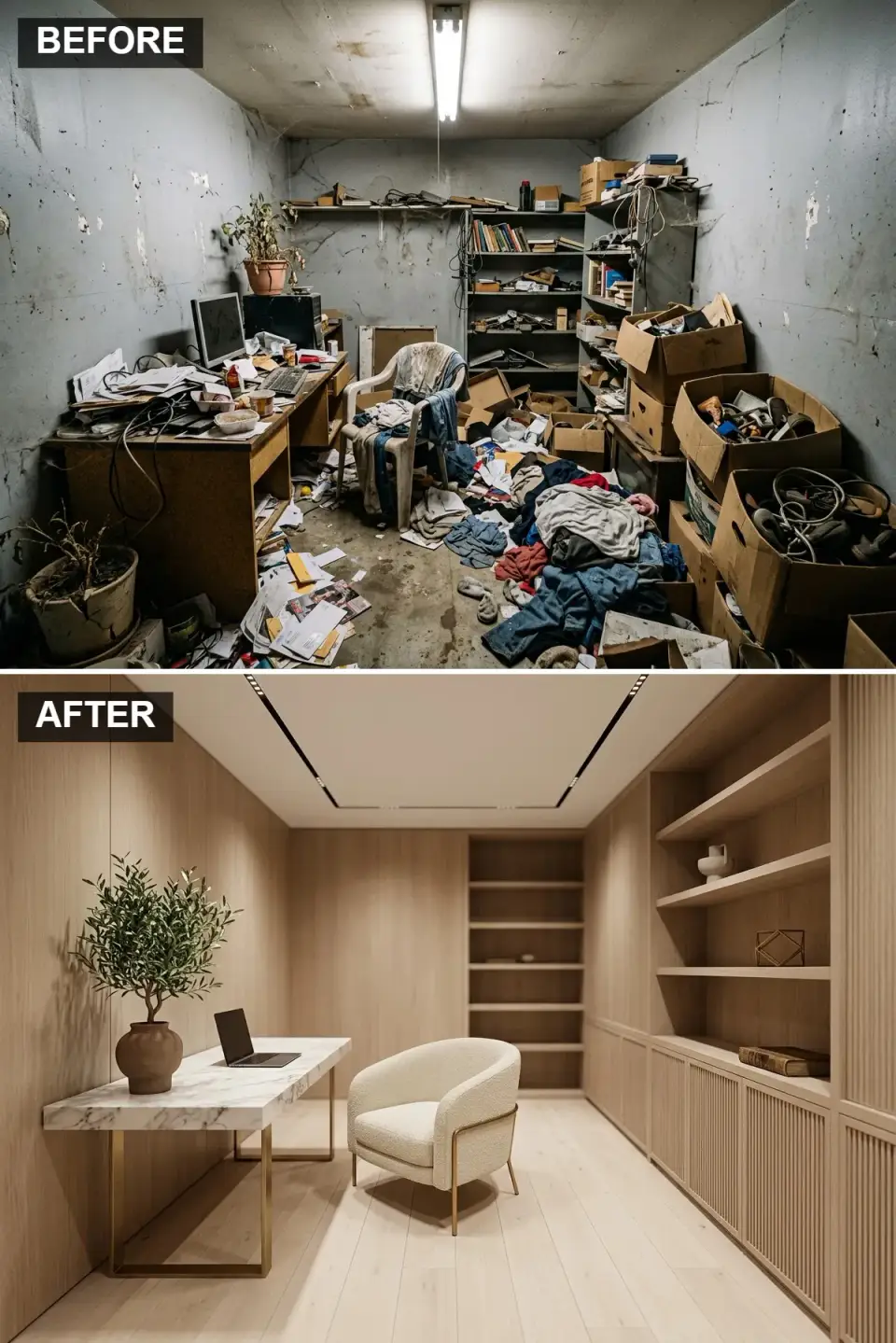
The highest-investment direction on the list and the one that can go wrong fastest if surfaces aren't specified properly. Real Carrara marble on a desk is porous and stains from coffee, red wine, and citrus within minutes if unsealed. Seal with a topical impregnator (MB Stone Care's MB-4 or similar) at install and re-seal annually. If you want the look without the babysitting, honed quartz from Cambria or Caesarstone in the "Statuario" or "Calacatta" series reads genuinely close and is stain-proof. Brass hardware: real solid brass patinas beautifully in Charleston's salt air; plated brass reveals base metal at the wear points within 18 months. Spend the extra $40–$80 on unlacquered solid brass handles and let them age.
Color Palette
Light Oak
#C9B293
Rift-sawn white oak with a natural oil finish reads luxurious without darkening the room.
Carrara Marble
#E8E8E8
Real Carrara or honed quartz with Carrara-style veining.
Brushed Brass
#B89B61
Unlacquered solid brass for legs, pulls, and picture lights.
Cream Bouclé
#F2EFE6
A tactile, softly curved accent chair balances the hard surfaces.
Styling Notes for This Look
- Cove LED strip: spec warm 2700K, 90+ CRI. Cool-temperature strip lighting destroys this palette immediately.
- Budget: real Carrara desk top $1,800–$3,800; quartz equivalent $1,200–$2,400; oak paneling (floor-to-ceiling one wall) $3,200–$7,500 installed.
- Bouclé pills if the weave is loose — spring for a tight-weave designer bouclé from Maharam, Kravet, or the Schumacher trade rooms rather than a bargain reproduction.
6. The Moody and Magnificent Library
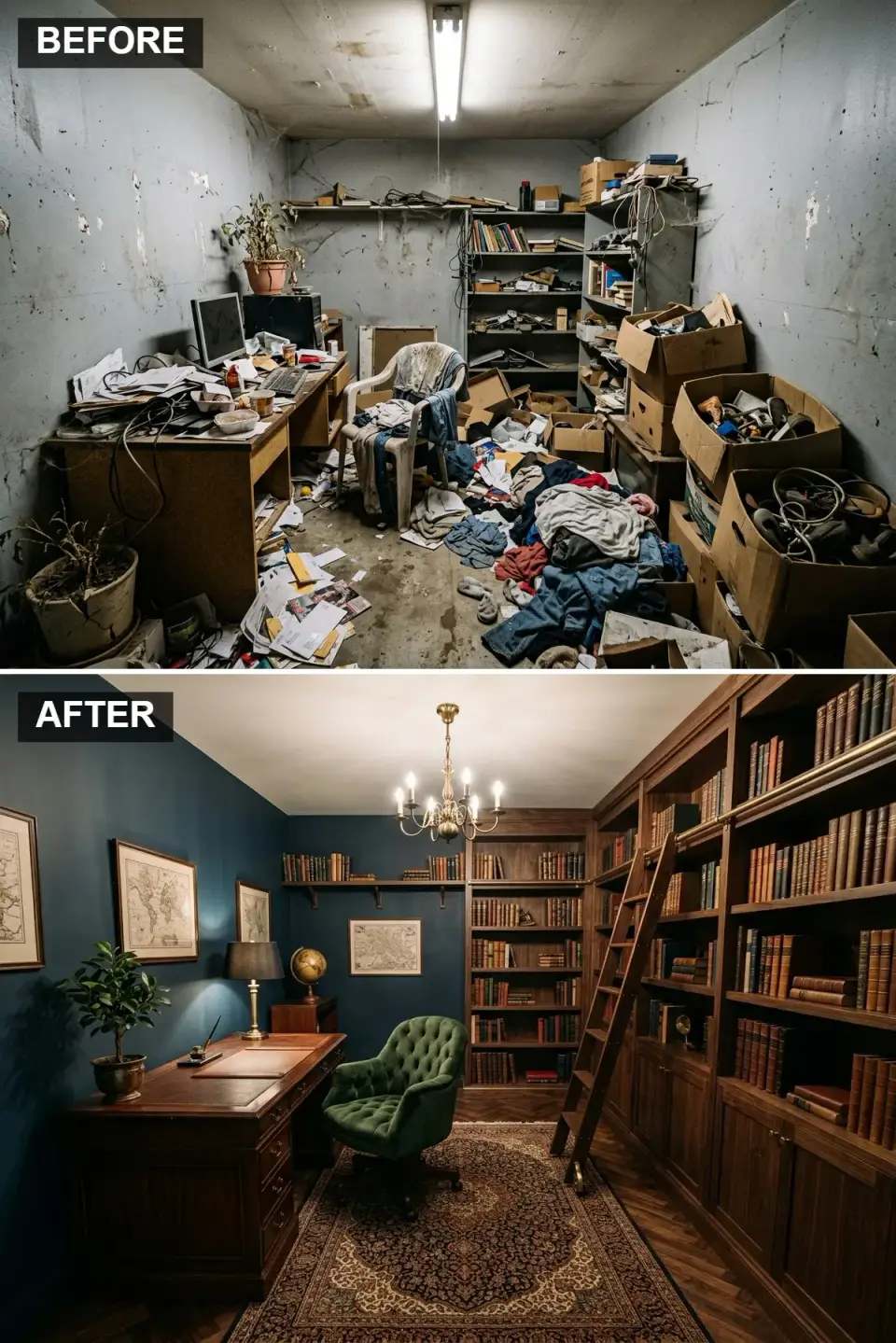
Floor-to-ceiling bookshelves are the defining feature here, and they carry real structural weight — a fully-loaded bookshelf runs 70–100 lbs per linear foot of shelf. On any built-in that goes above 6 feet, I spec the frame out of solid wood (poplar or maple) with plywood backing, not MDF, because MDF sags under book load within 5 years. The library ladder rail must be lagged into wall framing or top-plate, never into drywall alone — a failure here is a genuine injury risk. Deep teal paint (Sherwin-Williams Riverway, Farrow & Ball Hague Blue) holds up beautifully against dark walnut and the Charleston winter afternoon light. This direction adds roughly 2–4°F to the room's felt warmth because dark walls absorb IR.
Color Palette
Deep Teal
#1F4E5F
A saturated jewel tone that reads historic and cozy.
Dark Walnut
#3D2B1F
Deep wood tones add a sense of age and grandeur.
Emerald Velvet
#225C33
A tufted captain's chair in emerald green velvet carries the room.
Burgundy / Brown
#6B3025
A Persian or Turkish hand-knotted rug anchors the floor.
Styling Notes for This Look
- Built-in cost: $280–$550 per linear foot installed in Charleston, depending on wood species and trim detail. A full wall of built-ins runs $8,000–$18,000.
- Library ladder + track: $600–$2,400 for the rolling hardware; an actual Putnam-style wooden ladder is another $500–$1,200.
- Persian rugs: the price difference between hand-knotted and machine-made is real but the machine-made rugs last 10–15 years and read fine at this scale. Hand-knotted outlasts you.
7. Scandi-Style Craft Room for Creativity
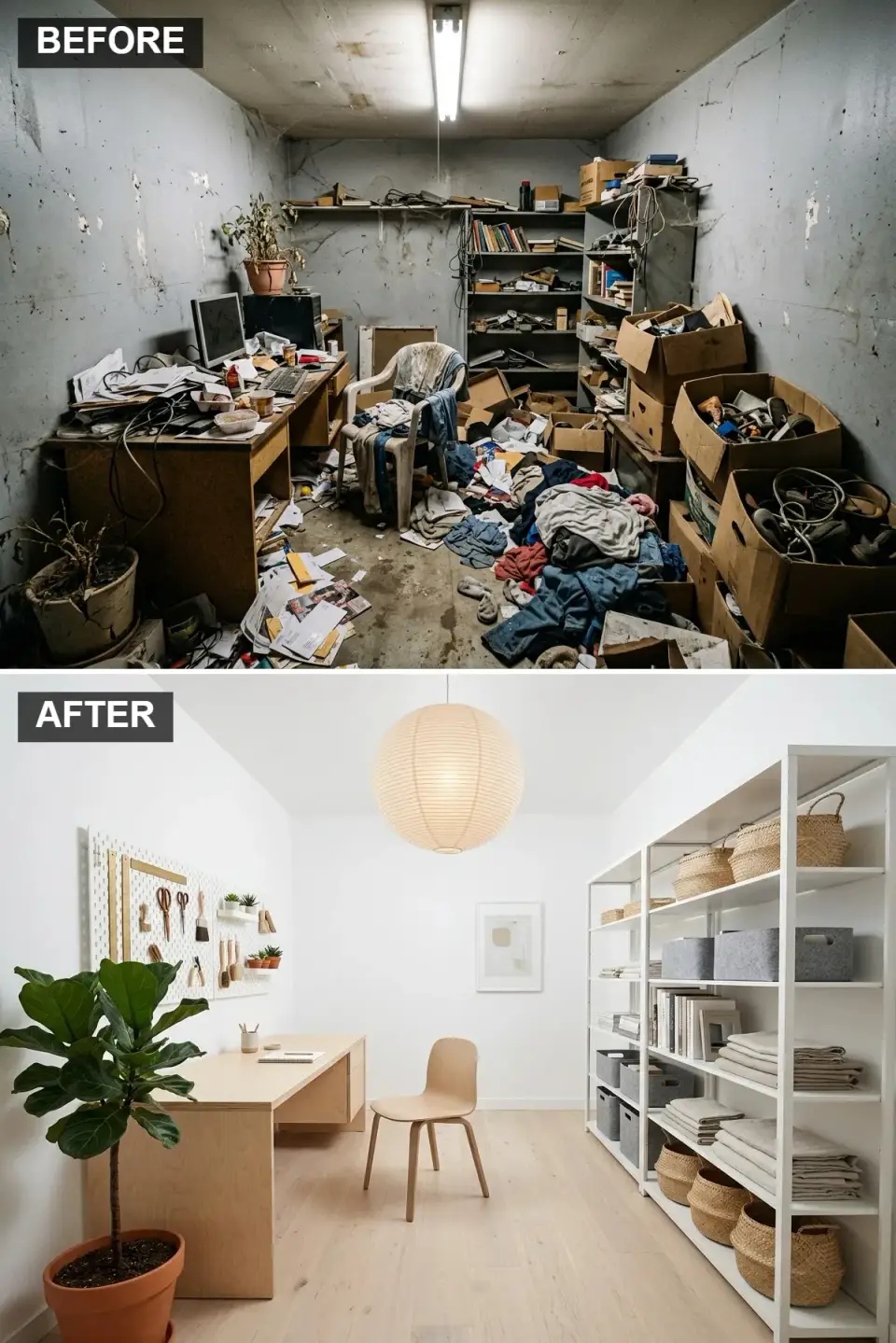
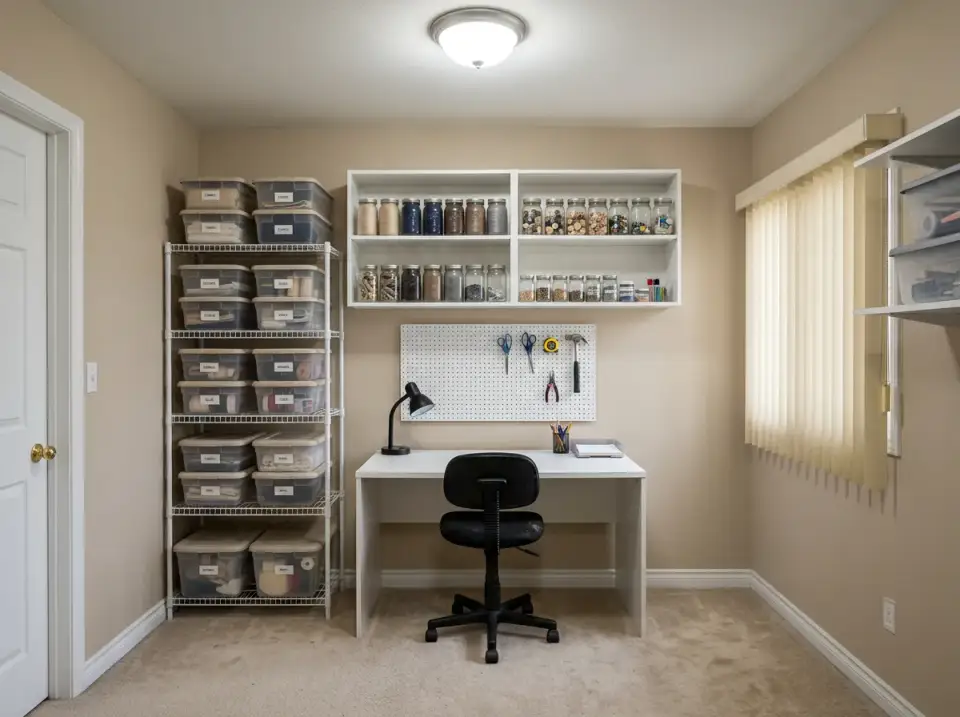
The most budget-flexible direction on the list. A solid-birch plywood desktop on IKEA trestle legs runs $140–$260 total and is structurally sound for decades. The pegboard is where most rooms go from "good" to "great" — and it's where the DIY version usually fails, because thin MDF pegboard warps under tool weight within a year. Spend up for 1/4-inch hardboard or Wall Control metal panel pegboard; it's $75–$160 for a 4×8 section and permanently flat. White paint on every surface looks simple but the trick is to keep it the same white throughout (Benjamin Moore Simply White, Behr Ultra Pure White, or Sherwin-Williams High Reflective White) — mixing whites across furniture, shelving, and pegboard reads sloppy in person even when it photographs fine.
Color Palette
Pure White
#FFFFFF
Consistent crisp white across every white surface in the room — not "soft white" on trim and "bright white" on pegboard.
Light Birch Plywood
#E3D5B8
Birch ply for the desktop; light-oak engineered flooring for the floor.
White Metal
#F8F8F8
Powder-coated metal shelving units (IKEA Omar, Elfa, Metro) for open storage.
Natural Straw
#D9C8A9
Seagrass or rattan basket collection to soften the white metal.
Styling Notes for This Look
- Metal pegboard (Wall Control, Triton): significantly flatter and stronger than hardboard pegboard — worth the 50% upcharge.
- Uniform basket sizing is what makes open shelving read as organized instead of cluttered. Measure shelf depth before ordering.
- Plywood edge: always round and sand the front edge of a DIY plywood desktop, or it splinters clothing and skin by month two.
8. Industrial Loft: Raw Materials and Rugged Charm
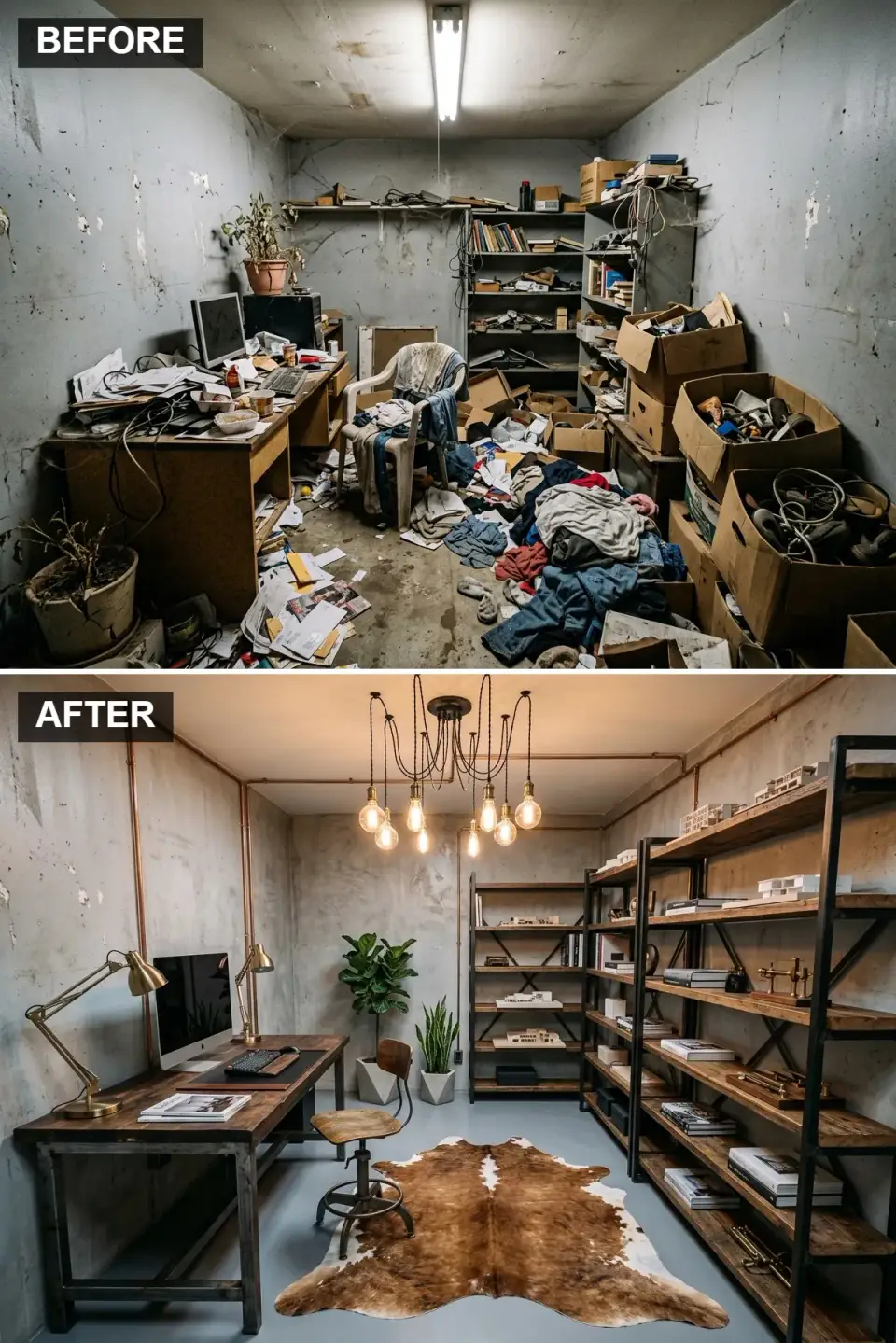
The industrial look is easy to mimic and hard to get right. One structural note that matters for code compliance in the Lowcountry: exposed electrical wiring in a habitable room must run in EMT (electrical metallic tubing) or MC (metal-clad) cable per NEC Article 300. Decorative exposed copper conduit that looks Instagram-right but contains Romex underneath is a genuine code violation and a fire inspection will fail it. If you want the exposed-conduit aesthetic, run actual EMT with copper-painted fittings, or hire a licensed electrician to install surface-mount raceway. The pipe-and-plank desk is beautiful and real: 3/4-inch black iron pipe ($3–$8 per foot) plus reclaimed heart pine or oak planks ($8–$15 per board foot in Charleston from Architectural Salvage Warehouse). Total desk cost: $220–$450 DIY.
Color Palette
Exposed Concrete
#949494
Raw grey concrete sets the industrial tone without paint.
Dark Iron
#333333
Black iron pipe or steel shelving — clear-coated to prevent rust.
Reclaimed Wood
#7A583F
Southern heart pine or reclaimed oak planks add warmth and genuine character.
Copper
#B87333
Copper conduit, lamp bases, or fixtures add the warm metallic note.
Styling Notes for This Look
- Edison-bulb pendants: buy LED filament bulbs (2200K amber, dimmable) — not actual incandescent Edison bulbs, which burn out monthly and run hot.
- Concrete floor sealer is non-negotiable — unsealed concrete throws dust that eats laptop fans.
- Clear-coat every piece of black iron pipe before install; unfinished pipe rusts in Charleston humidity within weeks.
9. Serene and Textured Home Office Retreat
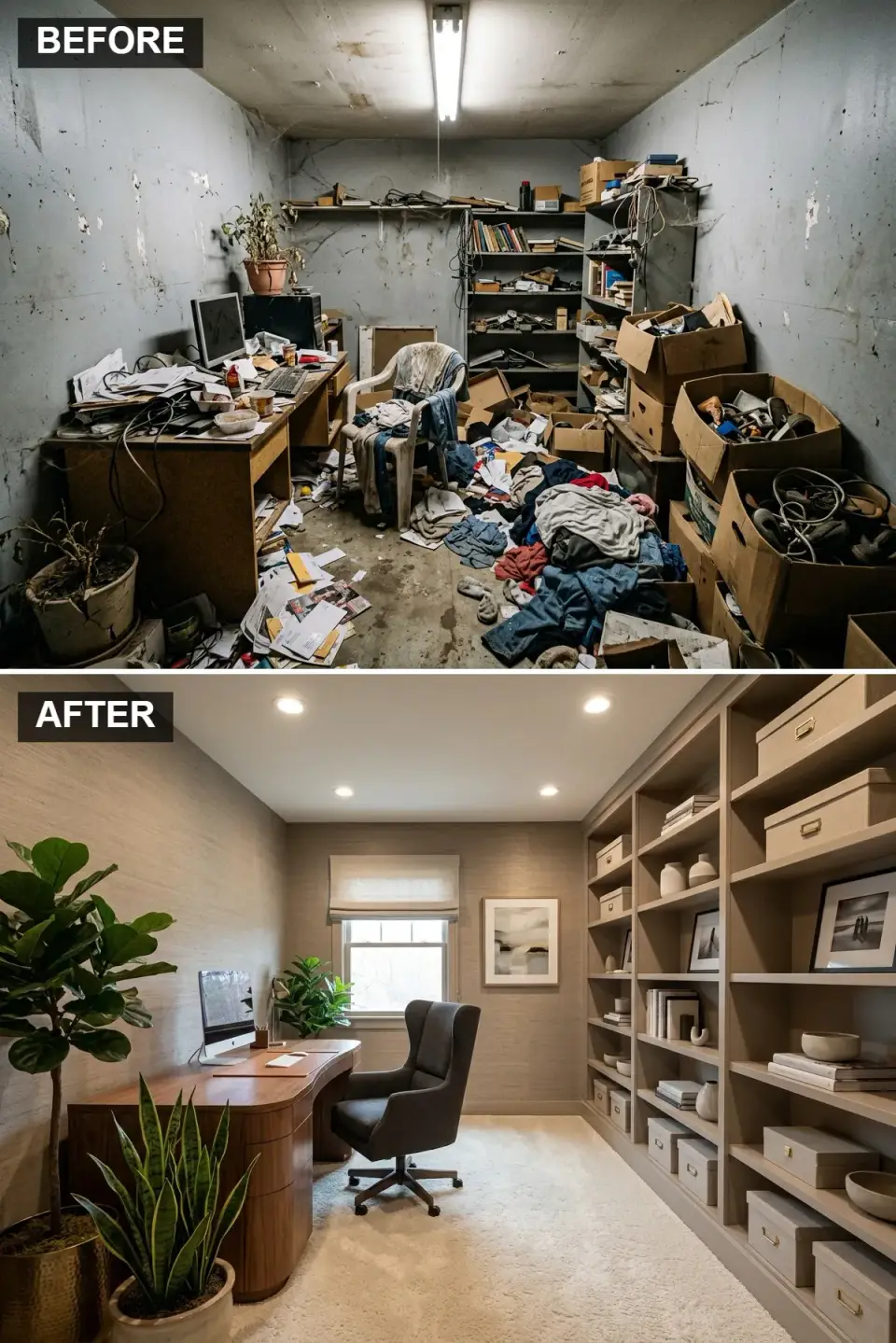
Grasscloth wallpaper is one of the materials I'm most often asked about and most often have to caveat for Lowcountry installations. The real Phillip Jeffries or Thibaut grasscloth looks beautiful and can wick humidity — in a Charleston room that runs above 60% RH without continuous HVAC, it mildews at the seams within 18–24 months. For high-humidity rooms I spec a vinyl grasscloth replica (Wallquest, York) that looks 90% as good and is bulletproof in our climate. The curved wooden desk is the other defining element; custom curves run $2,800–$6,500 in Charleston cabinetry shops, while a strong off-the-shelf option like the West Elm Cacao or Crate & Barrel Clybourn lands $1,400–$2,200.
Color Palette
Taupe Grasscloth
#A89F8F
Textured natural or vinyl grasscloth for warmth and depth.
Light Beige Carpet
#D9D0C1
Soft carpet adds sound absorption and tactile comfort.
Greige Paint
#B0ABA3
A restrained paint color for the built-ins that recedes into the grasscloth.
Medium Brown Wood
#8C6A4A
Mid-tone walnut or European oak for the curved desk centerpiece.
Styling Notes for This Look
- Fabric storage boxes on open shelves: identical sizing across the whole bookcase is the single biggest visual upgrade. Buy an extra two for growth.
- Recessed lighting: 3000K, 90+ CRI, with at least one dimmable zone per wall. Generic builder-grade recessed lighting flatters nothing.
- In rooms that get direct sun, grasscloth will fade visibly within 2–3 years. Add UV-filtering window film if the room faces south or west.
10. Mid-Century Modern Revival Den
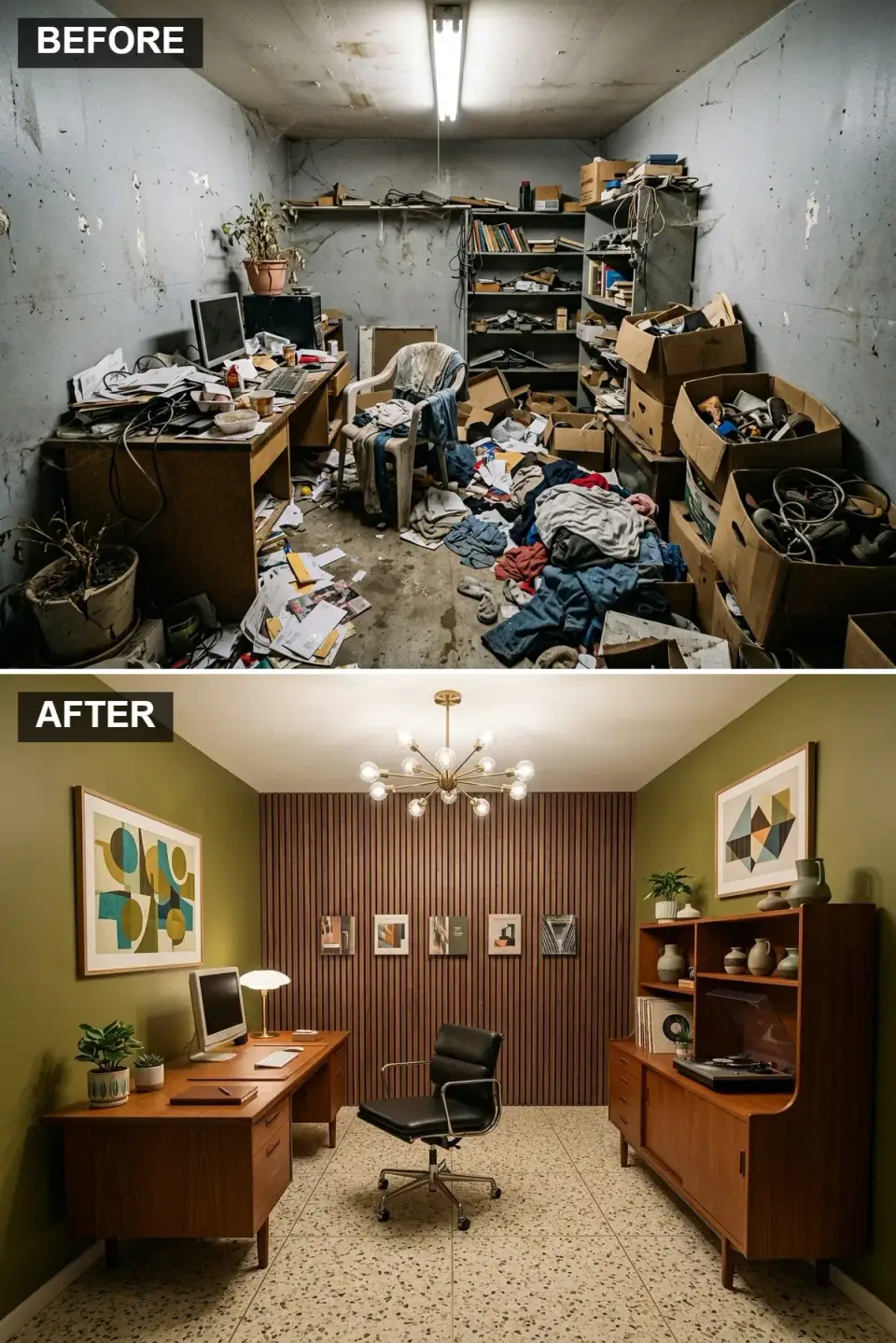
True vintage teak from the 1950s–70s holds its value and patinas beautifully — a real Finn Juhl, Hans Wegner, or Florence Knoll desk runs $3,500–$12,000 at Charleston's vintage dealers (like Objects of Art on King Street) or via 1stDibs. If the budget isn't there, good contemporary reproductions from Design Within Reach, Article, or Thrive Home Furnishings land $900–$2,400 and read credible. Real terrazzo flooring (poured and ground in place) costs $35–$60 per sq ft installed — expensive but lifetime durable. Porcelain terrazzo-look tile is $8–$18 per sq ft installed and visually reads 85% as authentic. A sputnik chandelier is the statement that makes the room; the Sputnik MCM reproductions from Rejuvenation or YLighting hit $450–$1,200 and look identical to the $5,000 originals.
Color Palette
Olive Green
#7F8C56
Sherwin-Williams Artichoke or Benjamin Moore Savannah Green read close.
Warm Teak Wood
#A67B5B
Vintage teak is the quintessential mid-century tone.
Walnut Slats
#5C4033
Vertical wood slat panels (Hey Wood, Slat Panel Co.) add texture.
Terrazzo
#C4BDB3
Real terrazzo or porcelain terrazzo-look tile underfoot.
Styling Notes for This Look
- Real vintage teak oils need reapplication annually — Watco or Howard Feed-N-Wax. Do it or the wood dries and cracks.
- Wood slat panels: pre-finished acoustic panels from Naturewall or Hey Wood install with construction adhesive plus finish nails; $18–$35 per sq ft.
- Sputnik chandelier scale matters — pick a diameter 1/3 to 1/2 the width of the desk it sits over. Smaller looks apologetic; larger looks costume.
11. The Ultimate Professional Editing Suite
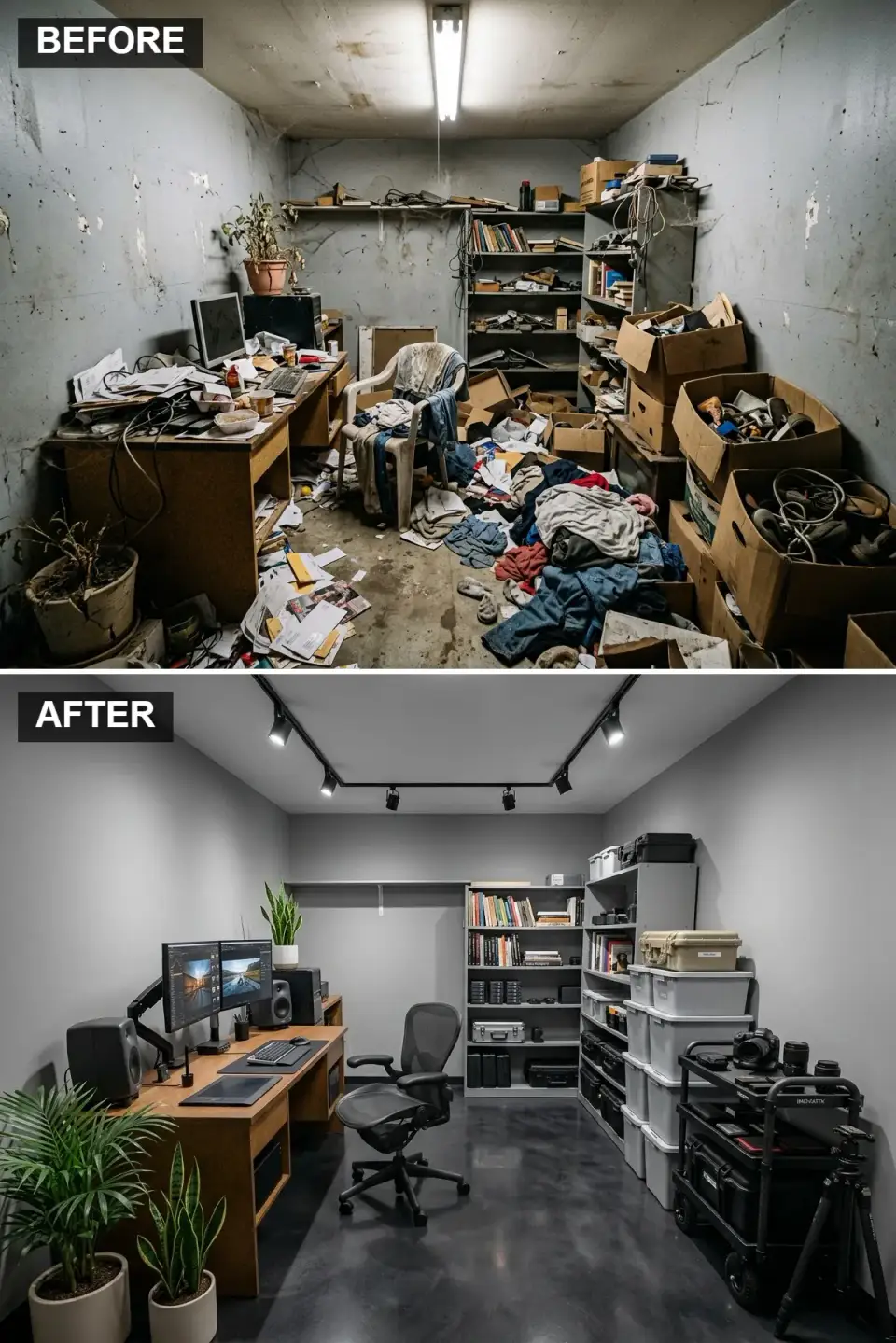
Professional editing suites have specific technical needs that casual home offices don't. Wall color matters — neutral 18% grey (Benjamin Moore Kendall Charcoal or Sherwin-Williams Gauntlet Gray) is what color graders and photographers use because it doesn't bias screen-perceived color. Soundproofing is usually the second priority: acoustic panels from GIK Acoustics or Acoustimac ($35–$120 per 2×4 panel) on the first reflection points and the rear wall bring a room from "echoey" to "professional" fast. Electrical: dedicated 20-amp circuits for primary workstations, with GFCI protection if the room is below grade. Track lighting works here because it's directional — standard overhead fluorescents (still present in a lot of Lowcountry basements) destroy color work and cause eye strain.
Color Palette
Neutral Grey
#4A4A4A
Color-accurate 18% grey for monitor work.
Dark Polished Concrete
#3B3B3B
Durable, low-dust, easy to mop — technical floor for technical work.
Black Metal
#1A1A1A
Heavy-duty wire shelving (Metro, Edsal) for gear cases.
Medium Oak
#8F6F4F
Solid oak desk for warmth against the technical palette.
Styling Notes for This Look
- Acoustic panels on the ceiling above the primary workstation kill the "basement echo" faster than wall panels.
- UPS (uninterruptible power supply) is essential for editing workstations in the Lowcountry — our grid brown-outs during summer storms.
- Monitor calibration matters more than wall color; if you're doing paid color work, a SpyderX or i1Display is $180–$400 well spent.
Pro Tips for Any Workspace Transformation
- Address humidity before aesthetics. In Lowcountry basements and older attic conversions, a dedicated dehumidifier (40–70 pint, ~$220–$380) is usually more impactful than any design choice. Paper, wood, leather, and electronics all suffer above 60% RH.
- Test your internet speed at the exact corner of the room where the desk will live. WiFi dead spots are the most common workspace regret. Hardwire the desk with Ethernet if speed matters.
- Lighting: ambient + task + accent, minimum. A single overhead fixture is a finished room's worst sin. Layer at least three light sources at three different heights.
- Ergonomic chair is the single highest-ROI purchase. Used Herman Miller Aeron or Steelcase Gesture on Charleston Craigslist: $400–$800. Worth more than any decor piece in the room.
- Sound matters. Hardwood and concrete floors echo; add a wool rug (minimum 6×9) under the primary seating zone. Acoustic panels behind the monitor reduce voice-call echo for anyone on the other end of a Zoom.
- Cable management is a design choice. A $30 under-desk cable tray and a $15 Velcro wrap kit transform a workspace more than most $300 decor pieces.
- Plan power outlets before finish work. Nothing is sadder than a gorgeous Scandi pegboard wall with an extension cord running across the floor.
Frequently Asked Questions
Which workspace direction has the best ROI at resale? Built-in cabinetry of any kind (Directions 5, 6, and 9) returns 45–60% of cost at resale in Charleston per Remodeling magazine's 2024 Cost vs. Value report. A room that reads as a dedicated home office rather than a convertible guest room is a measurable comp premium in post-2020 real estate listings across the Southeast. Can I convert a basement into one of these workspaces in the Lowcountry? Yes, but expect $8,000–$20,000 in pre-design work on moisture remediation, waterproofing, and egress window upgrades before you start design. IRC R310 requires an emergency egress window for below-grade habitable rooms. Charleston's water table and flood risk make this non-optional. What's the minimum square footage for a functional home office? 60 sq ft is the practical floor — enough for a desk, a chair, and a small file. 80–120 sq ft is the sweet spot for most of these directions. Above 150 sq ft, you can comfortably add a seating area (Directions 2, 6, 9). The zen direction works in 70 sq ft; the library direction really needs 140 sq ft minimum for the ladder to have meaning. How do I soundproof against a noisy household? Four things in order: (1) add a solid-core door — hollow-core doors transmit nearly all conversation volume; (2) add a door sweep and weatherstripping; (3) install acoustic panels on at least two walls; (4) consider a white-noise speaker like the LectroFan or a simple bedroom fan. Full insulation inside walls requires demolition and isn't usually worth it for a single-occupant office. Is it worth hiring a designer for a single-room workspace? For a straightforward room with a clear direction, a single 2-hour consult ($200–$450 in Charleston) is usually enough — long enough to catch lighting and layout issues before purchase, short enough to stay affordable. Full-service design on a room this size is usually more than the budget justifies unless the room is part of a larger project. How long does a full transformation like these actually take? Paint and furniture only: 1–2 weekends. Built-ins, lighting changes, and electrical: 3–6 weeks. Basement or attic conversions with moisture work and egress upgrades: 8–14 weeks. The permit process in Charleston County adds 2–4 weeks to anything structural. Can I mix elements from two directions? Yes — the most-commissioned hybrid in my practice is Direction 4 (modern minimalism) plus Direction 9 (serene textured) — a floating walnut desk with grasscloth walls. Or Direction 2 (scholar) plus Direction 6 (library) if you want dark academia without full built-ins. Avoid mixing Directions 1 (zen) or 7 (scandi) with anything moodier — the palettes fight.Sources and References
- Remodeling magazine, 2024 Cost vs. Value Report (South Atlantic region) — used for workspace addition and built-in ROI figures.
- NAHB Construction Cost Survey, 2024 edition — regional labor and material cost anchors.
- International Residential Code (IRC), 2021 edition: R310 (emergency egress), R303 (natural light and ventilation in habitable rooms), R324 (moisture and flood resistance).
- National Electrical Code (NEC) 2023 Article 300 — wiring methods for exposed conduit and raceway systems.
- Illuminating Engineering Society (IES), Lighting Handbook 10th edition — task lighting lux targets for workstations and studios.
- GIK Acoustics and Acoustimac published reference guides on first-reflection point treatment for home studios.
- Charleston County Building Department — current permit requirements for basement habitation and egress upgrades.
- Johan Martez consulting notes, 2018–2025 Lowcountry workspace projects — used for the real-quote anchors on built-ins, lighting, and HVAC in this guide.
Final Thoughts
The Charleston client I mentioned at the top of this piece sat with these eleven directions for almost three months before committing. She landed on a hybrid of Direction 4 (modern minimalism) and Direction 9 (serene textured) — a floating walnut desk against a wall of vinyl grasscloth with Herman Miller Aeron seating, recessed lighting, and a single west-facing window that we added UV film to protect the wallpaper. She said it was the first room in her house that felt intentional. That's what separates a workspace transformation that lasts from one that gets undone in 18 months — the room needs to match how you actually work, not how the best direction happens to photograph.
If you're planning a larger transformation and want companion reading from the Lowcountry specifically, see our 12 garage-to-studio transformations for adjacent approaches, our concrete-to-canopy urban garden transformation for outdoor complements, the expansive single-story modern farmhouse with dedicated office for new-build plans that prioritize an office zone, and the expanded modern farmhouse with home office and flexible bonus space for a larger layout with a dedicated workspace from day one.
— Johan Martez, Charleston, SC

Elise Marchetti
Transformations Editor · Charleston, South CarolinaBefore-and-after projects with the invoices attached. Elise runs the Transformations desk — interiors, exterior facades and outdoor spaces across the Lowcountry and the wider South — and writes up what actually changed, what it cost, and which three decisions moved the room.
More from Elise →
Reader notes